Syrian Armed Forces
The Syrian Armed Forces have undergone a profound transformation over the last century, evolving from a colonial volunteer force into a state military, and most recently, into a restructured entity under a transitional government. Following the collapse of the Ba'athist regime in December 2024 and the flight of Bashar al-Assad, the military has entered a new era of reorganization aimed at unifying disparate factions into a cohesive national defense force.
Historically, the military served as the primary instrument of state power for the Ba'ath Party. Under the 2012 Constitution, the President served as the Commander-in-Chief, while the Minister of Defense acted as the Deputy Commander-in-Chief. Today, the forces are transitioning toward a new structure led by the transitional government.
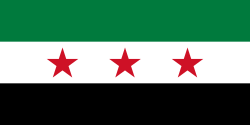
Key Facts
- Founded: 1943 (83 years ago).
- Current Leadership: President Ahmed al-Sharaa (Commander-in-Chief) and Minister of Defence Murhaf Abu Qasra.
- Active Personnel: Approximately 100,000.
- Headquarters: Hay'at al-Arkan, Umayyad Square, Damascus.
- Service Branches: Syrian Army, Syrian Air Force, and Syrian Navy.
- Major Suppliers: Russia, United States, Turkey, Qatar, Saudi Arabia, and Ukraine.
Historical Evolution
Mandate and Independence (1923–1945)
The origins of the modern military date back to 1923, when the French Mandate established a volunteer force to counter Syrian Arab nationalism. Initially led by French officers, this indigenous force expanded in 1925 to become the Special Troops of the Levant (Troupes Spéciales du Levant). During World War II, specifically in 1941, the Army of the Levant resisted the British and Free French invasion during the Syria–Lebanon Campaign.
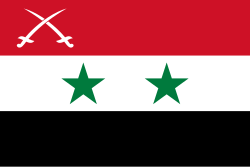
The Ba'athist Era (1963–2024)
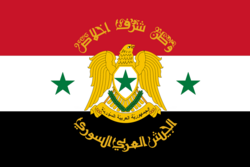
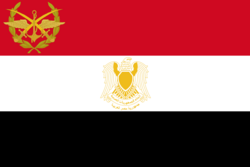
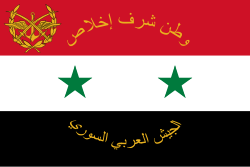
For over six decades, the Syrian Arab Armed Forces were the state's primary military arm under the Ba'ath Party. This period was marked by significant regional engagements, including the occupation of Lebanon from 1982 to 2005 and various modernization efforts during the 2000s.
The onset of the Syrian civil war in 2011 led to a drastic decline in personnel. In 2011, combined Army and Air Force personnel totaled 320,000; by 2014, this number plummeted to 173,000 due to casualties, desertions, and draft dodging. While numbers fluctuated, reaching roughly 170,000 active soldiers by 2023, the force remained strained until the regime's eventual collapse in December 2024.
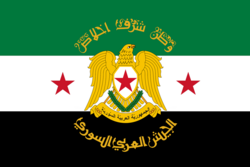
The Transitional Government (2024–Present)
Following the fall of the Assad regime, a transitional government began building a new army. By June 2025, the government had recruited half of its target 200,000-man force. This new military is a coalition of various factions led by Hay'at Tahrir al-Sham (HTS), incorporating 30,000 members of the Syrian National Army and 15,000 from the Syrian Democratic Forces (SDF). Notably, two-thirds of senior commanders are HTS members, and the United States has reportedly approved the integration of foreign fighters into the ranks.
Military Structure and Branches
The Army
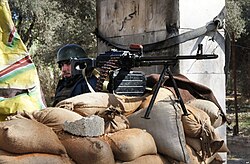
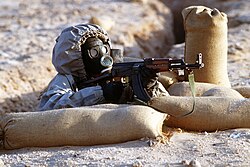
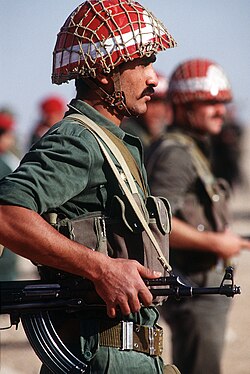
The Army remains the largest branch. Under the new administration, it is organized into various regional divisions to maintain security and stability across the country.
The Air Force and Navy
Established in 1948, the Air Force first saw combat in the 1948 Arab–Israeli War. Historically, land-based air defenses were managed by the separate Syrian Air Defence Force. However, the Air Force suffered near-total destruction in December 2024 following an Israeli invasion that coincided with the regime's collapse.
Administrative Leadership and Regional Command
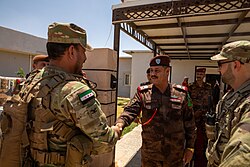
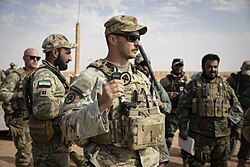
As of April 2026, the Ministry of Defense is led by Minister Murhaf Abu Qasra and Chief of Staff Ali Noureddine al-Naasan. The military is divided into strategic regional commands to ensure territorial integrity.
| Region | Key Divisions | Notable Commanders |
|---|---|---|
| Damascus | 77th, 70th, and Damascus Divisions | Sheikh Abu Adnan al-Zabadani, Essam al-Buwaydhani, Omar Mohammed Jaftashi |
| Aleppo | 80th, 76th, 72nd, 60th Divisions | Ahmed Rizk, Sayf Bulad, Doghan Suleiman |
| Latakia | 400th, 56th Reserve, 1st Coastal Divisions | Tariq Solaq, Muhammad Haj Ali |
| Hama | 82nd, 74th, 60th Divisions | Khaled Al-Halabi Abu Khattab, Jamil al-Saleh, Fadi Zouda |
| Idlib | 64th Division | Muhammad Ahmad al-Gharib |
| Eastern Syria | 66th, 86th Divisions | Ahmed Al-Muhammad, Abu Hatem Shaqra |
Frequently Asked Questions
Who is the current Commander-in-Chief of the Syrian Armed Forces?
The current Commander-in-Chief is President Ahmed al-Sharaa, following the establishment of the transitional government in December 2024.
How has the size of the army changed since the start of the civil war?
The force saw a significant drop from approximately 320,000 personnel in 2011 to 173,000 in 2014. The current transitional government aims to build a new army of 200,000 personnel.
Which factions are part of the new transitional army?
The new army is led by Hay'at Tahrir al-Sham (HTS) and includes members from the Syrian National Army, the Syrian Democratic Forces (SDF), and various foreign fighters.
What happened to the Syrian Air Force in 2024?
The Syrian Air Force was nearly destroyed in December 2024 during an Israeli invasion that occurred as the Assad regime collapsed.
Who are the primary foreign suppliers of military equipment to Syria?
Syria receives military supplies from several nations, including Russia, the United States, Turkey, Qatar, Saudi Arabia, and Ukraine.