Syrian Air: A Comprehensive History of Syria's National Carrier
Founded in 1946, Syrian Air (originally Syrian Airways) has served as the primary aviation link between Syria and the rest of the world for nearly eight decades. From its humble beginnings with propeller aircraft to the operation of wide-body jumbo jets, the airline's trajectory has mirrored the political and economic shifts of the region.
Operating primarily out of its hubs in Damascus and Aleppo, the state-owned carrier has navigated mergers, diplomatic crises, and the challenges of international sanctions to maintain its connectivity across the Middle East, Europe, and Asia.
Key Facts
- Founded: 1946 (commenced operations in June 1947).
- Ownership: 100% owned by the Government of Syria.
- Primary Hubs: Damascus International Airport and Aleppo International Airport.
- Current Fleet: 14 aircraft, primarily consisting of Airbus A320s and A340s.
- Alliances: Member of the Arab Air Carriers' Organization.
Early Years and the UAR Merger (1946–1961)
Syrian Airways began its journey in 1947 using Beechcraft Model 18s and Douglas DC-3 (C-47 Dakota) aircraft, the latter of which were acquired from Pan American World Airways. The early network focused on domestic connectivity between Damascus, Aleppo, Deir ez-Zor, Palmyra, and Qamishli.
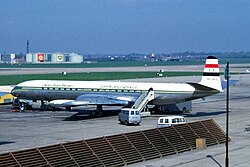
The mid-1950s saw a transition to larger aircraft, including the Douglas DC-4 Skymaster, to expand reach into the Persian Gulf. However, the airline's identity shifted dramatically in 1958 when Syria and Egypt united to form the United Arab Republic (UAR). This political union led to the merger of Syrian Airways and Misrair to create United Arab Airlines (UAA) on December 25, 1958.
This period was characterized by a centralized hub in Cairo, with Syrian operations limited mostly to regional and domestic routes. Following the dissolution of the UAR in September 1961, Syria withdrew from the merger, reclaiming its fleet to establish a new national entity.
The Rise of Syrian Arab Airlines (1961–1980)
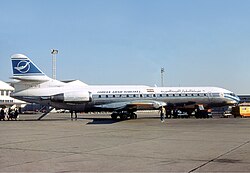
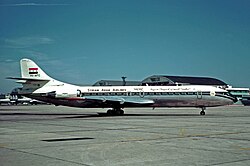
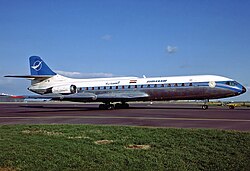
In October 1961, Syrian Arab Airlines (SAAL) was founded. The airline quickly expanded its horizons, launching flights to European capitals such as Rome, Munich, London, and Paris by 1964. The introduction of the Sud Aviation SE-210 Caravelle in 1966 marked a significant leap in modernization, allowing for high-density service across the Middle East and South Asia.
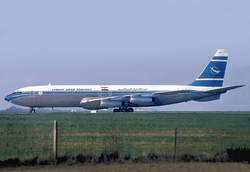
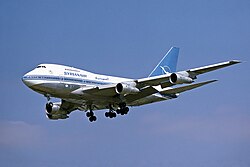
By the 1970s, the airline began diversifying its fleet. While it managed various Soviet-built aircraft for the government—including Antonov and Yakovlev models—it looked to the West for its primary commercial growth. In 1974, the airline leased Boeing 707s to increase capacity, eventually ordering Boeing 727-200s and the long-range Boeing 747SP.
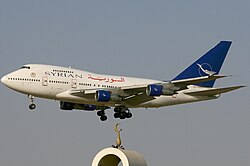
The Boeing 747SP was intended to launch the first transatlantic route by an Arab Middle Eastern airline to New York City. Although the joint venture with Royal Jordanian Airlines did not materialize as planned, the jumbo jets became staples on high-load routes to Europe and the Gulf, especially during periods when Beirut International Airport was closed due to conflict.
Operational Challenges and Modernization (1980–2010)
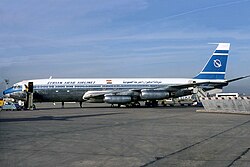
The 1980s were a period of volatility. The 1982 Lebanon War and the 1986 Hindawi affair—a diplomatic crisis with the UK—led to fluctuations in passenger numbers and the suspension of key routes to London. Despite these setbacks, the airline achieved record passenger numbers by 1990.
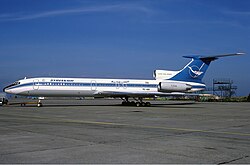
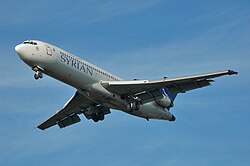
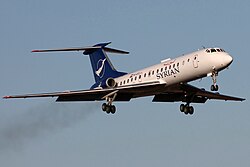
A major modernization phase began in the 1990s. In 1994, Kuwait donated three Boeing 727-269s, allowing the airline to retire its aging Caravelles. The most pivotal shift occurred in October 1998 with the arrival of the first Airbus A320-232, which signaled the phase-out of Soviet Tupolev aircraft from regular scheduled service by the year 2000.
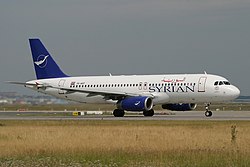
Throughout the early 2000s, Syrian Air optimized its network, scrapping unprofitable routes and adding new destinations like Milan, Barcelona, and Copenhagen. By 2003, the airline reported a net profit of 9 million dollars, driven by the efficiency of its newer Airbus fleet.
Civil War, Sanctions, and Recent Developments (2011–Present)
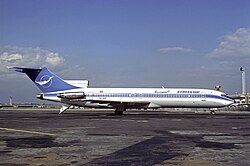
The onset of the Syrian Civil War in 2011 severely impacted the airline. U.S.-led embargos hampered plans to replace aging Boeing aircraft. By 2012, the fleet was reduced to eight aircraft, consisting of six Airbus A320s and two ATRs. Despite sanctions, the airline acquired Airbus A340-300s in 2017 to maintain long-haul capabilities.
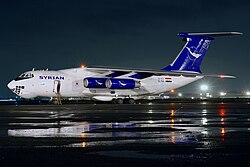
In January 2020, the airline was officially renamed from Syrian Arab Airlines to Syrian Airlines. Recent years have seen a gradual effort to revive services, including the delivery of additional A320s via Iran in 2022 and plans to resume flights to major cities in Saudi Arabia, Russia, and the UAE by 2026.
Fleet Summary
| Aircraft Type | In Service | Total Capacity | Notes |
|---|---|---|---|
| Airbus A320-200 | 9 | 162 | Main short-to-medium haul fleet |
| Airbus A340-300 | 2 | 243 | Long-haul operations |
| ATR 72-600 | 2 | 68 | Regional turboprops |
| Boeing 737-500 | 1 | 110 | Limited service |
Frequently Asked Questions
What was the original name of Syrian Air?
The airline was founded in 1946 as Syrian Airways before undergoing several name changes, including Syrian Arab Airlines, and finally becoming Syrian Airlines in 2020.
Which aircraft did Syrian Air use for its first flights?
The airline commenced operations in June 1947 using two Beechcraft Model 18s and three Douglas DC-3 (C-47 Dakota) aircraft.
Why did Syrian Air merge with Misrair?
The merger occurred in 1958 as a result of the political union between Syria and Egypt, which formed the United Arab Republic (UAR), leading to the creation of United Arab Airlines.
How did the Syrian Civil War affect the fleet?
The conflict and subsequent international sanctions prevented the airline from renewing its aging Boeing 727 and 747 fleets, forcing a reliance on a smaller number of Airbus aircraft and ATRs.
Does Syrian Air still operate jumbo jets?
No, the Boeing 747SP aircraft were retired. The airline now utilizes the Airbus A340-300 for its long-haul requirements.