Swedish: The Evolution and Structure of a North Germanic Language
Swedish, known natively as svenska, is a prominent North Germanic language with a rich historical lineage. As a member of the Indo-European language family, it has evolved through several distinct stages, from its roots in Old Norse to the standardized national language spoken today. With approximately 10 million native speakers, Swedish serves as a vital cultural and administrative pillar in Northern Europe.
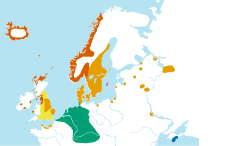
Key Facts
- Language Family: Indo-European > Germanic > North Germanic > East Scandinavian.
- Native Speakers: Approximately 10 million (based on 2012–2021 data).
- Official Status: Official language in Sweden, Finland, Åland, the European Union, and the Nordic Council.
- Writing System: Latin script (Swedish alphabet) and Swedish Braille.
- Primary Regions: Sweden, Finland, and formerly Estonia.
Historical Evolution
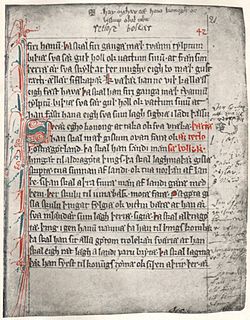
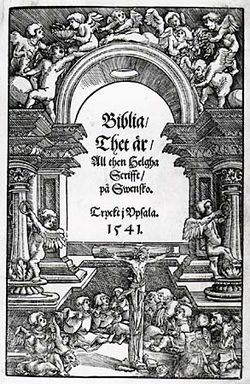
The journey of the Swedish language is marked by significant transitions. It originated from Old Norse, which branched into Old East Norse and eventually Old Swedish. The transition to Modern Swedish was characterized by a gradual stabilization of its orthography (the conventional spelling system).
A major turning point occurred in the 20th century when a standardized national language became accessible to all Swedes. By the 1906 spelling reform, the orthography had become almost entirely uniform. While older forms of the language included plural verb forms, these were phased out of official recommendations by the 1950s. The language used in formal writing today is largely consistent with the Swedish of the modern era.
Geographic Distribution and Official Status
Swedish holds a unique position in the Nordic region. It is the sole official national language of Sweden, where it was formally designated as the main language by the Riksdag in 2009. In Finland, it is one of two official languages, alongside Finnish. The Fenno-Swedish speaking minority is primarily located in the coastal areas and archipelagos of southern and western Finland.
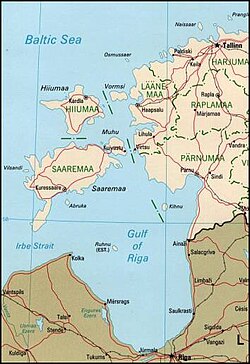
The autonomous region of Åland is a notable exception where Swedish serves as the sole official language. Historically, Swedish-speaking communities also existed in Estonia; however, following World War II, most of these populations fled to Sweden, leaving only a small number of speakers remaining.
Linguistic Structure: Grammar and Phonology
Grammar Fundamentals
Swedish grammar utilizes specific markers for possession and verb forms. For example, the word hästen (the horse) becomes hästens (the horse's) to indicate possession. The language also employs participles to describe states or actions, such as stekt fisk (fried fish) or stinkande fisk (stinking fish).
Passive voice in Swedish can be constructed in two primary ways: using the verb att bli (to become) with a past participle, or by adding the suffix -s to the verb. For instance, den blir målad and den målas both translate to "it is being painted."
Phonology and Dialects
The pronunciation of Swedish varies significantly across its six main dialect groups: Norrland, Finland Swedish, Svealand, Gotland, Götaland, and South Swedish dialects. One of the most critical pronunciation differences is the isogloss for the letter "R," which distinguishes between alveolar and uvular pronunciations.
![The vowel phonemes of Central Standard Swedish[51]](/images/bd/56/bd5670e2b51050c1d75adb657ec970231f1f04467d38fa4c52be871b06503443.webp)
![Isogloss for the pronunciation of "R" (c. 1960), being alveolar north of the boundary and uvular ("French R") south of it. It follows that the R+S combination is pronounced as spelled south of the boundary, while pronounced [ʂ] (similar to "sh" in "shark") north of it. This isogloss is the most imperative of all Swedish pronunciation differences.](/images/59/ca/59cac7924c30df18d983bea5a02e2e466dc1513d3fa9b820fcd0a3d83a410e30.jpg)
Summary of Swedish Language Profile
| Category | Details |
|---|---|
| Language Family | Indo-European, Germanic, North Germanic |
| Writing Systems | Latin script, Swedish Braille |
| Official Status | Main language in Sweden; Official in Finland and Åland |
| Dialect Groups | Norrland, Svealand, Götaland, Gotland, South Swedish, Finland Swedish |
| Regulatory Bodies | Swedish Academy, Swedish Language Council, Institute for the Languages of Finland |
Frequently Asked Questions
What are the main dialect groups in Sweden?
Swedish dialects are traditionally divided into six groups: Norrland, Svealand, Götaland, Gotland, South Swedish, and Finland Swedish.
Is Swedish spoken in Finland?
Yes, Swedish is one of the two official languages of Finland. It is spoken by a minority concentrated in coastal areas and is the sole official language in the Åland islands.
How is the passive voice formed in Swedish?
The passive voice can be formed by using the verb att bli with a past participle, or by adding the suffix -s to the verb.
What is the significance of the "R" isogloss in Swedish?
The "R" isogloss is a major pronunciation boundary. North of the boundary, the "R" is alveolar, whereas south of it, the "R" is uvular (often called a "French R").
Who regulates the Swedish language?
In Sweden, the language is regulated by the Swedish Academy and the Swedish Language Council. In Finland, it is regulated by the Institute for the Languages of Finland.
![A sign on the wall of a Swedish hotel, using both the recommended[20] dem and the colloquial dom for the word "them" on the same sign.](/images/25/8c/258c4ea1e175f2b4d95d2520fbe3c6b30f058959360d74cd91bb2ecd05442406.jpg)