Swedish City Derbies: The Fiercest Football Rivalries in Sweden
Football in Sweden is defined by more than just league standings; it is shaped by deep-rooted city derbies. These matches are often fueled by historical social class divides, geographic territorialism, and decades of sporting competition. From the intense atmosphere of Stockholm to the traditional clashes in Gothenburg, these rivalries represent the heartbeat of Swedish football culture.
Key Facts
- Tvillingderbyt (The Twin Derby) between AIK and Djurgården is considered the fiercest rivalry in Scandinavia.
- The 1959 match between IFK Göteborg and Örgryte holds the all-time Allsvenskan record with 52,194 spectators.
- AIK, Brommapojkarna, Djurgården, and Hammarby have a formal agreement not to transfer youth players between them.
- The "El Plástico" derby refers to the Djurgården vs Hammarby clash due to the artificial turf at Tele2 Arena.
- Assyriska FF and Syrianska FC in Södertälje are the most successful "immigrant clubs" in the country.
Stockholm: The Capital's Divided Loyalties
Stockholm's football scene is dominated by three major clubs: AIK, Djurgården, and Hammarby. To maintain order and tradition, matches between these sides are typically scheduled for daytime during weekends. While the city is shared, the clubs have distinct heartlands and identities.
AIK vs Djurgården: The Twin Derby
Founded just three weeks apart in 1891, Allmänna Idrottsklubben (AIK) and Djurgårdens Idrottsförening (Djurgården) share a rivalry known as Tvillingderbyt. Both clubs are historically the city's most successful, each boasting 12 Swedish championship titles. Out of 220 fixtures across all competitions, both sides have won 80 games each, though AIK has historically been the more victorious in overall fixtures.
The rivalry is marked by distinct fan identities. AIK supporters, nicknamed gnagare (rodents), are concentrated in the northwest along the Metro's blue line. Djurgården supporters, known as järnkaminer (iron stoves), claim the affluent Östermalm district as their heartland. The tension has occasionally boiled over into violence; for instance, the group Firman Boys targeted former players Jesper Jansson and Anders Limpar after they moved from AIK to Djurgården.
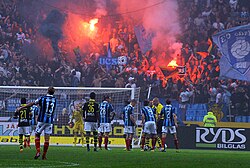
Djurgården vs Hammarby
This rivalry gained significant momentum in the 1950s and 1960s as Hammarby established itself as a top-flight team. Hammarby's stronghold is Södermalm, the southern district of the city centre. Tensions escalated in 2013 when both clubs began sharing the Tele2 Arena in Johanneshov. Because the stadium uses artificial turf, rival fans have dubbed the fixture "El Plástico."
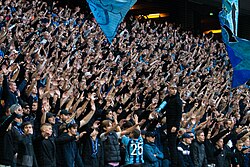
AIK vs Hammarby
Generally regarded as the least tense of the Stockholm derbies, this fixture still draws massive crowds. In 2015, two of their three meetings saw attendances exceeding 41,000 spectators.
Brommapojkarna
While Brommapojkarna frequently appears in the top league, they are not viewed as a traditional rival by the other Stockholm clubs. They are best known for operating the largest youth academy in Sweden and playing their home games at Grimsta IP.
Gothenburg: Class Warfare on the Pitch
In Gothenburg, football rivalries were historically built on social stratification, pitting the working class against the bourgeoisie.
IFK Göteborg vs Örgryte
Traditionally the city's primary rivalry, this clash pitted the middle-to-upper class Örgryte against the working-class IFK Göteborg. In the early 20th century, the intensity was so high that the Swedish press labeled the fans the "scum of Swedish football" due to frequent pitch invasions and fights. While the rivalry has cooled as Örgryte's prominence declined, it once drew a record-breaking 52,194 fans in 1959.
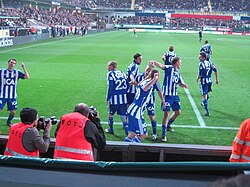
IFK Göteborg vs GAIS
Known as Göteborgsklassikern (The Gothenburg Classic), this is a battle between the city's two most supported clubs. Both fanbases are historically working-class, with IFK commanding 50% of the city's support and GAIS 12%. Their largest meeting at Nya Ullevi stadium drew 50,690 spectators.
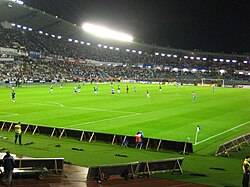
GAIS vs Örgryte
While less emotional than the other Gothenburg derbies, there remains a lingering friction based on the class divide between the working-class GAIS (12% city support) and the upper-class Örgryte (11% city support).
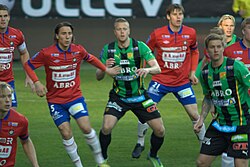
BK Häcken
Based on the island of Hisingen, BK Häcken was long the smallest of the city's clubs. However, their recent success—finishing as runners-up in 2012 and winning the title in 2022—has increased their rivalry with the larger clubs.
Other Regional Rivalries
Beyond the two largest cities, other regional clashes define the Swedish football landscape.
Södertälje: The Immigrant Derby
Assyriska FF (founded 1971) and Syrianska FC (founded 1977) are both supported primarily by Assyrian refugees. Sharing the Södertälje Fotbollsarena, these two sides are the most successful "immigrant clubs" in Sweden. The intensity of this match is such that former player Suleyman Sleyman described it as "greater than a Stockholm derby."
Malmö, Norrköping, and Halmstad
- Malmö: The rivalry between IFK Malmö and Malmö FF was prominent in the early 20th century but has largely faded, with only one cup fixture played since the 1960s.
- Norrköping: The clash between IFK Norrköping and the working-class Sleipner was a staple of the Allsvenskan until the 1940s, though it is now mostly remembered by older generations.
- Halmstad: Halmstads BK and IS Halmia share Örjans Vall. While Halmia dominated until the 1930s, the last competitive derby took place in 1979. Modern meetings are typically friendlies.
Summary of Major Swedish Derbies
| City | Primary Rivalry | Key Driver | Notable Fact |
|---|---|---|---|
| Stockholm | AIK vs Djurgården | Historical/Sporting | Known as Tvillingderbyt |
| Stockholm | Djurgården vs Hammarby | Geographic/Stadium | Called "El Plástico" |
| Gothenburg | IFK Göteborg vs Örgryte | Social Class | All-time attendance record (1959) |
| Gothenburg | IFK Göteborg vs GAIS | Popularity/Working Class | Known as Göteborgsklassikern |
| Södertälje | Assyriska vs Syrianska | Cultural/Ethnic | Most successful immigrant clubs |
Frequently Asked Questions
What is the Tvillingderbyt?
The Tvillingderbyt, or "Twin Derby," is the match between AIK and Djurgården in Stockholm. It is called this because both clubs were founded in 1891, only three weeks apart, and is considered the fiercest rivalry in Scandinavia.
Why is the Djurgården vs Hammarby match called "El Plástico"?
Supporters of other teams use this nickname because both clubs play their home matches at the Tele2 Arena, which is equipped with artificial turf (plastic) rather than natural grass.
Which Swedish derby holds the record for the highest attendance?
The rivalry between IFK Göteborg and Örgryte IS holds the all-time Allsvenskan record, with 52,194 spectators attending a match in 1959.
What is unique about the Södertälje derby?
The derby between Assyriska FF and Syrianska FC is unique because both clubs were founded by Assyrian refugees and are the most popular and successful "immigrant clubs" in Sweden.
Do Stockholm clubs trade youth players?
No. AIK, Brommapojkarna, Djurgården, and Hammarby have a mutual agreement not to engage in the transfer of each other's youth players.