Svante Pääbo and the Birth of Paleogenetics
The quest to understand human origins has been transformed by the work of Svante Pääbo, a pioneer who helped establish the field of paleogenetics. This scientific discipline utilizes genetics to study early humans and other ancient species, allowing researchers to read the biological blueprints of ancestors who lived tens of thousands of years ago.
Pääbo's journey began with postdoctoral research at the University of Zurich from 1986 to 1987, followed by a tenure as an EMBO Postdoctoral Fellow at the University of California, Berkeley. Working in Allan Wilson's lab, he focused on the genomes of extinct mammals, laying the groundwork for his future breakthroughs in human evolutionary biology.
By 1990, Pääbo returned to Europe to serve as a professor of general biology at LMU Munich. In 1997, he reached a significant career milestone by becoming the founding director of the Max Planck Institute for Evolutionary Anthropology in Leipzig, Germany.
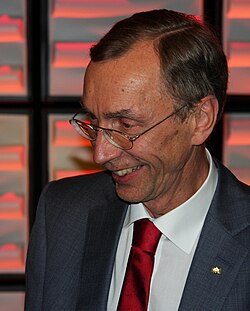
Mapping the Ancient Human Genome
Pääbo's career is defined by a series of landmark achievements in sequencing ancient DNA. In 1997, he and his team successfully sequenced mitochondrial DNA (mtDNA)—the genetic material found in mitochondria—from a Neanderthal specimen discovered in the Feldhofer grotto of the Neander valley.
His research expanded into the functional aspects of genetics in 2002, when his department published findings on FOXP2, often referred to as the "language gene," which is mutated in some individuals with language disabilities. This set the stage for his most ambitious project: the reconstruction of the entire Neanderthal genome.
In February 2009, at the AAAS Annual Meeting in Chicago, it was announced that the Max Planck Institute for Evolutionary Anthropology had completed the first draft of the Neanderthal genome. This massive undertaking, conducted with the 454 Life Sciences Corporation, involved sequencing over 3 billion base pairs.
The Discovery of the Denisovans
In March 2010, Pääbo's team analyzed a finger bone from the Denisova Cave in Siberia. The results revealed a previously unknown member of the genus Homo, termed the Denisova hominin. During this research, Pääbo identified a single amino acid substitution in the TKTL1 gene in Neanderthals compared to modern humans, a change that likely influenced neuronal development and brain structure.
Interbreeding and Human Heritage
A draft sequence of the Neanderthal genome published in Science in May 2010 provided evidence that Neanderthals and Eurasian humans (excluding Sub-Saharan Africans) interbred. This genetic admixture is estimated to have occurred roughly 50,000 to 60,000 years ago in the Middle East, a theory that has since gained mainstream scientific support.
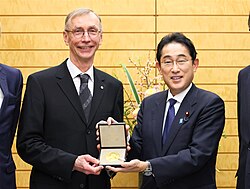
Modern Implications and Legacy
Pääbo's work continues to impact modern medicine. In 2020, he and Hugo Zeberg of the Karolinska Institutet published a study in Nature linking certain genetic variants at chromosomal region 3—inherited from European Neanderthals—to a higher risk of severe COVID-19 symptoms and hospitalization.
Beyond the lab, Pääbo shared his journey in the 2014 book Neanderthal Man: In Search of Lost Genomes, blending memoir with popular science to explain the effort to map ancient genomes.
Key Facts
- Field Founder: One of the founders of paleogenetics.
- Major Achievement: Sequenced the first draft of the Neanderthal genome (over 3 billion base pairs).
- New Species: Identified the Denisova hominin via DNA analysis of a finger bone.
- Human Evolution: Provided evidence of interbreeding between Neanderthals and Eurasian humans 50,000–60,000 years ago.
- Medical Link: Associated Neanderthal genetic heritage at chromosomal region 3 with increased COVID-19 severity.
- Top Honor: Awarded the 2022 Nobel Prize in Physiology or Medicine.
| Year | Milestone / Achievement | Significance |
|---|---|---|
| 1997 | Sequenced Neanderthal mtDNA | First successful sequencing of Neanderthal mitochondrial DNA |
| 2002 | FOXP2 Research | Insights into the "language gene" and disabilities |
| 2009 | Neanderthal Genome Draft | Completed first draft of the full Neanderthal genome |
| 2010 | Denisovan Discovery | Identification of a new extinct human relative |
| 2022 | Nobel Prize | Recognized for sequencing the first Neanderthal genome |
Frequently Asked Questions
What is paleogenetics?
Paleogenetics is a scientific discipline that uses genetic analysis to study ancient species and early humans, allowing researchers to reconstruct the evolutionary history of extinct organisms.
How did Pääbo contribute to our understanding of Neanderthals?
Pääbo sequenced the first draft of the Neanderthal genome and discovered that Neanderthals interbred with Eurasian humans between 50,000 and 60,000 years ago.
Who are the Denisovans?
The Denisovans are an extinct member of the genus Homo, identified by Pääbo and his colleagues in 2010 through the DNA analysis of a finger bone found in Siberia's Denisova Cave.
Does Neanderthal DNA affect modern health?
Yes. Research by Pääbo and Hugo Zeberg found that certain genetic variants inherited from Neanderthals at chromosomal region 3 are associated with a higher risk of severe COVID-19.
What is the significance of the TKTL1 gene?
Pääbo showed that a single amino acid substitution in the TKTL1 gene in Neanderthals likely influenced neuronal development, potentially contributing to differences in brain structure between Neanderthals and Homo sapiens.