Sursock Museum: A Beacon of Modern and Contemporary Art in Beirut
Located in the heart of the Rmeil district, the Sursock Museum (officially the Nicolas Ibrahim Sursock Museum) stands as a premier destination for modern and contemporary art in Lebanon. More than just a gallery, the museum is housed in a stunning architectural landmark that reflects the rich cultural synthesis of Beirut.
Key Facts
- Established: 1961
- Location: Rue Sursock, Rmeil district, Beirut, Lebanon
- Founder: Nicolas Ibrahim Sursock
- Collection Size: Over 800 artworks from the 19th and 20th centuries
- Architectural Style: A blend of Italianate (Venetian) and Ottoman influences
- Recent Status: Reopened May 26, 2023, following restoration after the 2020 Beirut explosion
History and Architectural Heritage
The story of the museum begins in 1912, when Lebanese aristocrat Nicolas Ibrahim Sursock constructed a private villa. Driven by a passion for the arts, Sursock decreed in his will that the residence be transformed into a museum for the public. Following his death in 1952, the villa was bequeathed to the city of Beirut.
Before becoming a public museum, the building served a diplomatic purpose. Between 1953 and 1957, President Camille Chamoun utilized the villa as a palais des hôtes—a presidential guesthouse designed to host visiting heads of state, including King Faisal of Iraq and the Shah of Iran.
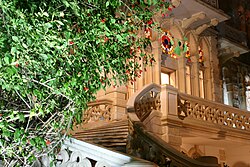
The museum officially opened its doors in 1961 under the direction of Amine Beyhum. By showcasing works from contemporary Lebanese artists, it established a vital precedent for cultural events in the capital. The building itself is a rare surviving example of its era's residential architecture in Beirut, blending Venetian and Ottoman styles.
Expansion and Modernization
To meet growing needs, the museum underwent a significant expansion project designed by French architect Jean-Michel Wilmotte and Lebanese architect Jacques Abou Khaled. This project, costing US$12 million, added four underground floors beneath the existing garden.
This expansion dramatically increased the museum's footprint from 1,500 square meters to 8,500 square meters. The new facilities include:
- Additional exhibition spaces and a research library
- An auditorium and a specialized restoration workshop
- Enhanced storage for the permanent collection
- A restaurant and a museum store
The expanded facility reopened to the public on October 8, 2015.
The Permanent Collection and Exhibitions
The Sursock Museum houses a diverse collection of over 800 artworks, spanning paintings, sculptures, and graphic arts from the 19th and 20th centuries. While it focuses heavily on modern and contemporary art, the collection also includes Islamic art and Japanese engravings.
The museum has hosted more than a hundred exhibitions, featuring a mix of local and international talent. Notable artists represented in the permanent collection include:
- Lebanese Artists: Chafic Abboud, Saloua Raouda Choucair, Paul Guiragossian, Hussein Madi, Omar Onsi, and Aref Rayess.
- International Artists: Kees van Dongen and others.
Past exhibitions have ranged from retrospectives of Moustafa Farroukh and Omar Onsi to international displays by Max Ernst and Cy Twombly, as well as thematic shows exploring ecology and the history of Beirut.
| Feature | Details |
|---|---|
| Official Name | Nicolas Ibrahim Sursock Museum |
| Primary Art Focus | Modern and Contemporary Art |
| Total Area | 8,500 square meters |
| Key Architectural Influences | Venetian and Ottoman |
| UNESCO Status | Enhanced protection (granted during 2024 conflict) |
Resilience and Restoration
On August 4, 2020, the museum suffered significant damage due to the catastrophic ammonium nitrate explosion in Beirut, which resulted in the destruction of some artworks. The path to recovery was supported by various donors, including a one-million-euro contribution from the Italian government in May 2021.
After extensive restoration, the museum reopened on May 26, 2023. In response to the 2024 Israeli invasion of Lebanon, UNESCO granted enhanced protection to the museum as one of 34 critical cultural sites to safeguard it from further damage.
Frequently Asked Questions
Who founded the Sursock Museum?
The museum was founded by Nicolas Ibrahim Sursock, who built the villa in 1912 and bequeathed it to the city of Beirut in his will to be used as a museum.
What architectural styles are present in the building?
The building is a prime example of Lebanese architecture, featuring a blend of Ottoman and Italianate (specifically Venetian) influences.
How large is the museum's collection?
The permanent collection consists of over 800 artworks, including paintings, sculptures, and graphic arts from the 19th and 20th centuries, as well as Islamic art and Japanese engravings.
What happened to the museum during the 2020 Beirut explosion?
The museum sustained significant structural damage and lost some of its artworks. It underwent a restoration process funded by various donors and reopened on May 26, 2023.
What was added during the museum's expansion?
The expansion added four underground floors, increasing the area to 8,500 square meters and adding a research library, auditorium, restoration workshop, and new exhibition spaces.