Beirut Downtown: The Heart of Lebanon's Capital
Beirut Downtown, also known as the Beirut Central District (BCD), serves as the economic, cultural, and political nucleus of Lebanon's capital. Spanning 191 hectares (470 acres), this area has undergone one of the most ambitious urban redevelopment projects of the late 20th century. Following the devastation of the Lebanese Civil War, the government approved a master plan in March 1994, leading to the formation of Solidere on May 5, 1994. This company was tasked with the reconstruction and development of the district, transforming it into an integrated business and commercial hub.
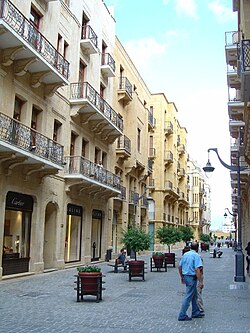
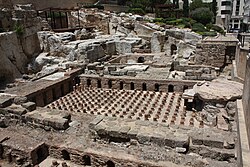
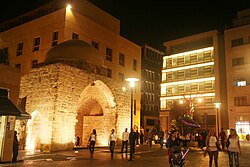
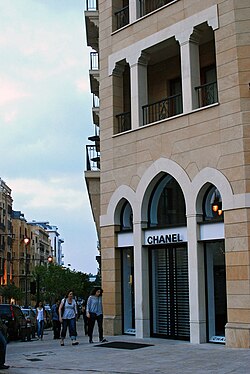
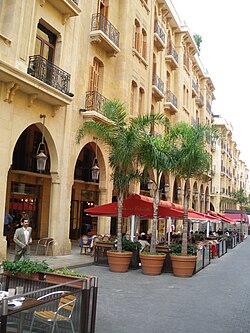
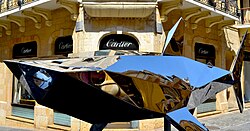
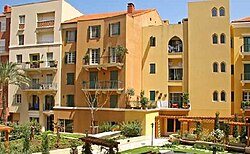
Today, the BCD is a blend of modern luxury and ancient history, where high-end boutiques and skyscrapers coexist with Roman ruins and historic religious sites.
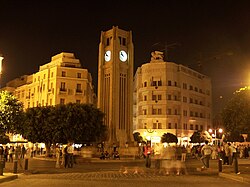
Key Facts
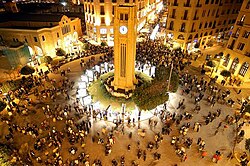
- Total Area: 191 hectares (470 acres).
- Population: Approximately 40,000 residents.
- Public Space: The BCD contains 50% of all public spaces in Beirut, despite occupying only 10% of the city's total area.
- Open Spaces: Over 60 gardens, squares, and pedestrian areas totaling 96 acres.
- Key Developer: Solidere, the company responsible for the district's post-war reconstruction.
Civic Institutions and Governance
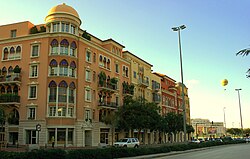
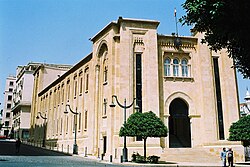
The district is the seat of Lebanese political power and administration. The Grand Serail is a primary landmark, serving as the Prime Minister's residence and office. Reconstructed in 1998 after severe war damage, the building covers 39,700 square meters and is characterized by its 588 arches and arcades surrounding a central limestone and Carrera marble fountain.
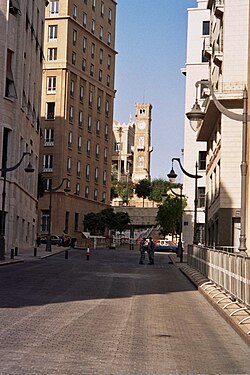
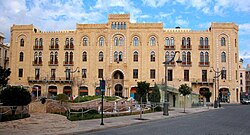
Other critical civic institutions located here include the Lebanese Parliament House, Beirut City Hall, and various ministries, including the Ministry of Finance, Ministry of Transportation, and the Ministry of Culture and Higher Education.
Public Squares and Memorials
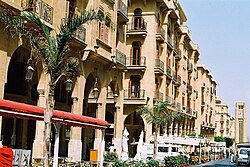
The BCD is defined by its expansive public spaces, which serve as both leisure areas and sites of political expression.
Martyrs' Square
The largest and most historically significant square in the district, Martyrs' Square was originally called "Place des Canons" during the Ottoman era. It earned its current name after Lebanese nationalists were executed there on May 19, 1916, during World War I. The square is home to the iconic bullet-riddled "Martyrs' Statue" and the old opera house. It remains the center of Lebanon's political life, notably serving as the focal point for the 2005 Cedar Revolution.
Rafik Hariri Memorial Garden
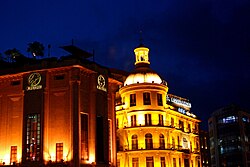
Located in the Saint George Bay neighborhood, this 700-square-meter garden honors former Prime Minister Rafik Hariri and 22 other victims of the February 14, 2005, car bombing. The memorial features a 6-meter bronze statue of Hariri and a clock that emits church bells and the Islamic call to prayer every day at 12:55 p.m., the exact time of the assassination.
Religious Diversity and Architecture
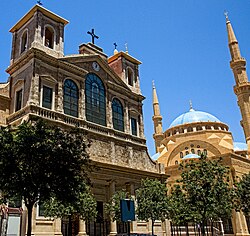
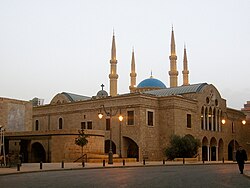
Beirut Downtown is a testament to Lebanon's religious pluralism, with mosques and cathedrals often standing side-by-side.
Islamic Landmarks
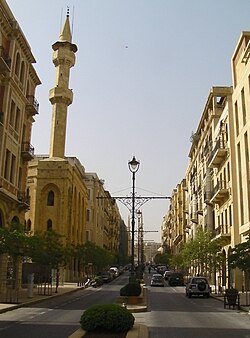
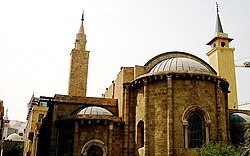
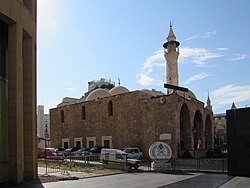
The Mohammad Al-Amin Mosque is one of the most recognizable structures in the city. Completed in 2007, it features yellow ochre stone, blue domes, and 72-meter-high minarets, drawing inspiration from the Sultan Ahmed Mosque in Istanbul. Other notable sites include the Al-Omari Grand Mosque and the Amir Assaf Mosque.
Christian Landmarks
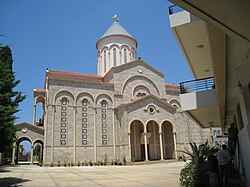
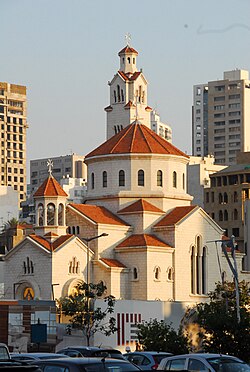
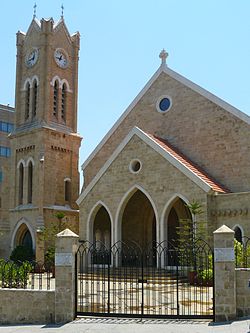
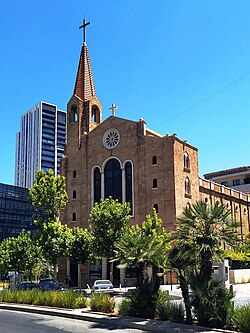
The Saint George Greek Orthodox Cathedral, completed in 1772, is the oldest orthodox church in Beirut. Excavations beneath the cathedral revealed remains of three other churches and Roman colonnades, which are now housed in an underground museum. Other significant sites include the Saint George Maronite Cathedral, the National Evangelical Church of Beirut (the first native Arabic Protestant congregation in the Middle East), and the Saint Elias Greek Catholic Cathedral.
Culture, Arts, and Leisure
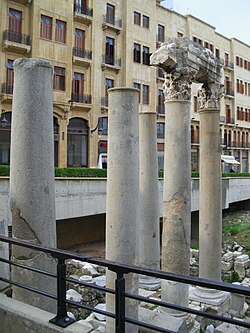
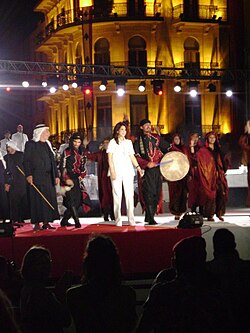
The district is a hub for the arts, featuring the Conservatoire Libanais, which hosts the Lebanese National Symphony Orchestra and over 4,800 students. Visitors can explore the Robert Mouawad Private Museum or walk through the Roman Baths Garden to see ancient ruins.
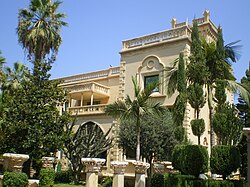
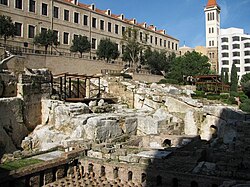
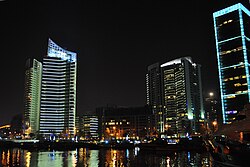
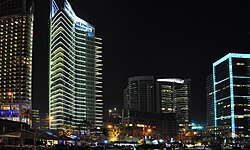
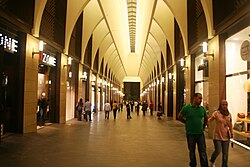
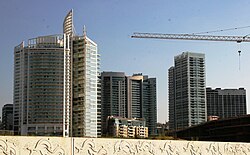
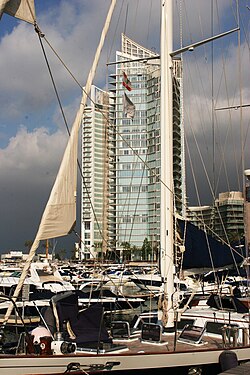
For shopping and dining, the Beirut Souks and the Saifi neighborhood offer a mix of traditional charm and modern luxury. The Zaitunay Bay area provides a contemporary waterfront experience with high-rise towers and a marina.
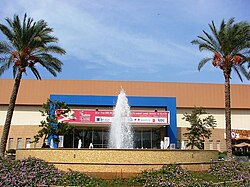
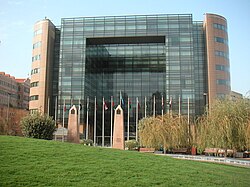
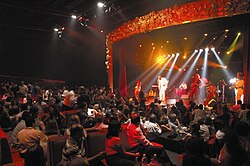
The Beirut International Exhibition & Leisure Center (BIEL) is the district's premier event venue, offering 82,000 square meters of multi-functional space, including a grand ballroom and a capacity for up to 20,000 standing attendees for concerts.
District Summary
| Category | Details |
|---|---|
| Total Area | 191 ha (470 acres) |
| Population | 40,000 |
| Key Developer | Solidere |
| Major Square | Martyrs' Square |
| Primary Government Site | Grand Serail |
| Waterfront Hub | Zaitunay Bay |
Frequently Asked Questions
What is Solidere?
Solidere is the Lebanese company established on May 5, 1994, specifically for the development and reconstruction of the Beirut Central District following the Lebanese Civil War.
Why is Martyrs' Square significant?
It is a symbol of Lebanon's modern history, named after nationalists executed there in 1916. It has since become the primary site for political demonstrations and the 2005 Cedar Revolution.
What can be found at the Saint George Greek Orthodox Cathedral?
Beyond the cathedral itself, the site features an underground museum containing the remains of three earlier churches and ancient Roman colonnades.
What is the capacity of the BIEL center?
The Beirut International Exhibition & Leisure Center can accommodate 9,000 seated persons or up to 20,000 standing persons for music concerts.
How much of Beirut's public space is in the Downtown area?
Despite making up only 10% of the city's total area, the Beirut Central District contains 50% of the entire city's public spaces, including over 60 gardens and squares.