Surrealism: The Art of the Unconscious and the Marvellous
Surrealism is one of the most influential avant-garde movements of the 20th century, seeking to bridge the gap between the rational world and the untapped potential of the unconscious mind. Emerging from the ashes of Dada, Surrealism transformed how we perceive reality, dreams, and the human psyche, leaving an indelible mark on visual arts, literature, film, and philosophy.
While the term "Surrealism" was first coined by Guillaume Apollinaire in 1917, the movement was officially codified in October 1924. This occurred when André Breton published the Surrealist Manifesto, successfully claiming the movement's identity over a rival faction led by Yvan Goll.
![Yvan Goll, Surréalisme, Manifeste du surréalisme,[30] Volume 1, Number 1, 1 October 1924, cover by Robert Delaunay](/images/dd/8f/dd8f72453b8de30318662b45e59ae6cb3007620cd00726896331e32efc5440f2.jpg)
Key Facts
- Origin: Officially established in Paris, France, in 1924.
- Core Philosophy: The exploration of the unconscious, dreams, and the "marvellous."
- Key Figures: André Breton, Salvador Dalí, René Magritte, Max Ernst, Leonora Carrington, and Meret Oppenheim.
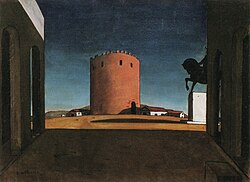
- Influences: Rooted in Symbolism, Abstract art, Metaphysical painting, and Dada.
- Legacy: Paved the way for Abstract Expressionism, Fantastic art, and Postmodernism.
The Foundations of Surrealist Thought
At its heart, Surrealism was more than an artistic style; it was a revolutionary way of thinking. The movement drew heavily from psychoanalysis—the study of the unconscious mind—and the belief that the rational mind repressed the true essence of human desire and creativity.
Automatism and the Unconscious
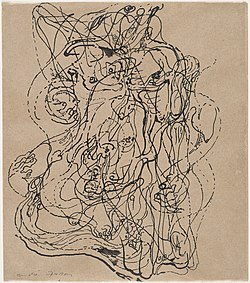
One of the primary techniques developed by the Surrealists was automatism, a process of creating art or writing without conscious control. By allowing the hand to move randomly across a page, artists hoped to bypass the "filter" of reason and access the raw imagery of the subconscious.
The Paranoiac-Critical Method
Later, Salvador Dalí introduced the paranoiac-critical method. Unlike the passive nature of automatism, this was a spontaneous method of irrational knowledge based on the critical and systematic objectivity of the associations and interpretations of delirious phenomena.
Surrealism in the Visual Arts
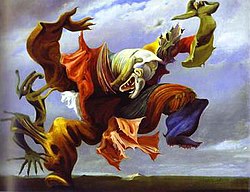
Although there was initial debate over whether Surrealism could be applied to painting, artists like Joan Miró and André Masson proved its viability in 1924. The first official exhibition, La Peinture Surrealiste, took place at Galerie Pierre in Paris in 1925, featuring works by Man Ray, Paul Klee, and others.
Surrealist art often utilized collage and montage—techniques inherited from Dada—to juxtapose unrelated objects in jarring, dreamlike settings. This created a sense of "convulsive beauty" and "objective chance," where the accidental meeting of two distant realities sparked a new poetic meaning.
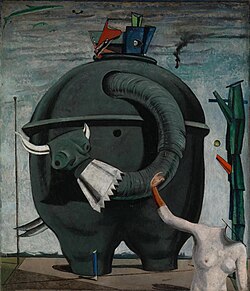
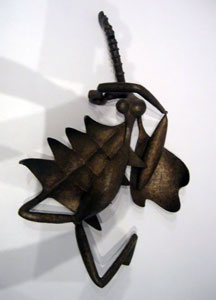
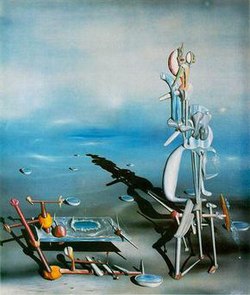
The movement also explored the concept of the "bizarre object," where everyday items were repurposed to challenge the viewer's perception of utility and reality.
Expansion into Other Media
Surrealism quickly expanded beyond the canvas, infiltrating cinema, photography, and theatre. Surrealist films often abandoned linear narratives in favor of shocking, non-sequitur imagery designed to mimic the logic of a dream.
Notable Surrealist Films
- Entr'acte by René Clair (1924)
- L'Étoile de la mer by Man Ray (1928)
- Un Chien Andalou by Luis Buñuel and Salvador Dalí (1929)
- L'Âge d'Or by Buñuel and Dalí (1930)
- The Blood of a Poet by Jean Cocteau (1930)
Global Reach and Lasting Influence
From its center in Paris, Surrealism spread globally, impacting political thought, social theories, and cultural practices. Even after the death of André Breton in 1966, the spirit of the movement persisted. While the original Paris group disbanded in 1969, new groups emerged, and the Group of Czech-Slovak Surrealists continues to publish their journal, Analogon, to this day.
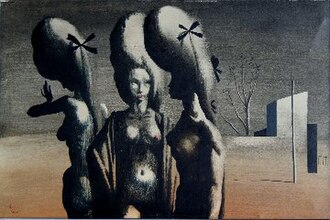
The movement's legacy is evident in the rise of Postmodernism and popular culture, as well as the development of AfroSurrealism and various forms of psychedelic art.
| Category | Details |
|---|---|
| Active Period | 1920s–1950s (and beyond) |
| Primary Hub | Paris, France |
| Key Techniques | Automatism, Collage, Paranoiac-Critical Method |
| Major Influences | Dada, Symbolism, Psychoanalysis |
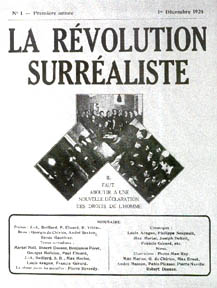
| Key Publications | Surrealist Manifesto (1924), La Révolution surréaliste |
Frequently Asked Questions
Who founded Surrealism?
While the term was coined by Guillaume Apollinaire, the movement was officially established by André Breton through the publication of the Surrealist Manifesto in 1924.
What is the difference between Dada and Surrealism?
Dada was primarily a movement of negation and anti-art, reacting to the horrors of World War I. Surrealism evolved from Dada but was more constructive, focusing on the exploration of the unconscious mind and the synthesis of dream and reality.
What is "automatic drawing"?
Automatic drawing is a technique where the artist allows their hand to move randomly across the paper without a conscious plan, intending to reveal imagery directly from the subconscious.
How did Surrealism influence cinema?
Surrealism introduced non-linear storytelling, dream-logic sequences, and shocking imagery to film, as seen in the collaborations between Luis Buñuel and Salvador Dalí.
Is Surrealism still active today?
Yes. While the original Paris group disbanded, various surrealist groups continue to exist worldwide, including the Group of Czech-Slovak Surrealists and the current Surrealist Group of Paris.