Surfing Water Terminology: A Comprehensive Glossary of Wave and Ocean Conditions
For anyone stepping into the ocean for the first time, the language of surfing can seem as turbulent as the water itself. From the way the wind shapes a wave to the specific anatomy of a breaking swell, understanding these terms is essential for safety, communication, and improving your performance in the water.
At its core, surfing is a dance between the energy of a distant storm and the geography of the coastline. When that energy reaches the shore, it transforms into the rideable waves we see at the beach.
Key Facts
- Offshore winds are ideal for surfing as they groom the wave face and create glassy conditions.
- Onshore winds typically result in choppy, messy waves that are less desirable for surfing.
- The pocket is the steepest part of the wave and the primary zone for generating speed.
- Swells are series of waves generated by distant storms that break upon reaching shallow water.
- Point breaks occur at rocky points, while beach breaks occur over sandbars.
The Anatomy of a Wave
To ride a wave effectively, you must understand its structure. A wave is not a single wall of water, but a complex shape with distinct sections.
The Top and Face
The crest is the highest point of the wave just before it breaks, also known as the peak. The face is the forward-facing surface that the surfer rides. When a wave is unbroken, this area is referred to as green or the shoulder.
The Break and the Barrel
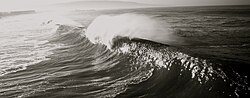
The curl is the specific portion of the wave that falls over as it breaks. When a large wave rolls over completely, it can create a barrel (also called a tube, cave, or green room), enclosing the surfer in a temporary horizontal tunnel of air. The whitewater, or "soup," is the ridge of turbulence and foam that remains after the wave has broken.
The Power Zone
The pocket is the area closest to the curl or whitewash. Known as the energy zone, this is the steepest part of the wave and where surfers go to generate maximum speed. The wall is the section of the face extending from the shoulder to the breaking part, providing the space for maneuvers.
Understanding Ocean Conditions
Not all waves are created equal. The quality of a surf session depends heavily on the wind, the seafloor, and the type of swell.
Wind Influence
Wind is the primary factor in determining if the water is glassy (extremely smooth) or choppy (rough surface caused by cross winds). Offshore wind blows from the land toward the ocean, holding up the wave face and creating clean, longer rides. Conversely, onshore wind blows from the ocean toward the shore, often leaving the waves blown out and messy.
Types of Breaks
Where a wave breaks depends on the bottom (the ocean floor). A beach break occurs on sandbars near the shore, while a point break occurs where an underwater rocky point shapes the wave. An A-Frame is a specific peak shape that allows a surfer to go either left or right with a clean shoulder on both sides.
Swell and Set Dynamics
A swell is a series of waves traveling from a distant storm. Within a swell, you will find set waves, which are groups of larger waves. An exceptionally large set wave is called a bomb, while an unusually hard-breaking wave is known as a pounder.
Navigating the Water
Getting to the waves requires navigating currents and positioning yourself correctly in the water.
Currents and Channels
A channel is a deep spot in the shoreline where waves generally do not break, often created by a riptide—a strong offshore current that pulls water back to sea. While dangerous for swimmers, surfers use channels to paddle out. Undertow refers to the under-current moving offshore as waves approach the beach.
Positioning
The line-up is the area where surfers queue and wait for waves to break. The outside refers to any point seaward of the normal breaking zone. When the ocean has no waves at all, it is described as flat.
Surf Terminology Summary
| Category | Term | Definition |
|---|---|---|
| Wind | Offshore | Wind from land to sea; creates clean, glassy waves. |
| Wind | Onshore | Wind from sea to land; creates choppy, messy waves. |
| Wave Part | The steepest, most powerful part of the wave. | |
| Wave Part | Barrel | A hollow tunnel formed by a rolling wave. |
| Location | Point Break | Waves breaking along a rocky point. |
| Location | Beach Break | Waves breaking over sandbars. |
| Condition | Close-out | A wave that breaks all at once across its entire face. |
Frequently Asked Questions
What is the difference between a beach break and a point break?
A beach break occurs when waves break over sandbars on the ocean floor, whereas a point break occurs when waves hit an underwater rocky point, causing them to wrap around and break more consistently along the shoreline.
Why is offshore wind preferred by surfers?
Offshore wind blows from the land toward the ocean, which "grooms" the waves. This holds up the wave face, prevents it from collapsing too quickly, and creates a smooth, glassy surface.
What does it mean when a wave is "closed-out"?
A close-out happens when a wave breaks at every position along its face simultaneously. Because there is no open shoulder to ride, these waves cannot be surfed.
What is the "pocket" of a wave?
The pocket is the area of the wave closest to the curl or whitewash. It is the steepest part of the wave and the energy zone where surfers can generate the most speed.
What is a riptide and how do surfers use it?
A riptide is a strong offshore current caused by tide water flowing out to sea. Surfers often use the channels created by these riptides to paddle out to the line-up without having to fight through breaking waves.