Supreme Court of New Jersey
The Supreme Court of New Jersey serves as the highest judicial authority in the state, operating under the mandate of the New Jersey State Constitution. Guided by its motto, "Independence. Integrity. Fairness. Quality Service," the court ensures the consistent application of law across the state's jurisdiction. Based in the Richard J. Hughes Justice Complex, the court acts as the final arbiter on state legal matters, with appeals moving only to the Supreme Court of the United States on specific questions of federal constitutional or statutory law.
The court's current structure was established in 1947, replacing the New Jersey Court of Errors and Appeals. While it now stands as the pinnacle of the state's legal system, its history is marked by significant evolution across three different state constitutions since 1776.
![The official seal of the Supreme Court, as included in certificates granted to attorneys approved by the Board on Attorney Certification in one of several specialist areas.[7]](/images/46/dc/46dc47dc9aaee82fae7d757889c09aa05ab4e25361657af869479fc8e0fe2a67.png)
Key Facts
- Composition: 7 justices, including the Chief Justice.
- Appointment: Executive appointment by the Governor with legislative confirmation by the State Senate.
- Tenure: Initial term of 7 years, with subsequent service until the mandatory retirement age of 70.
- Chief Justice: Stuart Rabner (since June 29, 2007).
- Jurisdiction: Hears appeals from the Appellate Division and select direct cases by court order.
Evolution of the Court
The role of the "Supreme Court" in New Jersey has shifted dramatically over time. Under the constitutions of 1776 and 1844, the Supreme Court was actually an intermediate court, similar in function to the current New York Supreme Court, rather than the highest court in the land.
The 1776 Constitution and Early Precedents
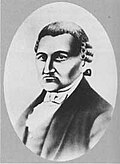
The foundation of judicial review—the power of a court to determine the constitutionality of a law—was established in New Jersey through the case of Holmes v. Walton (decided 1780). Chief Justice David Brearley's opinion in this case asserted the court's authority to evaluate constitutionality, predating the famous U.S. Supreme Court decision in Marbury v. Madison.
The 1947 Constitution
The current form of the court was solidified in 1947. Today, the court exercises jurisdiction as a matter of right if a case involves a question of constitutionality or if an Appellate Division judge dissented from a ruling. Additionally, the court may grant certification, allowing it to hear cases at its own discretion.
Membership and Judicial Administration
The court consists of seven positions. By tradition, a partisan balance is maintained, often allowing the sitting governor to ensure their political party holds a one-seat advantage. This balance frequently influences the selection of the Chief Justice and associate justices.
Judges are prohibited from practicing law or earning outside income while on the bench. Their salaries are protected and cannot be decreased during their tenure. The current Chief Justice, Stuart Rabner, is scheduled to conclude his lead position on June 30, 2030.
| Name | Role | Appointed By | Party | Mandatory Retirement |
|---|---|---|---|---|
| Stuart Rabner | Chief Justice | Jon Corzine | Democratic | June 30, 2030 |
| Anne M. Patterson | Associate Justice | Chris Christie | Republican | April 15, 2029 |
| Fabiana Pierre-Louis | Associate Justice | Phil Murphy | Democratic | September 9, 2050 |
| Rachel Wainer Apter | Associate Justice | Phil Murphy | Democratic | July 22, 2050 |
| Douglas M. Fasciale | Associate Justice | Phil Murphy | Republican | November 5, 2030 |
| Michael Noriega | Associate Justice | Phil Murphy | Democratic | March 27, 2048 |
| John Jay Hoffman | Associate Justice | Phil Murphy | Independent | August 23, 2035 |
Landmark Legal Rulings
The Supreme Court of New Jersey has a history of expansive interpretations regarding individual rights and social obligations.
Individual and Civil Rights
- Civil Rights: In Clover Hill Swimming Club, Inc. v. Robert F. Goldsboro (1966), the court ruled against a private club that denied membership to an African-American applicant despite public advertising.
- Privacy: In State ex rel. T. L. O. (1983), the court initially found a warrantless search of a student's purse unreasonable, though this was later reversed by the U.S. Supreme Court.
- Family Law: The 1988 In re Baby M case established that a surrogate mother was entitled to visitation rights.
- Equality: The 2006 Lewis v. Harris decision mandated that the state provide equal protection to same-sex couples, eventually leading to the legalization of same-sex marriage in the state.
Social and Political Impact
One of the court's most enduring legacies is the Mount Laurel Doctrine, stemming from two cases (1975 and 1983). This doctrine requires zoning authorities to implement inclusionary zoning to ensure the creation of affordable housing, declaring exclusionary zoning illegal.
In the realm of criminal law, State v. Kelly (1984) was pivotal in allowing expert testimony on "battered woman syndrome," recognizing it as a valid subject for evidence in murder trials.
Frequently Asked Questions
How is a Justice appointed to the New Jersey Supreme Court?
Justices are appointed by the Governor of New Jersey and must be confirmed by the State Senate.
What is the mandatory retirement age for New Jersey Justices?
Justices must retire upon reaching the age of 70.
What is the Mount Laurel Doctrine?
It is a legal requirement established by the court that mandates municipalities to provide a realistic opportunity for the construction of affordable housing through inclusionary zoning.
Can a Justice's salary be reduced while they are in office?
No, the salary of judges may not be decreased once they have taken office.
What happens after a Justice's initial seven-year term expires?
Traditionally, the Governor re-submits the Justice for tenure to allow them to continue serving until the mandatory retirement age.