Sunflower Seeds: Nutrition, Production, and Global Uses
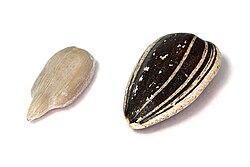
The sunflower seed, harvested from the Helianthus annuus plant, is a versatile crop valued globally for its nutritional density and industrial utility. While commonly referred to as a seed, it is botanically classified as a cypsela—a dry, single-seeded fruit. When the outer shell, or pericarp, is removed, the edible interior is known as the sunflower kernel or heart.
There are three primary varieties of sunflower seeds used commercially: linoleic (the most common), high oleic, and sunflower oil seeds. These varieties differ primarily in their concentrations of saturated, monounsaturated, and polyunsaturated fats.
Key Facts
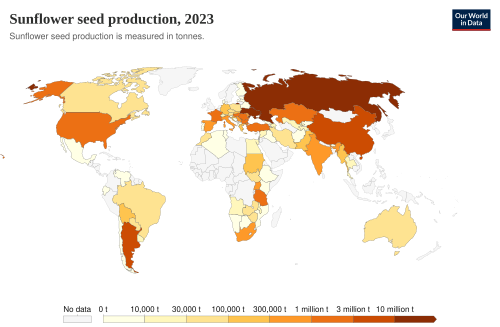
- Global Production: Russia and Ukraine are the dominant producers, accounting for 51% of the world's total output.
- Nutritional Powerhouse: Exceptionally rich in Vitamin E (234% DV) and Copper (200% DV).
- Commercial Types: Black oil seeds are typically used for oil extraction, while striped seeds are primarily used for confectionery snacks.
- Health Components: Contains phytosterols, which may help lower blood cholesterol levels.
Global Production and Varieties
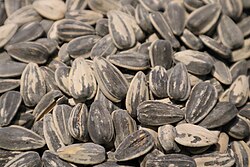
Sunflower seed production is concentrated in a few key regions. In 2022, global production reached 54 million tonnes. The industry distinguishes between seeds based on their husk patterns: solid black husks indicate oilseed sunflower crops, whereas striped husks indicate confectionery seeds intended for direct consumption.
The following table outlines the leading producers of sunflower seeds based on FAOSTAT data.
| Country | Production (Million Tonnes) |
|---|---|
| Russia | 16.4 |
| Ukraine | 11.3 |
| Argentina | 4.1 |
| China | 2.9 |
| Turkey | 2.6 |
| Bulgaria | 2.1 |
| Romania | 2.1 |
| France | 1.8 |
| Kazakhstan | 1.3 |
| Hungary | 1.3 |
| World Total | 54.3 |
Culinary Uses and Consumption
Sunflower seeds are consumed in a wide variety of forms. In-shell seeds are popular street foods in Asian, Eastern European, and Mediterranean cultures, where they are often roasted and salted. In the United States, they are a common alternative to chewing tobacco for baseball players.
Beyond raw or roasted snacks, sunflower kernels are used in several specialized food products:
- Baked Goods: Dehulled kernels are added to breads for flavor and texture.
- Confections: Kernels are used in seed brittle or ground into a paste to make halva in countries like Russia, Ukraine, and Bulgaria.
- Sunflower Butter: A nut-free alternative to peanut butter, though it is important to note that rare sunflower seed allergies can occur.
- Animal Feed: They are a staple ingredient in commercial birdseed mixes.
Nutritional Profile
Dried sunflower seeds are nutrient-dense, consisting of approximately 51% fat, 21% protein, and 20% carbohydrates. They are particularly noted for their high levels of linoleic acid, a polyunsaturated fat.
Per 100g serving, sunflower seeds provide 584 kcal and are a significant source of several essential micronutrients. They offer over 20% of the Daily Value (DV) for protein, dietary fiber, and various B vitamins. Most notably, they provide 234% of the DV for Vitamin E and 200% for Copper.
Essential Minerals and Vitamins
The seeds are rich in minerals including magnesium (77% DV), manganese (85% DV), phosphorus (53% DV), and zinc (45% DV). These elements, combined with phytosterols, contribute to the overall health benefits of the seed.
Industrial Applications: Oil and Hulls
Sunflower Oil
Sunflower oil is extracted using high pressure or solvents like hexane. Linoleic sunflower oil is characterized by high polyunsaturated fatty acids (roughly 68% linoleic acid) and low saturated fats. The remaining protein-rich "cake" after oil extraction is repurposed as fuel, fertilizer, or livestock feed.
The Role of Hulls
The hulls are primarily composed of cellulose and decompose slowly, making them suitable for use as biomass fuel. However, they contain allelopathic compounds—substances that inhibit the growth of other plants. These compounds are toxic to most garden plants and grasses, though a few species, such as day lilies, remain unaffected.
Frequently Asked Questions
What is the difference between a sunflower seed and a kernel?
Botanically, the "seed" is actually a cypsela (the seed within its hull). The kernel, or heart, is the edible part that remains after the hull has been removed.
Are sunflower seeds a safe substitute for peanut butter?
Yes, sunflower butter is commonly used as a substitute for those with nut allergies, although rare allergies to sunflower seeds themselves can occur.
Which countries produce the most sunflower seeds?
Russia and Ukraine are the world's leading producers, together contributing 51% of the total global production as of 2022.
What are the health benefits of the fats in sunflower seeds?
Sunflower seeds are rich in monounsaturated and polyunsaturated fats, specifically linoleic acid. They also contain phytosterols, which may help in lowering blood cholesterol levels.
Can sunflower hulls be used in gardening?
Caution is advised, as sunflower hulls contain allelopathic compounds that are toxic to most grasses and garden plants, with few exceptions like day lilies.