Subtropical Climates: Geography, Classifications, and Characteristics
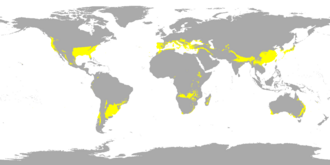
The subtropics are distinct geographic and climate zones that serve as a transition between the intense heat of the tropics and the cooler temperate regions. Generally located between the Tropic of Cancer and Tropic of Capricorn and the 40th parallel in both hemispheres, these regions are defined by specific temperature thresholds and precipitation patterns.
While typically associated with these latitudes, subtropical climates can also occur at high elevations within the tropics—such as the Ethiopian Highlands, the Mexican Plateau, and Da Lat in the Vietnamese Central Highlands. Additionally, maritime influences can push subtropical conditions beyond 45 degrees poleward along the coasts of Argentina and Northwest Europe.
Key Facts
- Location: Primarily between the Tropics and the 40th parallel, though altitude and ocean currents can shift these boundaries.
- Temperature: Defined by various systems, generally requiring at least one month to average below 18 °C (64.4 °F) to avoid being classified as tropical.
- Flora: Supports specific crops including citrus, mango, avocado, litchi, and date palms.
- Weather Patterns: Home to many of the world's deserts due to the subtropical ridge, as well as humid monsoon and Mediterranean regions.
Scientific Classifications of Subtropical Climates
Because climate is complex, scientists use different classification systems to define what constitutes a "subtropical" environment. Six major classifications utilize the term to categorize temperature and precipitation.
Trewartha and Köppen Classifications
The Trewartha climate classification defines the subtropics as regions where eight or more months of the year maintain an average temperature of 10 °C (50 °F) or higher. In contrast, the Köppen climate classification focuses on extremes: the warmest month must be above 22 °C (71.6 °F), and the coldest month must be above 0 °C (32 °F) or −3 °C (26.6 °F), depending on the specific preference used.
The Holdridge System and the Frost Line
Leslie Holdridge defined subtropical climates based on biotemperature (the mean annual temperature excluding values below 0 °C). In this system, subtropical climates have a mean annual biotemperature between 24 °C and the frost line (the critical temperature line), which typically ranges from 16 °C to 18 °C (often simplified to 17 °C).
The frost line is a vital biological boundary. Plants on the warmer side of this line are generally sensitive to low temperatures and can be killed by frost. Conversely, flora on the colder temperate side have evolved to survive cold periods, either as seeds (annuals) or as hardy perennial plants.
Arid Climate Distinctions
Wladimir Köppen also distinguished between different types of arid (dry) climates. He categorized hot or subtropical (semi-)arid climates (BWh or BSh) as having an average annual temperature of 18 °C (64.4 °F) or higher, separating them from cold or temperate (semi-)arid climates (BWk or BSk).
Environmental Characteristics and Biodiversity
The subtropics exhibit a wide variety of weather patterns depending on their proximity to oceans and atmospheric pressure systems.
- Deserts: A significant portion of global deserts are found here due to the subtropical ridge, a belt of high pressure that inhibits rainfall.
- Monsoon Regions: In areas like Northern Vietnam and Hanoi, the subtropics experience a distinct wet season during the summer.
- Mediterranean Regions: Unlike monsoon areas, these regions experience their wet season during the winter.
- Coastal Influence: Regions bordering warm oceans often receive heavy rainfall from tropical cyclones.
These diverse conditions support a variety of subtropical agriculture, most notably the cultivation of citrus fruits, mangoes, avocados, litchis, and date palms.
| Classification System | Primary Metric | Subtropical Threshold |
|---|---|---|
| Trewartha | Monthly Average | ≥ 10 °C (50 °F) for 8+ months |
| Köppen | Monthly Extremes | Warmest > 22 °C; Coldest > 0 °C or -3 °C |
| Holdridge | Biotemperature | Between 16 °C–18 °C and 24 °C |
| Köppen (Arid) | Annual Average | ≥ 18 °C (64.4 °F) for BWh/BSh |
Frequently Asked Questions
What is the difference between a tropical and a subtropical climate?
Under both the Köppen and Trewartha systems, a climate is considered tropical if it does not have at least one month with an average temperature below 18 °C (64.4 °F). Subtropical climates must have at least one such cooler month.
Can subtropical climates exist outside the standard latitudes?
Yes. They can occur at high elevations in tropical zones, such as the Ethiopian Highlands or the Mexican Plateau. They can also be found beyond 45 degrees poleward on the coasts of Argentina and Northwest Europe due to maritime influences.
What is the "frost line" in the Holdridge system?
The frost line is a critical temperature boundary (roughly 16 °C to 18 °C) that separates warm temperate regions from subtropical regions. It marks a physiological divide between plants that are sensitive to frost and those adapted to survive cold periods.
Why are so many deserts located in the subtropics?
Many deserts form in these regions because of the development of the subtropical ridge, a high-pressure atmospheric zone that typically suppresses precipitation.
Which plants thrive in subtropical zones?
Common plants grown in these regions include citrus fruits, mangoes, avocados, litchis, and date palms.