State Ownership: Models, Mechanisms, and Economic Impact
State ownership, often referred to as public or government ownership, occurs when a national government, state, or public body representing a community owns an industry, asset, property, or enterprise. This stands in contrast to private ownership, where assets are held by individuals or private parties. While often used interchangeably, public ownership specifically refers to industries that sell goods and services to consumers, distinguishing them from general government services funded by a public budget.
This form of ownership can exist at various levels—national, regional, local, or municipal—and may also be vested in autonomous public enterprises. In the broader landscape of economics, state ownership is one of three primary property forms, alongside private and collective (or cooperative) ownership.
Key Facts
- Scope: Can occur at national, regional, local, or municipal levels.
- SOEs: State-owned enterprises (SOEs) are commercial entities owned by government bodies in market or mixed economies.
- Processes: Nationalization transfers assets to central government; municipalization transfers them to local government.
- Corporatization: The act of turning public property into a state-owned enterprise.
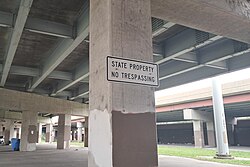
- Distinction: State ownership may refer to exclusive government use (e.g., a lab), while public property is generally available to all (e.g., a park).
State-Owned Enterprises (SOEs)
In market-based economies, state-owned assets are frequently managed as joint-stock corporations where the government holds a controlling stake or total ownership. These are known as state-owned enterprises. Depending on their purpose, an SOE may operate as a nonprofit corporation, a commercial entity in a competitive market, or a natural monopoly (a situation where one provider is more efficient than multiple competitors).
Governments may use profitable SOEs to supplement the general budget. In some cases, transforming government agencies into corporations—a process called corporatization—serves as a precursor to privatization. Economies with a high concentration of government-owned businesses are described as state capitalist economies.
State Ownership in Different Economic Systems
The role of state ownership varies drastically by economic ideology:
- Soviet-type Economies: State property was the dominant form of industry. The state held monopolies on land and natural resources, operating under a planned economy framework.
- Socialist Economies: Public ownership of the means of production is a subset of social ownership. In this context, the surplus generated by assets is intended to accrue to society as a social dividend rather than to private capital owners.
- Mixed Economies: State ownership is often used to promote industrialization or manage natural monopolies.
It is important to note that nationalization is not inherently socialist; it exists across various political systems for different reasons. Friedrich Engels noted that state ownership of commercial industry could represent the final stage of capitalism, as it does not automatically eliminate wage labor or capital accumulation.
Public Property vs. State Ownership
While the terms are related, there is a critical distinction between state ownership and public property. State ownership often refers to assets used exclusively by a specific government branch, such as a specialized research laboratory. In contrast, public property refers to resources owned by the state population that are available for general public use, such as public parks or open spaces.
Economic Theory and Criticism
Neoclassical economic theory uses contract theory to analyze whether state or private ownership is more desirable. The property rights approach, developed by Oliver Hart and colleagues, suggests that ownership is crucial because it determines how unforeseen contingencies are handled when contracts are incomplete.
Research by Hart, Shleifer, and Vishny (1997) suggests a trade-off: private ownership often provides stronger incentives to reduce production costs, but may result in lower quality. Conversely, state ownership may be superior depending on the investment technologies available. Further research by Besley and Ghatak (2001) indicates that if a private party (such as an NGO) values the public good more than the government does, that party should be the owner, regardless of technology.
| Ownership Type | Primary Controller | Typical Goal | Example |
|---|---|---|---|
| State Ownership | Government/Public Body | Public interest or budget support | State-owned utility company |
| Public Property | State (for the people) | General public access | Public park |
| Private Ownership | Individuals/Corporations | Profit maximization | Private retail store |
| Collective Ownership | Cooperatives/Members | Mutual benefit | Worker cooperative |
Frequently Asked Questions
What is the difference between nationalization and municipalization?
Nationalization is the process of transferring private or municipal assets to a central government or state entity. Municipalization is the transfer of private or state assets to a local municipal government.
Is state ownership always a sign of a socialist economy?
No. State ownership and nationalization can exist under many different political and economic systems. While it is a characteristic of socialist economies, it is also used in capitalist and mixed economies to manage monopolies or promote development.
What is a state-owned enterprise (SOE)?
An SOE is a commercial enterprise owned by a government entity. It can operate as a nonprofit, a competitive commercial business, or a natural monopoly.
How does public property differ from state ownership?
State ownership can refer to assets used exclusively by a government branch (like a lab), whereas public property refers to assets available for use by the general population (like a public park).
What is corporatization?
Corporatization is the process of transforming public property or government agencies into state-owned corporations, which sometimes serves as a step toward privatization.