State Dog Breeds of the United States
Across the United States, many states have chosen to honor the bond between humans and canines by designating an official state dog. While some states select breeds based on historical ties or indigenous origins, others use these designations to promote animal welfare and the adoption of shelter pets.
The tradition began in 1964 when Maryland became the first state to name a dog breed as a symbol, selecting the Chesapeake Bay Retriever. Pennsylvania followed shortly after in 1965 with the Great Dane. Since then, sixteen states have officially adopted specific breeds as their state symbols.
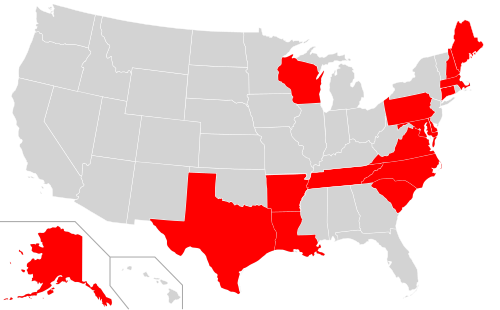
Key Facts
- Maryland was the first state to designate an official dog breed (1964).
- Indigenous breeds, such as the Plott Hound in North Carolina and the Boston Terrier in Massachusetts, are frequently chosen.
- Student-led campaigns were responsible for the designation of the Alaskan Malamute and the Chinook.
- Several states, including Colorado and California, have designated rescue dogs or shelter pets as their official state pets.
- New York chose a functional category, the "working dog," rather than a specific breed.
How States Choose Their Official Dogs
Indigenous and Historical Ties
Many states prioritize breeds that originated within their borders. For example, North Carolina chose the Plott Hound because it was the only breed indigenous to the state. Similarly, Massachusetts recognizes the Boston Terrier and Alaska recognizes the Alaskan Malamute.
In other cases, historical utility outweighs origin. Pennsylvania selected the Great Dane because early settlers used them as working and hunting dogs, choosing them over the Beagle during the selection process.
The Influence of Youth and Community
Some state dogs owe their status to the passion of schoolchildren. In 2010, the Alaskan Malamute became law following a campaign started by kindergarten student Paige Hill. That same year, elementary students from Bedford, New Hampshire, successfully campaigned for the Chinook to be named the state dog.
Alternative Designations and Failed Bids
Functional and Inclusive Symbols
Not every state opts for a specific breed. New York designated the working dog—animals trained for specific service roles—as its symbol in 2015. New Jersey followed a similar path by naming the Seeing Eye Dog as its official dog in 2019.
To encourage the adoption of animals from shelters, several states have designated rescue animals as their state pets. This movement began in Colorado in 2013 and was later adopted by Tennessee (2014), California (2015), Illinois (2017), Georgia (2018), and Delaware (2023).
Proposed and Rejected Breeds
The path to becoming a state symbol is not always easy. In 1991, Georgia's attempt to adopt the Golden Retriever failed in the State Senate, as an opposing campaign pushed for the Bulldog, the mascot of the University of Georgia. Similarly, Washington rejected the Siberian Husky in 2004.
Other unique proposals have emerged based on pop culture or local suggestions. In Kansas, residents proposed the Cairn Terrier in 2006 due to its role as "Toto" in The Wizard of Oz, though the bill was tabled in 2012.
Summary of Official State Dog Designations
| State | Dog Breed/Designation | Year |
|---|---|---|
| Maryland | Chesapeake Bay Retriever | 1964 |
| Pennsylvania | Great Dane | 1965 |
| Virginia | American Foxhound | 1966 |
| Louisiana | Catahoula Leopard Dog | 1979 |
| Massachusetts | Boston Terrier | 1979 |
| South Carolina | Boykin Spaniel | 1985 |
| Wisconsin | American Water Spaniel | 1985 |
| North Carolina | Plott Hound | 1989 |
| Texas | Blue Lacy | 2005 |
| New Hampshire | Chinook | 2009 |
| Alaska | Alaskan Malamute | 2010 |
| New York | Working dog | 2015 |
| Tennessee | Bluetick Coonhound | 2019 |
| Connecticut | Siberian Husky | 2024 |
| Arkansas | Labrador Retriever | 2025 |
| Maine | Seppala Siberian sleddog | 2025 |
Frequently Asked Questions
Which state was the first to name an official dog breed?
Maryland was the first state to do so, designating the Chesapeake Bay Retriever as its official state dog in 1964.
Do all states choose breeds native to their region?
No. While many states choose indigenous breeds, some choose based on history. For example, Pennsylvania chose the Great Dane because it was introduced by early settlers as a working dog, despite not originating there.
What is a "working dog" designation?
A working dog designation, used by New York, refers to animals trained for specific service roles rather than a single specific breed.
Why do some states designate "rescue dogs" as state pets?
States like California and Colorado have designated rescue dogs and cats as state pets specifically to promote the adoption of animals from shelters.
Has any state designated a wild canine as a state symbol?
Yes, South Dakota lists the coyote as its state wildlife animal, and Minnesota has seen multiple legislative proposals to adopt the eastern timber wolf as a state animal.