Starfish: Biology, Diversity, and Ecology of the Asteroidea
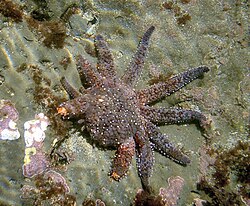
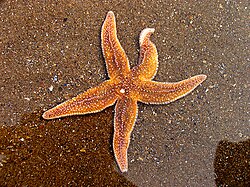
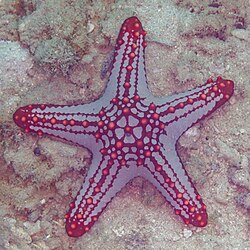
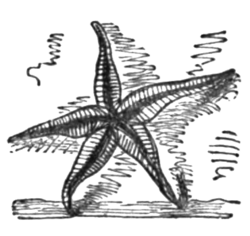
Starfish, also commonly known as sea stars, are fascinating marine invertebrates characterized by their star-shaped polygon bodies. Belonging to the class Asteroidea within the phylum Echinodermata, these creatures are found in every ocean on Earth. From the warm waters of tropical reefs to the freezing depths of polar regions, starfish occupy a vast range of habitats, spanning from the intertidal zone down to abyssal depths of 6,000 meters (20,000 feet).
While often confused with brittle stars or basket stars (ophiuroids), true starfish are distinct in their anatomy and biological functions. With over 1,900 known species, they play critical roles in maintaining the balance of marine ecosystems.

Key Facts
- Species Diversity: Over 1,900 species exist globally.
- Habitat: Found in all oceans, from shallow shores to 6,000 meters deep.
- Classification: Class Asteroidea, Phylum Echinodermata.
- Temporal Range: Present in the fossil record from the Ordovician period to the present.
- Unique Ability: High capacity for regeneration, including regrowing entire bodies from a single arm in some species.
Anatomy and Biological Systems
Body Structure and Water Vascular System
The starfish body is designed for a life on the seabed. One of their most distinctive features is the water vascular system, a hydraulic network used for locomotion, food and waste transportation, and respiration. This system powers the tube feet, which allow the starfish to adhere to surfaces and move with precision.
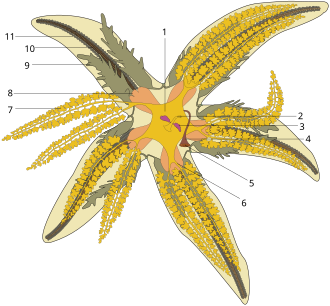
Digestive and Sensory Systems
Starfish possess a unique method of feeding. Some species can evert their stomach—pushing it outside their body—to digest prey externally. Their sensory capabilities include eyespots located at the tips of their arms, allowing them to detect light and movement.
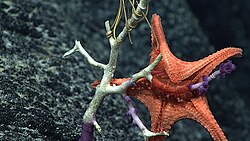
Life Cycle and Regeneration
Development and Reproduction
The life cycle of a starfish typically begins with a bilaterally symmetric larva, a stark contrast to the radial symmetry of the adult. These larval stages, such as the scaphularia, bipinnaria, and brachiolaria, drift in the ocean currents before settling and metamorphosing into the star-shaped adult form.
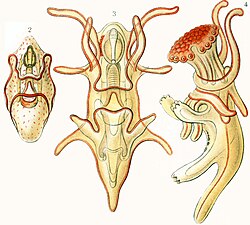
The Power of Regeneration
Starfish are renowned for their ability to regenerate lost limbs. In some cases, this process goes beyond simple repair; certain species can regrow an entire body from a single severed arm, a form of asexual reproduction.
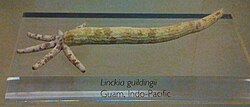
Diversity and Classification
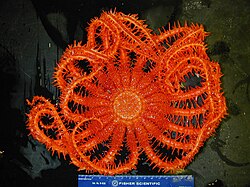
The class Asteroidea is divided into several orders, each with distinct characteristics. These range from the multi-armed Brisingida to the more common Forcipulatida.
| Order | Number of Families | Number of Genera | Number of Species |
|---|---|---|---|
| Valvatida | 16 | 172 | 695 |
| Paxillosida | 7 | 48 | 372 |
| Forcipulatida | 6 | 63 | 269 |
| Velatida | 4 | 16 | 138 |
| Spinulosida | 1 | 8 | 121 |
| Brisingida | 2 | 17 | 111 |
| Notomyotida | 1 | 8 | 75 |
Ecology and Human Interaction
Ecological Impact
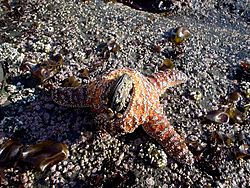
Many starfish are considered keystone species, meaning they have a disproportionately large effect on their environment. For example, by preying on mussels, certain starfish prevent a single species from dominating the intertidal zone, thereby increasing overall biodiversity.
Threats and Defense
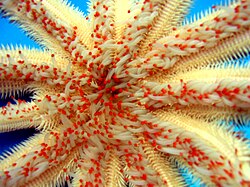
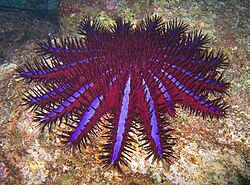
While they are formidable predators, starfish are also prey for animals like gulls. To defend themselves, some species utilize warning coloration to signal toxicity to potential predators.

Human Relations
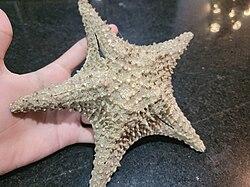
Humans interact with starfish in various ways. They are studied extensively in research, collected as souvenirs, and in some cultures, such as in China and Japan, they are prepared as food.


Evolutionary History
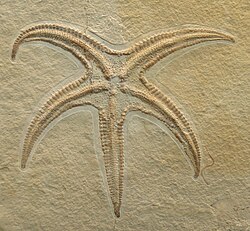
The fossil record shows that starfish have existed since the Ordovician period. Extinct groups, such as the Calliasterellidae from the Devonian and Carboniferous periods, provide insight into how these creatures evolved their complex body plans over millions of years.
Frequently Asked Questions
Are starfish actually fish?
No, starfish are not fish. They are marine invertebrates belonging to the phylum Echinodermata. They lack gills, scales, and fins, and they do not have a backbone.
How do starfish eat?
Starfish use a unique process where they can push their stomach out through their mouth to digest prey, such as mussels or coral, externally before pulling the nutrients back into their body.
Can a starfish really grow back from one arm?
Yes, some species possess extraordinary regenerative abilities that allow them to regrow a complete body from a single arm, provided a portion of the central disc is present.
What is a keystone species in the context of starfish?
A keystone species is one that maintains the structure of an entire ecosystem. Starfish act as keystone species by controlling the population of prey like mussels, which prevents those prey from overcrowding other species.
Where do starfish live?
They are found globally in all oceans, ranging from shallow intertidal zones to the deep sea, reaching depths of up to 6,000 meters.