Standard Chartered: A History of Global Expansion and Evolution
Standard Chartered stands as one of the world's most prominent international banking groups, with a legacy deeply rooted in the trade routes between Asia, Africa, and the West. Formed through the merger of two pioneering institutions, the bank has navigated over a century and a half of economic shifts, regulatory challenges, and strategic pivots to maintain its position in the global financial landscape.
The Foundations: Two Banking Legacies
The origins of the modern group lie in two distinct entities: the Chartered Bank and the Standard Bank.
The Chartered Bank
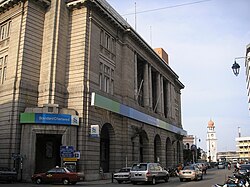
Established in 1853 after Queen Victoria granted a royal charter to Scotsman James Wilson, the Chartered Bank focused on the burgeoning markets of Asia. By 1858, it had opened branches in Bombay, Calcutta, and Shanghai, followed by Hong Kong and Singapore in 1859. The bank played a critical role in regional currency stability, beginning the issuance of banknotes denominated in Hong Kong dollars in 1862.
The Standard Bank
Founded in 1862 by John Paterson in the Cape Province of South Africa, the Standard Bank became a cornerstone of African development. It was instrumental in financing the Kimberley diamond fields starting in 1867 and later expanded to Johannesburg following the discovery of gold in 1885. At its peak, half of the output from the world's second-largest gold field passed through the bank on its way to London.
From 1883 to 1962, the institution operated as the Standard Bank of South Africa before rebranding to Standard Bank Limited in 1962, separating its South African operations into a distinct subsidiary.
The Merger and Strategic Shifts (1969–2000)
In 1969, the two banks merged to create a balanced global network, leveraging their strengths in Asia and Africa while expanding into Europe and the United States. However, the following decades were marked by volatility and restructuring.
In 1986, the group successfully defeated a hostile takeover bid from Lloyds. This event triggered a period of divestment, leading the bank to sell Union Bank to the Bank of Tokyo and United Bank of Arizona to Citicorp. During this time, Singaporean tycoon Khoo Teck Puat became a significant shareholder, eventually holding 13.4% of the bank's shares.
The 1990s brought significant regulatory and ethical hurdles. In 1992, the bank faced a scandal in Mumbai involving the illegal diversion of depositors' funds for stock market speculation, costing nearly £350 million. In 1994, reports emerged of bribery in Malaysia and the Philippines, and the Hong Kong Securities and Futures Commission banned the bank from underwriting IPOs for nine months due to illegal share price support.
By 1997, the bank sold its metals division, Mocatta Bullion and Base Metals, to Scotiabank for US$ 26 million, and eventually closed its Asian investment banking operations in 2000.
Aggressive Growth and Diversification (2000–2010)
The turn of the millennium saw a renewed focus on private banking and strategic acquisitions. In 2000, the acquisition of Grindlays Bank from ANZ expanded the bank's footprint in India and Pakistan.
Key expansions during this decade included:
- Indonesia: Partnering with Astra International to take over PermataBank, creating one of the group's largest branch networks.
- South Korea: Acquiring Korea First Bank in 2005, later rebranded as SC First Bank.
- Pakistan: Acquiring an 81% stake in the Union Bank of Pakistan in 2006 for $511 million.
- United States: Acquiring American Express Bank Ltd (AEB) for US$823 million in 2008.
In 2006, Temasek, the Singapore state-owned investment firm, became the largest shareholder after purchasing the stake held by the estate of the late Khoo Teck Puat.

Modern Era: Digital Transformation and Wealth Management
From 2010 onward, Standard Chartered shifted its focus toward strategic alliances and high-net-worth services. In 2010, it formed a partnership with the Agricultural Bank of China (ABC) and launched the first Indian Depository Receipt (IDR) offer.
Despite receiving accolades such as "Global Bank of the Year" in 2010, the bank faced internal challenges. In 2015, it exited the equity capital markets business and announced 15,000 job cuts following profit warnings. The bank also faced losses in the diamond and jewelry sector, with an estimated $1.7 billion in diamond debt remaining unpaid after a $400 million loss on risky loans.
Looking toward the future, the bank is embracing automation and fintech. In 2025, it entered a joint venture with Animoca Brands and Hong Kong Telecom to issue a HKD-backed stablecoin (a cryptocurrency pegged to the Hong Kong Dollar). By 2030, the bank plans to cut 7,000 jobs to make room for artificial intelligence. In March 2025, it launched an exclusive investment platform for ultra-high-net-worth clients, signaling a definitive pivot toward wealth management.
Key Facts
- Founded: 1853 (Chartered Bank) and 1862 (Standard Bank).
- Merger Year: 1969.
- Major Shareholders: Temasek (Singapore) became the largest shareholder in 2006.
- Key Markets: Strong historical and current presence in Asia, Africa, and the Middle East.
- Recent Pivot: Shifting focus toward wealth management and AI-driven operations.
| Year | Event | Impact/Detail |
|---|---|---|
| 1853 | Chartered Bank Founded | Royal charter granted by Queen Victoria. |
| 1862 | Standard Bank Founded | Established in South Africa by John Paterson. |
| 1969 | Merger | Chartered and Standard banks merge. |
| 2006 | Temasek Acquisition | Temasek becomes the largest shareholder. |
| 2012 | DFS Settlement | $340 million fine for Iran-related transactions. |
| 2025 | Stablecoin Venture | Joint venture for HKD-backed stablecoin. |
Money-Laundering and Regulatory Challenges
The bank has faced severe scrutiny from US regulators. In 2012, the New York Department of Financial Services (DFS) accused the bank of hiding $250 billion in transactions involving Iran. This resulted in a $340 million settlement and the installation of an independent monitor.
Further penalties followed in 2014, with a $300 million fine for compliance breaches in Hong Kong and the UAE. By 2019, the bank set aside approximately $1 billion to resolve ongoing investigations in the US and UK, including a $134 million penalty from the UK's Financial Conduct Authority.
Frequently Asked Questions
How was Standard Chartered formed?
Standard Chartered was formed in 1969 through the merger of the Chartered Bank (founded in 1853) and the Standard Bank (founded in 1862).
What is the bank's current strategic focus?
The bank is currently restructuring to focus on wealth management for ultra-high-net-worth clients and integrating artificial intelligence and automation into its operations.
Who is the largest shareholder of the bank?
Temasek, the Singapore state-owned private investment firm, became the largest shareholder in March 2006.
What were the major regulatory issues in 2012?
The New York Department of Financial Services accused the bank of hiding $250 billion in transactions involving Iran, leading to a $340 million fine and increased oversight.
Is Standard Chartered involved in cryptocurrency?
Yes, in February 2025, the bank established a joint venture with Animoca Brands and Hong Kong Telecom to issue a stablecoin backed by the Hong Kong Dollar (HKD).