Species at Risk Act: Protecting Canada's Biodiversity
The Species at Risk Act (SARA) is a cornerstone of Canadian federal legislation dedicated to the preservation of the nation's biological diversity. Enacted on December 12, 2002, this law serves as a primary mechanism for Canada to fulfill its commitments under the International Convention on Biological Diversity. Its overarching mission is to prevent wildlife species from disappearing by protecting endangered or threatened organisms and their critical habitats.
Beyond merely reacting to crises, SARA is designed to be proactive. It manages species that may not yet be threatened but whose existence or habitat is in jeopardy. By establishing a framework for cooperation between governments, organizations, and individuals, the Act ensures a coordinated effort to preserve biodiversity and imposes penalties for those who fail to comply with its regulations.
Key Facts
- Effective Date: December 12, 2002.
- Primary Goal: To prevent wildlife species from disappearing and protect their habitats.
- Assessment Body: COSEWIC, an independent committee of scientists and wildlife experts.
- Official List: Schedule 1 serves as the official List of Wildlife Species at Risk.
- Legal Framework: Includes the creation of Recovery Strategies for extirpated, endangered, or threatened species.
How Species are Identified and Listed
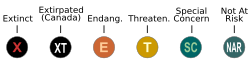
The process of identifying species at risk is a collaborative effort between scientific experts and government officials. The Act designates COSEWIC (the Committee on the Status of Endangered Wildlife in Canada) as the independent body responsible for assessing the conservation status of wildlife.
Once COSEWIC identifies a threatened species, it submits a report to the government. The Minister of the Environment then evaluates these recommendations to determine if a species should be added to Schedule 1—the official List of Wildlife Species at Risk—or if its current status should be updated. The final decision involves the Governor in Council and advice from the Cabinet.
Recovery Strategies and Implementation
When a species is officially listed as extirpated (locally extinct), endangered, or threatened, SARA mandates the creation of a Recovery Strategy. This document is developed by the federal government in consultation with Indigenous organizations, wildlife management boards, and relevant provincial and territorial governments.
A Recovery Strategy must include:
- An analysis of the major threats to the species and its habitat.
- Clearly defined population objectives.
- Broad outlines of the actions required to stop or reverse the decline of the species.
To ensure transparency, proposed strategies are posted on the Species at Risk Public Registry for public comment, typically for a period of 60 days. The strategy must be finalized within 30 days following the close of the comment period.
Legislative History and Modernization
SARA was introduced in the House of Commons by David Anderson, MP and Minister of the Environment, and passed through the Senate before receiving Royal Assent in late 2002. As environmental challenges evolve, the legislation is subject to updates. On March 31, 2022, the Canadian government moved to revamp the Act via Bill S-6, aiming to modernize amendments and remove outdated provisions.
| Detail | Information |
|---|---|
| Citation | S.C. 2002, c. 29 |
| Royal Assent Date | December 12, 2002 |
| Initiating Chamber | House of Commons of Canada |
| Key Assessment Body | COSEWIC |
| Official List | Schedule 1 |
Jurisdictional Challenges: The Western Chorus Frog Case
The implementation of SARA can sometimes lead to conflict between federal and provincial jurisdictions. A notable example occurred in July 2016 regarding the Western Chorus Frog, which had experienced a 90% decrease in its historical range by 2009.
The Government of Canada issued an emergency order to halt the development of a 2 km area on the South Shore of Montreal, Quebec, to protect the frog's habitat. This order stopped the construction of 171 approved residences. While the original plan had set aside 35.5 hectares for conservation, the federal intervention increased this protected area to 87 hectares. The Government of Quebec opposed this move, viewing it as an overstep of provincial jurisdiction.
Frequently Asked Questions
What is the main purpose of the Species at Risk Act?
The main purpose of SARA is to prevent wildlife species in Canada from disappearing by protecting endangered or threatened organisms and their habitats, as well as managing species that are not yet threatened but are at risk.
What is the role of COSEWIC?
COSEWIC is an independent committee of wildlife experts and scientists tasked with identifying threatened species and assessing their conservation status to provide recommendations to the government.
What happens after a species is listed as endangered or threatened?
The federal government must prepare a Recovery Strategy in consultation with provinces, territories, Indigenous organizations, and wildlife management boards to outline how to stop or reverse the species' decline.
How can the public participate in the recovery process?
Proposed Recovery Strategies are posted on the Species at Risk Public Registry, where the public is generally given 60 days to provide comments before the strategy is finalized.
What is Schedule 1?
Schedule 1 is the official List of Wildlife Species at Risk under the Species at Risk Act.