Spaghetti Westerns: The Evolution of a Cinematic Genre
The landscape of the Western film was irrevocably changed by the emergence of the Spaghetti Western—films produced primarily in Italy and Spain. While Sergio Leone's early work set the stage, the genre rapidly evolved from gritty tales of survival into diverse subgenres, ranging from political critiques to slapstick comedies. This evolution was driven by a handful of influential directors and actors who redefined the archetype of the American frontier hero.
Key Facts
- The Dollars Trilogy and Sergio Corbucci's Django were primary catalysts for the genre's growth.
- Bounty hunting became a dominant profession for protagonists following the success of For a Few Dollars More.
- Zapata Westerns introduced political themes, often critiquing imperialism and the Mexican Revolution.
- The Trinity films shifted the genre toward burlesque comedy, significantly reducing the violence typical of earlier entries.
- The genre peaked in 1968, accounting for one-third of all Italian film production, before declining in the late 1970s.
The Rise of the Bounty Hunter and Unstable Alliances
Following the 1965 release of For a Few Dollars More, the figure of the bounty hunter became a staple of the genre. Films such as Arizona Colt, Vengeance Is Mine, and Any Gun Can Play adopted this profession for their leads. Interestingly, the film also popularized the use of the musical watch, a gadget that appeared in numerous subsequent productions.
This era also introduced the concept of the "hero pair," often characterized by unstable partnerships and conflicting motives. In Leone's work, the pairing of an unshaven bounty hunter (Clint Eastwood) and the sophisticated Colonel Mortimer (Lee Van Cleef) established a template. This dynamic was mirrored in various combinations, such as lawmen paired with outlaws in And the Crows Will Dig Your Grave, or avengers paired with con-men in The Dirty Outlaws.
The theme of mentorship—where a younger gunfighter learns from an experienced veteran—was further explored in Day of Anger and Death Rides a Horse, both featuring Lee Van Cleef as the seasoned mentor.
Zapata Westerns and Political Critique
A distinct variation known as the Zapata Western emerged, focusing on the relationship between a revolutionary Mexican bandit and a profit-driven American. This subgenre began with Damiano Damiani's A Bullet for the General and was expanded by Sergio Sollima's trilogy, including The Big Gundown, Face to Face, and Run, Man, Run.
Other notable examples include Sergio Corbucci's The Mercenary and Compañeros. These films were often viewed as leftist critiques of imperialism and the traditional Hollywood portrayal of the Mexican Revolution, earning them respect from both audiences and critics.
Betrayal, Trickery, and the Tragic Hero
As the genre progressed, the clear line between hero and villain blurred. In The Good, the Bad and the Ugly, all three protagonists are driven by greed. This theme of universal betrayal and shifting alliances for monetary gain was adopted by films like One Dollar Too Many and Kill Them All and Come Back Alone.
Parallel to this, the "trickster" hero emerged. Characters like Sabata (Lee Van Cleef) and Sartana (Gianni Garko) utilized outrageous weaponry and intellect rather than simple vengeance. These characters appeared in series directed by Gianfranco Parolini and Giuliano Carnimeo.
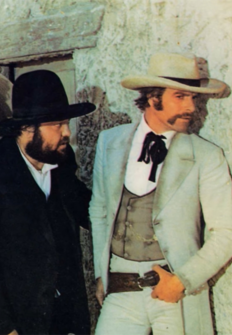
Conversely, Sergio Corbucci's Django introduced the tragic hero. Starring Franco Nero, the film emphasized violence and the misery resulting from the conflict between money and revenge. The name "Django" became so iconic that it was used for protagonists in many subsequent films. This trend of the "wronged hero" or "prodigal son" continued in films like Keoma and The Return of Ringo, while Giuliano Gemma specialized in characters (often named "Gary") who had to clear their names in films like Wanted and Long Days of Vengeance.
The Trinity Era: A Shift to Comedy
By 1968, the genre reached its production peak, but the tone shifted dramatically with Enzo Barboni's They Call Me Trinity and Trinity Is Still My Name. Starring Terence Hill and Bud Spencer, these films replaced grit with burlesque comedy.
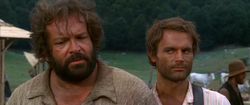
The films lampooned Western stereotypes, featuring the lazy but quick Trinity and his irritable brother Bambino. This "Trinity-style" wave introduced religious pacifism to explain the lack of gunplay, leading to a surge of films featuring priests or religious groups. While some critics viewed this as a degeneration of the genre, the chemistry between Hill and Spencer remained a massive draw.
Summary of Spaghetti Western Subgenres
| Subgenre | Primary Focus | Key Examples | Notable Figures |
|---|---|---|---|
| Classic/Bounty Hunter | Greed, Vengeance, Professionalism | Dollars Trilogy, For a Few Dollars More | Sergio Leone, Clint Eastwood |
| Zapata Western | Revolution, Anti-Imperialism | A Bullet for the General, The Big Gundown | Sergio Sollima, Damiano Damiani |
| Tragic/Wronged Hero | Violence, Redemption, Family | Django, Keoma, Wanted | Franco Nero, Giuliano Gemma |
| Comedy Western | Parody, Slapstick, Pacifism | They Call Me Trinity, My Name Is Nobody | Terence Hill, Bud Spencer |
Twilight of the Genre
The decline of the Spaghetti Western began in the late 1960s. While Terence Hill continued to attract audiences with My Name Is Nobody and Franco Nero found success with Keoma in 1976, mainstream interest faded by the end of the decade. Final attempts to revive the style included the 3D production Comin' at Ya! and the comedy Buddy Goes West, but the era of the Italian Western had effectively come to a close.
Frequently Asked Questions
What is a Zapata Western?
A Zapata Western is a subgenre of the Spaghetti Western that focuses on the Mexican Revolution, typically featuring a partnership between a revolutionary Mexican bandit and an American from the frontier, often serving as a critique of imperialism.
How did the Trinity films change the genre?
The Trinity films shifted the genre from violent, gritty dramas to burlesque comedies. They introduced a more sentimental mood, reduced the amount of killing, and parodied traditional Western stereotypes.
Who were the most influential actors in Spaghetti Westerns?
Key figures include Clint Eastwood, who defined the early "man with no name" archetype; Lee Van Cleef, known for his sophisticated bounty hunter roles; Franco Nero, who portrayed the tragic Django; and the comedic duo of Terence Hill and Bud Spencer.
Why was the name "Django" so significant?
Because of the massive influence of Sergio Corbucci's film Django, the name became synonymous with a specific type of violent, revenge-driven hero, leading many subsequent Westerns to name their protagonists Django regardless of the plot.
When did the Spaghetti Western genre peak and decline?
The genre reached its height in 1968, making up one-third of Italian film production. It saw a sharp decline by 1969 and virtually ground to a halt by the end of the 1970s.