Soviet Employment and the Evolution of Women's Labor
The economic landscape of the Soviet Union was defined by a complex struggle to balance rapid growth with sustainable labor practices. While the state sought to expand its industrial capacity, it faced significant challenges regarding labor productivity—the measure of economic output per worker—and the integration of women into the professional sphere.
The Productivity Dilemma
Soviet economists frequently expressed concern that the government prioritized sharp growth in per capita income over actual labor productivity. A fundamental issue was the structure of the Soviet wage system. Unlike capitalist economies, wages in the Soviet Union could not effectively serve as a tool for disciplining workers or as a robust incentive system.
The workforce was not managed by the traditional "stick and carrot" approach; the "carrot" of increased wages and the "stick" of unemployment were largely absent or limited in capacity, making it difficult for the state to drive efficiency through financial motivation alone.
The Integration of Women into the Workforce
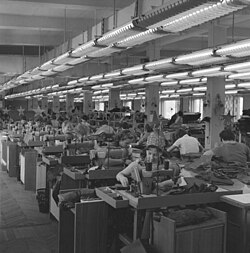
The early Soviet government pursued an aggressive policy of pushing women into urban industrial employment, driven by a combination of ideological, political, and economic motives. However, the turmoil following the revolution initially hindered these efforts.
By 1924, the 13th Party Congress noted with alarm that female employment had dipped from 25 percent to 23 percent of the total workforce. This trend reversed slightly by 1928, reaching 24 percent. Under the rule of Joseph Stalin, there was a significant surge, with women making up 39 percent of the workforce by 1940.
The most dramatic shift occurred between 1940 and 1950. During this decade, women accounted for 92 percent of all new employment entrants, primarily due to the exodus of men fighting in World War II. By 1945, women constituted 56 percent of the workforce, though this number dropped to 47 percent by 1950 as men returned to civilian life.
Late-Era Campaigns and Labor Shortages
In the 1960s, the Soviet Union launched its final major campaign to increase female employment to combat nationwide labor shortages. A 1959 census revealed that of the 13 million able-bodied people not working, 89 percent were women. Many of these women resided in small urban areas where childcare facilities were either poor or non-existent.
Between 1960 and 1971, 18 million women entered the workforce, mostly from domestic households. By the 1970s, this source of labor was largely exhausted, except within the Soviet Muslim community. In Soviet Central Asia, employing local women remained a challenge; for instance, in 1973, less than one-third of the employed population in Turkmenistan were ethnic Turkmen, with the majority of working women being of Russian or Ukrainian ethnicity.
Social Dynamics and Systemic Barriers
Despite official policies, the Soviet Union struggled with ingrained patriarchy. While the pre-Stalin government initiated policies to end workplace discrimination, Stalin's more conservative administration overturned several Bolshevik legislations. While women were encouraged to work, they were often relegated to the bottom of the social ladder, occupying low-skilled and lowest-paid positions.
Furthermore, women experienced a double burden. As they were proletarianized—meaning they were integrated into the industrial working class—their family burdens increased, as they were still expected to perform traditional domestic duties.
Shifts in Employment Sectors
Despite these barriers, the nature of women's work evolved significantly. In 1926, 90 percent of working women were employed in agriculture. By 1959, this dropped to 50 percent, and by 1975, less than one-third of working women remained in the agricultural sector.
Two primary factors drove this increase in female labor participation: first, by 1960, women outnumbered men in the Soviet Union; second, average wages were often too low for a family to survive on a single income, making female employment a financial necessity.
Key Facts
- Labor Incentives: The Soviet Union lacked a "stick and carrot" system (unemployment and wage hikes) to discipline or motivate workers.
- WWII Impact: Women made up 92% of new employment entrants between 1940 and 1950.
- Workforce Peak: Female participation reached 51.5% of the workforce by 1976.
- Sector Shift: Women in agriculture dropped from 90% in 1926 to under 33% by 1975.
- Regional Disparity: In 1973 Turkmenistan, ethnic Turkmen made up less than one-third of the employed population.
| Year | Number (Millions) | % of Workforce |
|---|---|---|
| 1922 | 1.560 | 25% |
| 1940 | 13.190 | 39% |
| 1945 | 15.920 | 54% |
| 1950 | 19.180 | 47% |
| 1960 | 29.250 | 47% |
| 1970 | 45.800 | 51% |
| 1976 | 53.700 | 51.5% |
Frequently Asked Questions
Why was labor productivity a concern for Soviet economists?
Economists were concerned that the state focused too much on increasing per capita income rather than improving the actual efficiency of labor, and they lacked effective wage-based incentives to motivate workers.
How did World War II affect female employment?
The war caused a massive exodus of men, leading women to fill the void. Between 1940 and 1950, women represented 92% of new entrants into the workforce, peaking at 56% of the total workforce in 1945.
What was the "double burden" faced by Soviet women?
The double burden refers to the expectation that women should participate in the industrial workforce (proletarianization) while continuing to handle all traditional domestic and family duties at home.
Why did women's roles in agriculture decline over time?
Women moved toward urban industrial employment due to government campaigns to solve labor shortages, a general demographic shift where women outnumbered men by 1960, and the economic necessity of dual-income households due to low average wages.
What were the challenges of female employment in Central Asia?
Employment of local women was difficult in the Central Asian republics; consequently, many of the women working in these regions were of Russian or Ukrainian ethnicity rather than local ethnic groups.