Luhansk: A History of Industrial Power and Political Conflict
Luhansk is a city defined by its industrial roots and its strategic position within the Donets Basin (or Donbas), a region renowned for its mineral wealth and manufacturing capacity. From its origins as a military outpost of the Russian Empire to its role as a focal point in modern geopolitical conflict, the city's trajectory reflects the broader shifts of Eastern European history.
Founding and Early Industrialization
The city's history began in 1797 when British industrialist Charles Gascoigne founded an ammunition and cannon factory for the Black Sea Fleet. Commissioned by the Imperial Russian government in 1795, Gascoigne—who had previously established various mines and factories across the Russian Empire—selected a site at the confluence of the Luhan and Vilkhivka rivers.
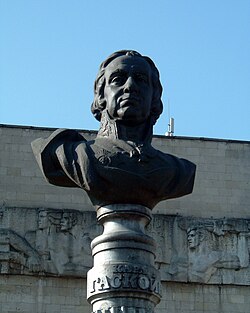
The city takes its name from the Luhan River. According to folk etymology, the name also relates to the Ukrainian word Luh, meaning "meadow," in reference to the surrounding river floodplains. While the factory served as the industrial core, Russian craftsmen settled nearby in Kamianyi Brid. Over time, the factory expanded significantly during the Napoleonic and Crimean Wars, becoming a vital industrial hub linked by rail to the Azov Sea and other major cities by 1880.
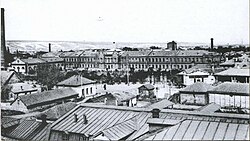
In 1882, the Luhansk Factory and Kamianyi Brid merged to form the settlement of Luhansk, which subsequently achieved city status. By 1897, the population reached 20,400, with Russians comprising 68.2% of the residents. The industrial landscape expanded further in 1896 when German industrialist Gustav Hartmann founded a locomotive-building company, now known as Luhanskteplovoz. By 1900, this facility produced a significant portion of all locomotives in the Russian Empire.
Turmoil and the Soviet Era
The early 20th century brought severe instability. During the Ukrainian War of Independence, Luhansk suffered economic devastation and changed hands multiple times. It was occupied by the Central Powers in April 1918, held by Anton Denikin's anti-communist Volunteer Army in May 1919, and finally captured by the Red Army in January 1920.
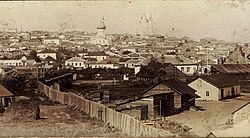
Under Soviet rule, the city underwent rapid growth and several identity shifts. On November 5, 1935, it was renamed Voroshilovgrad in honor of Soviet politician Kliment Voroshilov. This period saw a dramatic demographic shift; between 1926 and 1939, the population surged from 72,000 to 212,000. The proportion of Ukrainians rose from 19.1% in 1897 to 58.7% by 1939, partly due to refugees fleeing the Holodomor, a man-made famine in Soviet Ukraine.
World War II and Post-War Recovery
During World War II, the city became a frontline location. After the failure of Nazi Germany's Operation Barbarossa, German forces captured Voroshilovgrad on July 14, 1942. Local partisans resisted the occupation until the Red Army liberated the city on February 14, 1943.
Post-war reconstruction brought another wave of Russian migrants to assist with industrialization, shifting the demographics again. By 1959, Ukrainians were a minority at 48.3%. The city's name fluctuated based on political whims: it reverted to Luhansk in 1958 following Nikita Khrushchev's directive against naming cities after living people, returned to Voroshilovgrad in 1970 after Kliment Voroshilov's death, and finally regained the name Luhansk on May 4, 1990.
Independence and Modern Conflict
Following Ukraine's independence from the Soviet Union in 1991, the city faced economic stagnation. The population declined from 505,000 in 1992 to 424,000 by 2014. A 1994 referendum in the region showed strong support (approximately 90%) for the Russian language to hold official status alongside Ukrainian.
In April 2014, the city became the center of a violent uprising. Russia-backed separatists seized government buildings and proclaimed the Luhansk People's Republic (LPR). An unconstitutional independence referendum was held on May 11, 2014, though it was not recognized by any legitimate government.
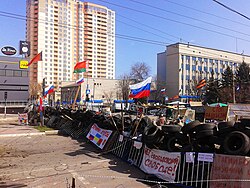
The ensuing war in Donbas saw heavy fighting. In August 2014, Ukrainian forces surrounded the city, leading to significant civilian casualties. During this period, the Lithuanian honorary consul, Mykola Zelenec, was abducted and murdered by separatists. By September 1, 2014, Ukrainian forces withdrew from the Luhansk International Airport. The Ukrainian government subsequently moved the temporary administration of Luhansk Oblast to Sievierodonetsk.
Internal power struggles continued within the LPR. In November 2017, armed men in unmarked uniforms took positions in the city center during a conflict between leader Igor Plotnitsky and interior minister Igor Kornet. Plotnitsky eventually resigned, citing health reasons and war wounds, and was replaced by Leonid Pasechnik.
Key Facts
- Founded: 1797 by British industrialist Charles Gascoigne.
- Primary Industry: Originally ammunition and cannons; later a major hub for locomotive production (Luhanskteplovoz).
- Name Changes: Known as Luhansk, then Voroshilovgrad (1935), back to Luhansk (1958), Voroshilovgrad again (1970), and finally Luhansk (1990).
- Demographic Shifts: Population composition fluctuated between Russian and Ukrainian majorities throughout the 19th and 20th centuries.
- Modern Status: Capital of the self-proclaimed Luhansk People's Republic (LPR) since 2014.
| Year | City Name | Population/Demographic Note | Key Event |
|---|---|---|---|
| 1897 | Luhansk | 20,400 (68.2% Russian) | Imperial Russian era growth |
| 1939 | Voroshilovgrad | 212,000 (58.7% Ukrainian) | Soviet industrialization & Holodomor refugees |
| 1959 | Luhansk | 48.3% Ukrainian / 47.1% Russian | Post-WWII reconstruction |
| 1989 | Voroshilovgrad | 52.4% Russian / 41.8% Ukrainian | Late Soviet period |
| 2014 | Luhansk | 424,000 | Outbreak of war in Donbas |
Frequently Asked Questions
Who founded the city of Luhansk?
The city was founded in 1797 by Charles Gascoigne, a British industrialist commissioned by the Imperial Russian government to establish an ammunition and cannon factory.
Why was the city renamed Voroshilovgrad?
The city was renamed Voroshilovgrad on November 5, 1935, to honor Kliment Voroshilov, a prominent Soviet military commander and politician.
What is the significance of Luhanskteplovoz?
Founded by Gustav Hartmann in 1896, it became one of the most important locomotive-building companies in the Russian Empire, producing a large proportion of its locomotives.
How did the demographics of Luhansk change over time?
The population shifted several times: it was majority Russian in the late 1800s, became majority Ukrainian by 1939 (partly due to Holodomor refugees), and returned to a Russian majority by the late Soviet period.
What happened in Luhansk in 2014?
Russia-backed separatists seized government buildings and proclaimed the Luhansk People's Republic (LPR), leading to an unrecognized independence referendum and the start of the war in Donbas.