Sovereign States: The Foundations of International Authority and Recognition
In the realm of global politics, the sovereign state serves as the primary unit of organization. At its core, a sovereign state is a political entity that possesses sovereignty—the highest authority over a specific territory. While the term "country" is often used interchangeably with sovereign state, it can also refer to constituent countries or dependent territories that do not possess full independence.
The transition from a mere territory to a recognized sovereign state involves a complex interplay of legal criteria and political acceptance. For a state to be considered sovereign, it must generally meet specific requirements that allow it to function independently and interact with the rest of the world.
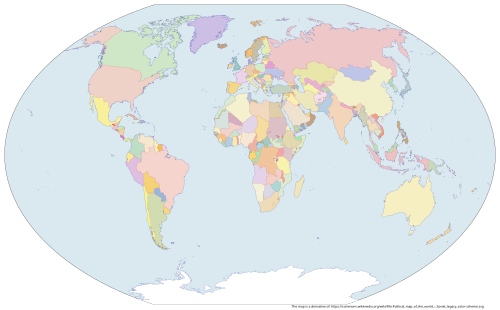
Key Facts
- Core Requirements: A sovereign state must have a permanent population, a defined territory, an independent government, and the capacity to engage in international relations.
- Sovereignty: Defined as the highest authority over a territory, implying independence from external control.
- Recognition: While a state may exist politically without it, recognition by other states is crucial for effective diplomatic and economic engagement.
- Legal Framework: The Montevideo Convention provides one of the most widely accepted formulations of the criteria for statehood.
The Criteria for Statehood
According to international law, specifically the Montevideo Convention, four essential qualifications must be met for an entity to be recognized as an international person (a state):
- Permanent Population: A stable community of people living within the state.
- Defined Territory: Clear geographic boundaries over which the state exercises control.
- Government: An organized political authority that is not under the control of another power.
- Capacity for Relations: The ability to enter into diplomatic agreements and interact with other sovereign states.
The Role of Recognition
The status of a country is often determined not just by its internal capabilities, but by how other states perceive it. This has led to two primary legal perspectives on statehood.
Constitutive Theory
The constitutive theory suggests that a state does not truly exist in the eyes of international law until it is recognized by other sovereign states. In this view, recognition is what "constitutes" the state.
Declarative Theory
Conversely, the declarative theory posits that statehood is a matter of fact. If an entity meets the physical and political criteria (population, territory, government), it is a state regardless of whether other nations recognize it. Recognition is seen as a mere acknowledgment of an existing fact.
Types of State Status
Not all states enjoy the same level of authority or recognition. The international community distinguishes between different levels of sovereignty based on actual control and legal acceptance.
De Facto and De Jure States
A de jure state is one that is recognized by law and the international community. A de facto state is an entity that exercises actual control over a territory and population but lacks widespread legal recognition. These entities often struggle to engage in formal diplomatic relations despite having a functioning government.
Semi-Sovereign States
Some entities are described as semi-sovereign. These are states that possess some degree of independence but have significant limitations on their sovereignty, often due to historical treaties, security arrangements, or the influence of a dominant neighboring power.
| Status Type | Key Characteristic | International Standing |
|---|---|---|
| Sovereign (De Jure) | Full legal and actual control | Fully recognized; full diplomatic capacity |
| De Facto State | Actual control without legal title | Limited or no recognition; diplomatic hurdles |
| Semi-Sovereign | Partial independence | Recognized, but with restricted authority |
| Dependent Territory | Under the jurisdiction of another state | Not a sovereign international person |
Theoretical Perspectives on the State
Beyond legal definitions, scholars have debated the ontological status—the nature of being—of the state. Some view the state as a quasi-abstract entity, a legal fiction created by documents and treaties. Others, drawing from philosophical traditions, describe the state as a spiritual entity or a manifestation of a people's collective will and history.
It is also important to distinguish between the state and the government. The state is the enduring legal entity, while the government is the specific administration that exercises the state's authority at a given time. This distinction explains why a state can continue to exist even if its government collapses or is replaced.
Frequently Asked Questions
What is the difference between a country and a sovereign state?
While often used as synonyms, "sovereign state" specifically refers to an independent entity with the highest authority over its territory. "Country" is a broader term that can include constituent countries (like those within a union) or dependent territories that lack full sovereignty.
Can a state exist if no other country recognizes it?
Under the declarative theory of statehood, yes. If an entity has a permanent population, defined territory, and an independent government, it exists as a state. However, in practice, a lack of recognition makes it very difficult to engage in trade, diplomacy, and international law.
What happens when a state becomes extinct?
State extinction occurs when a state ceases to function as a sovereign entity, often through the application of military force by foreign powers or through total absorption into another state, leading to the loss of its independent political existence.
What is a de facto state?
A de facto state is a political entity that possesses the actual characteristics of a state—such as controlling a territory and governing a population—but lacks the formal, legal recognition (de jure status) from the majority of the international community.