Southern Paiute Culture: Artistry, Survival, and Sacred Traditions
The Southern Paiute people developed a sophisticated way of life tailored to the demanding environments of the American Southwest. Their culture is a testament to ingenuity, blending deep spiritual connections to the land with practical mastery of natural resources. From the intricate art of weaving to the strategic gathering of desert flora, every aspect of their daily existence was designed for sustainability and resilience.
The Art and Utility of Basket Weaving
For the women of the Paiute tribes, basket weaving was one of the most essential skills, a tradition believed to have been passed from mother to daughter for at least 9,000 years. Utilizing red-stemmed willows, they created versatile tools that integrated into nearly every part of their lives.
Large conical baskets were used as backpacks for foraging and gathering. The Paiutes also engineered specialized tools for stripping fruit from trees, extracting roots, and winnowing (the process of separating grain from chaff by blowing air through it). To create waterproof vessels for cooking and storing water, weavers tightly sealed their baskets with resin and clay.
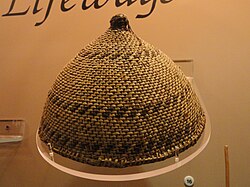
Regional environments influenced the application of these skills. Those living near marshes crafted rafts, nets, and duck decoys for waterfowl hunting. Weaving was even applied to architecture; by tightly weaving cattail stalks into long, board-like sections and securing them to willow limbs driven into the ground, they constructed their homes.
Traditional Diet and Foraging Practices
The Southern Paiute diet relied heavily on the diverse offerings of the desert. A primary staple was the bitterroot, supplemented by wild onion, wild carrot, and chokecherries. Chokecherries provided dual utility: the berries were crushed and dried for preservation, while the stems were brewed into a sweet beverage.
One of the most unique sources of sweetness came from cane plants. When aphids swarmed the stalks, they left behind small droplets of nectar. Women would beat the cane rods to loosen these dried droplets, then use a winnowing dish to separate the nectar from the cane debris. Additionally, they gathered waada seeds—tiny black seeds ground into a meal.
While foraging was central, those with access to sufficient water implemented ditch irrigation to farm maize, squash, and wheat. Meanwhile, the men served as the primary hunters, pursuing rabbits, bighorn sheep, waterfowl, and other local mammals.
Paiute Archery and Toolmaking
The weaponry of the Southern Paiute was designed for utility and durability in a harsh desert climate. Artifacts preserved by the Smithsonian Institution provide insight into their craftsmanship.
Bows and Arrows
Paiute bows were typically crafted from hardwood branches, such as mountain mahogany or mesquite. A notable example measures 38 5/8 inches and features a round cross-section with a two-ply sinew string. These bows often included a sinew back stained with reddish-brown ocher and bore visible carving marks, reflecting their role as practical tools for survival.
Arrows were equally functional. Points were secured using pine pitch glue, with sinew wrappings applied behind the point to prevent the shaft from splitting upon impact. Feathers from buzzards and hawks were used for fletching.
Quivers and Storage
Quivers were constructed from deerskin, often retaining thick hair—an indicator that the deer was harvested during winter. Sewn with two-ply sinew, these cases were typically plain and devoid of decoration, emphasizing the utilitarian nature of a desert-dwelling culture.
Sacred Landscapes and Holy Land Traditions
The Southern Paiute spiritual life is centered around Puaxant Tuvip, or "power land." This holy land encompasses various landmarks that are integral to their stories and collective memory.
One such landmark is Nuvagantu (Mount Charleston in Nevada), which the Southern Paiute believe to be the site of their creation. These sacred areas served as vital hubs where different families and tribes gathered to socialize, perform religious ceremonies, and engage in trade and barter. Other culturally significant landmarks include the Grand Canyon and the Colorado River.
Today, these traditions persist as the Southern Paiute maintain a supernaturally given right to be informed about and influence projects that impact their holy lands.
Key Facts
- Weaving Heritage: Basket weaving skills have been passed down for approximately 9,000 years.
- Material Use: Red-stemmed willows and cattails were primary materials for baskets and housing.
- Dietary Staples: Bitterroot, waada seeds, and aphid-produced nectar were key food sources.
- Agriculture: Maize, squash, and wheat were grown using ditch irrigation in water-rich areas.
- Archery: Bows were made from hardwood (mesquite/mahogany) and reinforced with sinew and ocher.
- Sacred Site: Nuvagantu (Mount Charleston) is believed to be the place of creation.
| Category | Key Materials/Elements | Primary Purpose |
|---|---|---|
| Basketry | Red-stemmed willow, resin, clay | Foraging, cooking, water storage, and housing |
| Diet | Bitterroot, waada seeds, maize, squash | Sustenance and nutrition |
| Archery | Hardwood, sinew, pine pitch, hawk/buzzard feathers | Hunting and survival |
| Spirituality | Puaxant Tuvip, Nuvagantu, Colorado River | Religious ceremony, identity, and social gathering |
Frequently Asked Questions
How did the Southern Paiute make their baskets waterproof?
They tightly wove the baskets and sealed them using a combination of clay and resin to create functional cooking pots and water jugs.
What was the significance of Nuvagantu?
Nuvagantu, known today as Mount Charleston in Nevada, is a holy landmark where the Southern Paiute believe they were created.
How did the Southern Paiute obtain sweetness in their diet?
They obtained sweetness by beating cane rods to collect dried nectar droplets left by aphids, as well as by brewing the stems of chokecherries.
What materials were used in Paiute bow construction?
Bows were made from hardwood branches like mesquite or mountain mahogany, featuring two-ply sinew strings and sinew backs often stained with reddish-brown ocher.
What is Puaxant Tuvip?
Puaxant Tuvip refers to the "power land," the holy land of the Southern Paiute that links their stories and memories to significant physical landmarks.