Southern Decadence: New Orleans' Iconic LGBTQ Celebration
Every Labor Day weekend, the streets of New Orleans transform into a vibrant epicenter of liberation and celebration known as Southern Decadence. This annual five-day event, running from Thursday to Monday, draws hundreds of thousands of visitors to the French Quarter for a festival defined by music, costumes, and an unapologetic embrace of LGBTQ identity.
While it shares the high energy and crowd density of the world-famous Mardi Gras, Southern Decadence is distinct in its sexual tone and specific focus on the LGBTQ community. Centered primarily at the intersection of Bourbon and St. Ann streets, the event culminates in a grand parade through the French Quarter on the Sunday before Labor Day.
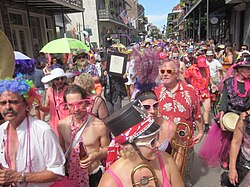
Key Facts
- Founded: 1972
- Frequency: Annual (Labor Day Weekend)
- Location: New Orleans, Louisiana (primarily the French Quarter)
- Attendance: Often exceeds 250,000 participants
- Economic Impact: Estimated at over $275 million (as of 2018)
- Duration: Five days (Thursday through Monday)
The History of Decadence
Southern Decadence began modestly in August 1972 as an end-of-summer gathering of 40 to 50 friends, both gay and straight. The original hosts invited guests to "Come as Your Favorite Southern Decadent," establishing the tradition of elaborate costuming that persists today.
The event's first "walking parade" took place in 1973. Participants met at Johnny Matassa's Bar in the French Quarter to showcase their costumes before walking to Belle Reve in the Tremé neighborhood. Early costumes featured figures such as Tallulah Bankhead, Helen Keller, and Belle Watling. By 1974, the event grew in scale with the appointment of Frederick Douglas Wright, an African American, as the first grand marshal, giving him control over the parade of characters through the French Quarter.
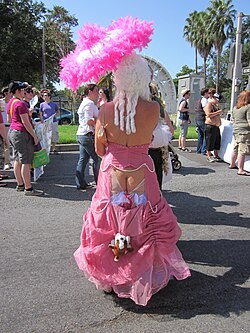
Event Characteristics and Themes
Commonly referred to by attendees simply as "Decadence," the festival is characterized by street parties, dance events, and the tradition of tossing beads. While the event caters primarily to gay men, it is inclusive of the broader LGBTQ community; lesbian groups, including Dykes on Bikes, are regular participants in the annual parade.
The Role of Annual Themes
Consistent thematic elements became a staple of the event starting in 1988 with the "Plagues, Pests, Parasites" theme. Since then, themes have been featured every year, often reflecting humor, provocation, or current events. Notable examples include:
- "Voodoo That You Do"
- "Menage à Trois"
- "Hurricane: This Year, They Blow Back"
- "House of Bourbon — Unleash Your Beast" (2018)
- "Fruit Salad: Come Toss a Good Time" (2019)
Overcoming Challenges and Opposition
The festival's provocative nature has occasionally led to friction with religious and conservative groups. In 2003, a formal petition sought to terminate the event, citing public sex acts. However, New Orleans business owners and hoteliers strongly supported the festival due to its economic benefits. This conflict eventually led the police to issue clarifications on public sex laws.
Legal battles also emerged regarding street preaching. The city once passed an ordinance banning social, political, or religious messages on Bourbon Street from sunset to sunrise to protect public safety. This was later challenged by the ACLU and eventually lifted by the New Orleans City Council after being deemed unconstitutional.
Resilience in the Face of Disaster
Southern Decadence has shown remarkable resilience despite several major cancellations caused by natural disasters and health crises.
Hurricanes Katrina and Gustav
In 2005, Hurricane Katrina forced the official cancellation of the event. Despite the mandatory evacuation, a small group of French Quarter residents held an abbreviated parade of about two dozen people—the first parade in the city following the storm. The event returned in 2006 with the theme "Southern Decadence Rebirth." Similarly, in 2008, Hurricane Gustav caused the cancellation of official events after Sunday midday, though a small unofficial parade again took place.
The COVID-19 Pandemic
The event was officially cancelled in 2020 and 2021 due to the COVID-19 pandemic and the subsequent impact of Hurricane Ida on South Louisiana.
| Category | Details |
|---|---|
| Primary Location | Bourbon and St. Ann Streets, French Quarter |
| Peak Attendance | Over 250,000 (2018) |
| Key Traditions | Costuming, Bead Tossing, Sunday Parade |
| Major Cancellations | 2005 (Katrina), 2008 (Gustav), 2020-2021 (COVID-19) |
Frequently Asked Questions
When does Southern Decadence take place?
The event is held annually over five days, from Thursday to Monday, during the Labor Day weekend.
Who can attend Southern Decadence?
While the event primarily caters to gay men, it is an LGBTQ-based event that is lesbian-friendly and open to a global crowd of revelers.
What is the significance of the Sunday parade?
The Sunday parade is the culmination of the weekend's festivities, featuring costumes and characters marching through the French Quarter.
How does Southern Decadence differ from Mardi Gras?
While both involve parades, beads, and large crowds in New Orleans, Southern Decadence is specifically LGBTQ-focused and generally more sexual in tone.
Has the event ever been fully cancelled?
Yes, official celebrations were cancelled in 2005 due to Hurricane Katrina, in 2020 and 2021 due to the COVID-19 pandemic, and partially in 2008 due to Hurricane Gustav.