South Korean Education System: Structure, Achievements, and Challenges
South Korea is globally recognized for its rigorous and highly structured approach to learning. Driven by a deep cultural emphasis on academic achievement, the nation's education system is a cornerstone of its social and economic development. From early childhood through tertiary education, the system is designed to foster high levels of literacy and technical proficiency.
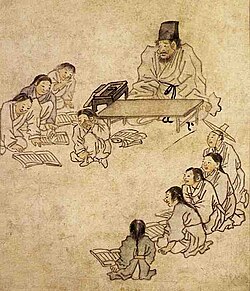
Key Facts
- Literacy Rate: 100% across all demographics.
- Education Budget: Approximately 5.6% of the national GDP.
- Secondary Completion: Roughly 98% of students finish secondary education.
- University Enrollment: A high rate of 73.7% as of 2020.
- Primary Language: Korean.
The Educational Framework: From Nursery to University
The South Korean school system follows a clear progression of grades, categorized by age and level of specialization. The journey begins with early childhood education and moves through primary, secondary, and post-secondary stages.
School Grades and Age Structure
Education is organized into distinct levels to ensure developmental progression:
- Infant and Kindergarten: Nursery school (ages 0–2) and Kindergarten (ages 3–5).
- Elementary School: Grades 1 through 6, covering international ages 6 to 14.
- Middle School: Grades 7 through 9, covering international ages 12 to 17.
- High School: Grades 10 through 12, covering international ages 15 to 20.
- Post-secondary: Tertiary education, typically involving four-year programs (freshman, sophomore, junior, and senior years).
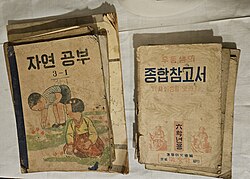
Primary Education Details
Elementary education is divided into two main stages. The Elementary School Adaptation Stage (Grades 1–2) focuses on foundational skills like Korean (listening, speaking, reading, and writing), Mathematics, and "Disciplined Life" (moral education and social studies). The Full-scale Study Stage (Grade 3 and above) expands the curriculum to include Science, English, and practical skills.
Classroom dynamics also shift as students age. In the lower grades, students typically have a maximum of 5 periods per day (40 minutes each) and finish by 2 PM. In the upper grades, the schedule extends to a maximum of 7 periods, with students finishing before 4 PM. Additionally, upper-grade students elect class presidents and vice presidents, whereas this is not practiced in the lower grades.
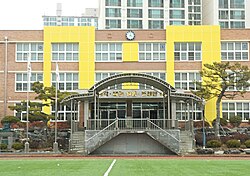
Secondary and Higher Education
Secondary education in South Korea is highly successful, with nearly 98% of students completing their studies. However, the landscape of high school is diverse. While most attend general schools, there are autonomous private high schools and special-purpose high schools that offer more freedom from Ministry of Education policies. These, along with schools for gifted students, often come with significantly higher tuition costs.
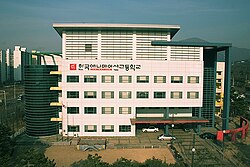
The Pursuit of Higher Education
University is considered the most prestigious path for young South Koreans. The competition to enter top-tier institutions, often referred to as SKY universities (Seoul National University, Korea University, and Yonsei University), is intense. In 2004, nearly 90% of general high school graduates achieved university entrance, though this figure was 68.9% in 2017.
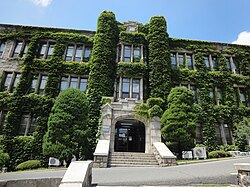
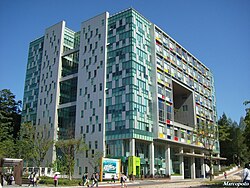
Higher education institutions include a variety of formats:
- Regular Colleges and Universities: The traditional four-to-six-year undergraduate route.
- Junior Colleges: Offering two-year courses.
- Vocational and Technical Institutions: Including polytechnic and industrial colleges.
- Specialized Formats: Cyber colleges, distance learning, and corporate universities.
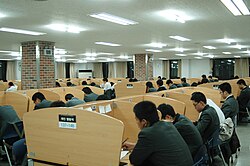
| Classification | Total Schools | Total Students |
|---|---|---|
| Junior College Course | 154 | 623,460 |
| Undergraduate Course | 227 | 2,250,686 |
| Graduate Course | 1,174 | 327,415 |
Challenges and Social Pressures
Despite high achievement levels, the South Korean education system faces significant criticism regarding student well-being and economic efficiency. The intense focus on entrance exams has led to a culture of extreme competition.
Key Areas of Concern
- Student Health and Sleep: Due to long study hours, high school students in 2019 averaged only about 6 hours and 3 minutes of sleep, which is lower than the OECD average.
- Hagwons: The prevalence of private academies (hagwons) adds to the academic pressure and financial burden on families.
- Skill Mismatch: According to 2020 International Labour Organization data, South Korea ranked 30th out of 30 OECD countries in "skill-matching level," indicating a gap between university majors and job requirements.
- English Proficiency: While South Korea has seen significant improvements—ranking 6th out of 25 Asian countries in 2020—the high cost of English education remains a topic of discussion.
Frequently Asked Questions
What are SKY universities?
SKY refers to the three most prestigious universities in South Korea: Seoul National University, Korea University, and Yonsei University.
How does the Korean school day differ for primary students?
In the lower grades (1–2), students typically finish by 2 PM and have up to 5 class periods. In the upper grades (3–6), they may have up to 7 periods and finish by 4 PM.
What is the literacy rate in South Korea?
South Korea maintains a 100% literacy rate across all genders and age groups.
Why is there a concern regarding "skill-matching" in Korea?
Data from the International Labour Organization suggests a high rate of mismatch between the subjects students study in university and the actual skills required in the workforce.
Are there different types of high schools in South Korea?
Yes. Beyond general high schools, there are autonomous private high schools, special-purpose high schools, and schools specifically designed for gifted students.