Understanding the South Korean Education System: Structure, Success, and Challenges
South Korea is globally recognized for its rigorous and highly successful education system. Driven by a deep cultural emphasis on learning, the nation has transformed its academic landscape to become a powerhouse of human capital. With a national education budget representing 5.6% of its GDP, the government maintains a robust framework that spans from early childhood through tertiary education.
While the system produces world-class literacy rates and high university enrollment, it is also characterized by intense competition and unique social pressures. This article explores the structure, progression, and complexities of education in South Korea.
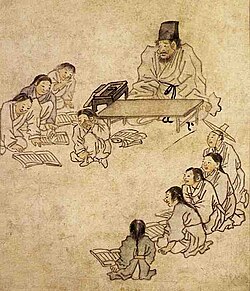
Key Facts
- Literacy Rate: 100% across all demographics (male and female).
- Education Investment: 5.6% of the national GDP.
- Secondary Attainment: 98.0% of students complete secondary education.
- Higher Education: In 2020, the university enrollment rate reached 73.7%.
- Global Presence: South Korea is a top student-sending country to the United States.
The Educational Journey: From Kindergarten to University
The South Korean school system is organized into distinct stages, moving from foundational social and academic skills to specialized higher learning. The system uses both international age and a traditional Korean age system to define grade levels.
Primary Education
Primary education is divided into two main phases. The Elementary School Adaptation Stage (Grades 1–2) focuses on basic skills and "disciplined life" (moral education). From Grade 3 onwards, students begin "full-scale study," incorporating subjects such as Mathematics, Science, Social Studies, and English. During these years, students also engage in "sensible life" and "safe life" (safety education) modules.
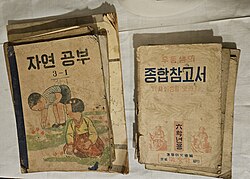
Classroom dynamics change as students progress. While younger students may have shorter days (ending by 2 PM) and fewer periods, older primary students may have up to 7 periods per day and participate in elected class leadership roles.
Secondary Education
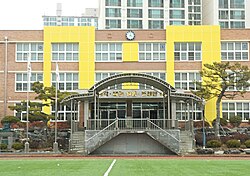
Secondary education comprises middle school and high school. In middle school, the curriculum expands to prepare students for more advanced academic tracks. High school offers various paths, including general education and specialized options:
- Autonomous Private High Schools: These institutions operate with more freedom from Ministry of Education policies.
- Special-Purpose High Schools: These often carry higher tuition costs; for example, in 2009, the average tuition for these schools was approximately US$5,614 per year.
- Gifted Schools: Highly specialized institutions where annual tuition can reach US$7,858.
- Vocational Schools: Focused on technical skills and career readiness.
Higher Education (Tertiary)
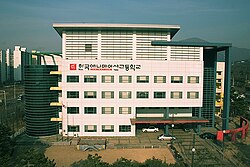
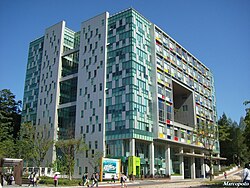
University is considered the most prestigious route for young South Koreans. The landscape of higher education is diverse, including regular universities, vocational colleges, industrial universities, and open universities. Courses typically last between four and six years.
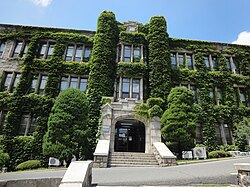
The pursuit of a degree is highly competitive. While nearly 90% of general high school graduates achieved university entrance in 2004, this figure was 68.9% in 2017. The "SKY" universities—Seoul National University, Korea University, and Yonsei University—represent the pinnacle of academic achievement.
System Overview and Statistics
The following table provides a summary of the educational landscape, including student populations and attainment levels.
| Category | Total Students (Approx.) | Key Metric |
|---|---|---|
| Primary Education | 3.3 Million | Foundational literacy and social skills |
| Secondary Education | 4.0 Million | 98% completion rate |
| Post-Secondary | 3.6 Million | 69.8% diploma attainment |
| Higher Education | Varies | High university enrollment (73.7% in 2020) |
Challenges and Social Pressures
Despite its academic success, the South Korean system faces significant criticism regarding the well-being of its students and the efficiency of its labor market.
The Competitive Environment
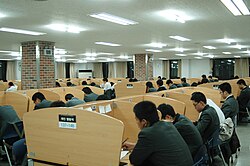
The drive to enter prestigious universities creates an environment of intense competition. This often leads to excessive nighttime self-study and long hours. In 2019, most high school students slept an average of 6 hours and 3 minutes—one hour less than the OECD average. The prevalence of Hagwons (private academies) further intensifies this pressure.
Economic and Skill Mismatches
A notable paradox exists in the labor market. While university graduation rates are among the highest in the OECD, South Korea ranked 30th out of 30 OECD countries in 2020 regarding "skill-matching level." This indicates a high rate of mismatch between students' academic majors and their actual job roles.
Frequently Asked Questions
What is the primary language used in South Korean schools?
The primary language of instruction is Korean.
How does English proficiency compare in South Korea?
While South Korea historically ranked low in English ability among Asian countries in 2003, the nation has seen significant improvement. By 2020, it ranked 6th out of 25 Asian countries according to Education First.
What are "SKY" universities?
SKY refers to the three most prestigious universities in South Korea: Seoul National University, Korea University, and Yonsei University.
Are there different types of high schools in South Korea?
Yes. Beyond general high schools, there are autonomous private high schools, special-purpose high schools, schools for gifted students, and vocational schools.
How many South Korean students study abroad?
In 2012, approximately 154,000 South Korean students were pursuing degrees at overseas universities, with the United States, Japan, Canada, and Australia being top destinations.