South Korean City Classifications: From Special Cities to Municipalities
South Korea's urban landscape is organized through a sophisticated hierarchy of administrative divisions. While many people recognize the bustling streets of Seoul, the country's governance structure distinguishes between various types of urban centers based on their population, urbanization, and level of autonomy. Understanding these classifications is essential to grasping how South Korea manages its rapidly growing metropolitan areas and smaller municipal hubs.
At the highest level of urban autonomy, certain major cities function with a status equivalent to an entire province. This allows them to manage their own affairs independently of the surrounding regional government. Below this tier, most cities operate under provincial jurisdiction, maintaining a level of administration similar to counties.
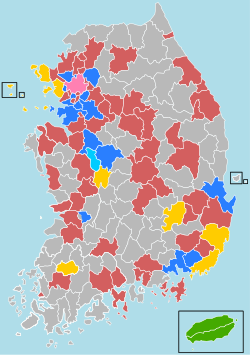
Key Facts
- Seoul is classified as a teukbyeolsi (Special City), the highest urban designation.
- There are six metropolitan cities (gwangyeoksi) in South Korea.
- To become a city under the Local Autonomy Act, an area must generally be predominantly urbanized with a population of at least 50,000.
- Large cities with significant populations can achieve autonomous status equivalent to provinces.
- Smaller cities (si) remain under the jurisdiction of their respective provinces.
Legal Standards for City Status
The Local Autonomy Act (Article 10) establishes the specific criteria required for a populated area to be officially designated as a city. These standards ensure that administrative resources are allocated to areas that meet specific urbanization and demographic thresholds.
Criteria for Designation
An area may qualify for city status through one of the following pathways:
- A predominantly urbanized area with a population of at least 50,000.
- A gun (county) that contains an urbanized area with a population of at least 50,000.
- A gun with a total population of at least 150,000 that contains multiple urbanized areas, each having a population of at least 20,000.
In certain unique instances, cities are established through specific legislation rather than standard population thresholds. A notable example is Gyeryong, which was designated as a city via a special bill by the National Assembly.
Hierarchy of Urban Classifications
South Korean cities are categorized into several distinct tiers, ranging from highly autonomous special cities to standard municipal cities.
Special and Metropolitan Status
The most prominent urban centers hold special statuses. Seoul, the nation's capital, is a teukbyeolsi (Special City). Historically, it was designated as a "Special Independent City" (teukbyeoljayusi) in 1946 before becoming a Special City in 1949. Additionally, there is one Special Self-Governing City (teukbyeoljachisi), which is Sejong.
The next tier consists of gwangyeoksi (Metropolitan Cities). There are six of these major hubs, which possess significant autonomy. These include large centers like Busan, Incheon, and Daegu.
Municipal and Administrative Cities
Below the metropolitan level, the classification system includes:
- Big Municipal Cities (daedosi): Larger urban centers that fall under provincial oversight.
- Administrative Cities (haengjeongsi): A specific classification for certain municipal structures.
- Cities (si): The standard classification for smaller urban areas that are under provincial jurisdiction, functioning at the same level as counties.
Summary of City Classifications
| Classification (English) | Korean Name | Hangul | Hanja | Count |
|---|---|---|---|---|
| Special City | teukbyeolsi | 특별시 | 特別市 | 1 |
| Special Self-Governing City | teukbyeoljachisi | 특별자치시 | 特別自治市 | 1 |
| Metropolitan City | gwangyeoksi | 광역시 | 廣域市 | 6 |
| Big Municipal City | daedosi | 대도시 | 大都市 | 17 |
| Administrative City | haengjeongsi | 행정시 | 行政市 | 2 |
| City | si | 시 | 市 | 60 |
Frequently Asked Questions
What is the difference between a Special City and a Metropolitan City?
A Special City (teukbyeolsi), such as Seoul, holds a unique status as the capital and has a level of autonomy equivalent to a province. Metropolitan Cities (gwangyeoksi) are the next largest tier of autonomous urban centers, such as Busan or Incheon.
How many metropolitan cities are there in South Korea?
There are currently six metropolitan cities (gwangyeoksi) in South Korea.
What are the population requirements to become a city?
Under the Local Autonomy Act, a predominantly urbanized area generally needs a population of at least 50,000 to be classified as a city.
Are all cities in South Korea autonomous?
No. While Special Cities and Metropolitan Cities have autonomous status equivalent to provinces, smaller cities (si) are under the jurisdiction of their respective provinces.
Can a city be renamed?
Yes, several cities in South Korea have undergone name changes. For example, Chungmu was renamed to Tongyeong in 1995, and Iri was renamed to Iksan in 1995.