South American Championship 1957: Argentina's Legendary Triumph in Peru
The 1957 South American Championship was more than just a regional tournament; it was the stage for one of the most iconic eras in Argentine football history. Held in Peru from March 7 to April 6, the competition saw Argentina secure their 11th title in a display of offensive brilliance and tactical balance that captured the imagination of the public and the media alike.
While the tournament featured seven teams from the South American confederation, the event was marked by the withdrawal of Bolivia and Paraguay. All matches were centralized in a single venue, the Estadio Nacional de Lima, which hosted a total of 21 matches and witnessed a staggering 101 goals.
Key Facts
- Champions: Argentina (11th title)
- Host Country: Peru
- Venue: Estadio Nacional de Lima (Capacity: 50,000)
- Top Scorers: Humberto Maschio (Argentina) and Javier Ambrois (Uruguay) with 9 goals each
- Best Player: Enrique Sívori (Argentina)
- Total Goals: 101 goals scored across 21 matches (4.81 per match)
The Rise of the Carasucias
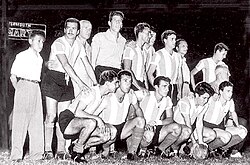
Managed by Guillermo Stábile, the Argentine squad is widely regarded as one of the finest in the nation's history. The team was defined by its attacking line, nicknamed the Carasucias (meaning "dirty faces"), consisting of Omar Corbatta, Humberto Maschio, Antonio Angelillo, Enrique Sívori, and Osvaldo Cruz. This quintet brought a level of flair and goalscoring prowess that was unprecedented, netting 25 goals in just six matches.
Despite the offensive fireworks, Argentina's success was built on a balanced foundation. A sturdy defense, anchored by notable players such as Pedro Dellacha and Néstor Rossi, ensured that Argentina conceded the fewest goals of any team in the competition.
A Lasting Legacy and Media Impact
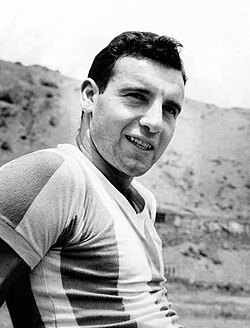
The 1957 victory was a turning point in terms of visibility. While Argentina had won previous South American competitions, this specific triumph generated massive media repercussion. The individual brilliance of the players was undeniable; Enrique Sívori was officially named the best player of the tournament.
The impact extended beyond the pitch. Omar Corbatta, in particular, became an idol among the people of Lima (Limeños) due to his phenomenal dribbling skills. Following a decisive 3–0 victory over Brazil, Corbatta famously gave his shirt to the crowd as a gesture of gratitude for their acclaim.
The Aftermath and the 1958 World Cup
The brilliance displayed in Peru led to immediate interest from European clubs. Following the tournament, Maschio, Angelillo, and Sívori were traded to Italian giants Bologna, Internazionale, and Juventus, respectively. However, this success came with a domestic cost. Due to the decisions of AFA interventor Raúl Colombo, who claimed the national team had plenty of available players, these three stars were not called up for the 1958 FIFA World Cup in Sweden.
Tournament Statistics and Standings
The competition was played as a final round where teams faced each other in a league format. Argentina dominated the standings, though they suffered a final-day loss to Peru.
| Team | Pld | W | D | L | GF | GA | GD | Pts |
|---|---|---|---|---|---|---|---|---|
| Argentina | 6 | 5 | 0 | 1 | 25 | 6 | +19 | 10 |
| Brazil | 6 | 4 | 0 | 2 | 23 | 9 | +14 | 8 |
| Uruguay | 6 | 4 | 0 | 2 | 15 | 12 | +3 | 8 |
| Peru | 6 | 4 | 0 | 2 | 12 | 9 | +3 | 8 |
| Colombia | 6 | 2 | 0 | 4 | 10 | 25 | -15 | 4 |
| Chile | 6 | 1 | 4 | 9 | 17 | -8 | 3 | |
| Ecuador | 6 | 0 | 1 | 5 | 7 | 23 | -16 | 1 |
Frequently Asked Questions
Who were the top scorers of the 1957 South American Championship?
The tournament had two joint top scorers: Humberto Maschio of Argentina and Javier Ambrois of Uruguay, both of whom scored 9 goals.
What was the "Carasucias"?
The Carasucias (meaning "dirty faces") was the nickname given to Argentina's legendary attacking line, which included Omar Corbatta, Humberto Maschio, Antonio Angelillo, Enrique Sívori, and Osvaldo Cruz.
Where were the matches played?
All matches of the tournament were held at the Estadio Nacional de Lima in Lima, Peru.
Why did some of the star players miss the 1958 World Cup?
Maschio, Angelillo, and Sívori moved to Italian clubs after the tournament. They were not selected for the 1958 World Cup by AFA interventor Raúl Colombo, who stated that the national team had sufficient players available.
How many goals were scored in total during the tournament?
A total of 101 goals were scored across 21 matches, averaging approximately 4.81 goals per game.