1921 South American Championship: Argentina's First Continental Triumph
The 1921 South American Championship marked a pivotal moment in the history of football, serving as the fifth continental tournament for South American nations. Held in Buenos Aires, Argentina, from October 2 to October 30, 1921, the event was more than just a sporting competition; it was a cultural phenomenon that solidified football's status as a national passion in Argentina.
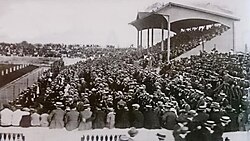
While Argentina had previously won friendly competitions such as the Copa Lipton and Copa Newton, this tournament provided the stage for their first official continental title. The event was hosted at the Sportivo Barracas stadium, which saw crowds far exceeding its official capacity, reflecting the immense public interest in the sport.
Key Facts
- Champion: Argentina (1st official title)
- Host City: Buenos Aires, Argentina
- Venue: Sportivo Barracas (Capacity: 30,000)
- Top Scorer: Julio Libonatti (3 goals)
- Participating Teams: Argentina, Brazil, Uruguay, and Paraguay
- Total Matches: 6
- Total Goals: 14 (Average of 2.33 per match)
Political Turmoil and Tournament Background
The 1921 championship was played against a backdrop of intense institutional conflict. The Argentine Football Association (AFA) was locked in a dispute with the dissident Asociación Amateurs de Football (AAmF). This rift was so deep that the AAmF ignored the continental competition entirely, continuing its own Primera División championship simultaneously.
International tensions also played a role. Chile was originally invited but withdrew due to internal dissent and a conflict involving the AAmF. Brazil's squad was similarly affected by internal strife, as they excluded players from São Paulo (Paulistas), fielding only players from Rio de Janeiro (Cariocas). Notably, this included the exclusion of Arthur Friedenreich, the first star of Brazilian football, following a ban on black players suggested by Brazilian President Epitácio Pessoa.
The Paraguayan Debut
Paraguay made its debut in this edition of the championship. Their journey to Buenos Aires via Rosario included several friendly matches against local clubs Newell's Old Boys and Tiro Federal. Interestingly, the ship transporting the Paraguayan squad also carried Argentine players Ernesto Celli, Gabino Sosa, and Julio Libonatti to the capital.
The Road to Victory
Argentina's path to the title was defined by defensive dominance and clinical finishing. The team did not concede a single goal throughout the entire tournament, led by the exceptional performances of goalkeeper Américo Tesoriere.
The tournament opened with a high-stakes clash between Argentina and Brazil. Despite the stadium's official capacity of 22,000, approximately 30,000 spectators attended, driven by ticket reselling. Argentina secured a 1–0 victory thanks to a goal by Julio Libonatti.
The Final Showdown: Argentina vs. Uruguay
The final match against Uruguay was the most anticipated event of the tournament. To ensure peak performance, Argentine executives sent the players to a training camp in Tigre, where they engaged in relaxing activities like fishing and bocce. As the final approached, the team was moved to a strictly controlled hotel in downtown Buenos Aires to avoid distractions.
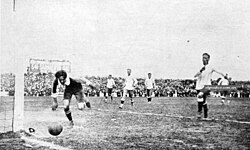
The match drew nearly 40,000 fans, many of whom had traveled by train from Rosario to support local players. Argentina won the match 1–0, with Julio Libonatti scoring the decisive goal in the 57th minute. This victory gave Argentina 6 points from 3 games, crowning them champions.
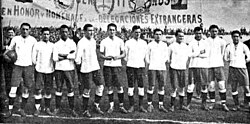
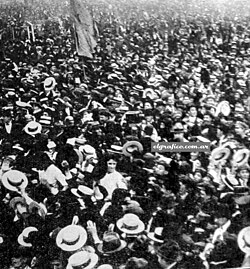
The conclusion of the match saw an outpouring of emotion, as the crowd stormed the pitch to carry the players of both nations back to the Argentine team's hotel.
Tournament Statistics and Legacy
The 1921 championship was a resounding commercial success. Ticket sales generated $147,033, and with a $15,000 donation from the Buenos Aires City Council, the event yielded a profit of $48,232—a significant sum for the amateur era of football.
Julio Libonatti emerged as the tournament's standout offensive player, scoring one goal in every match played by Argentina.
| Team | Played | W | D | L | GF | GA | GD | Points |
|---|---|---|---|---|---|---|---|---|
| Argentina | 3 | 3 | 0 | 0 | 5 | 0 | +5 | 6 |
| Brazil | 3 | 1 | 0 | 2 | 4 | 3 | +1 | 2 |
| Uruguay | 3 | 1 | 0 | 2 | 3 | 4 | -1 | 2 |
| Paraguay | 3 | 1 | 0 | 2 | 1 | 7 | -6 | 2 |
Frequently Asked Questions
Who was the top scorer of the 1921 South American Championship?
Julio Libonatti was the top scorer of the tournament, netting a total of 3 goals, scoring exactly one goal in each of Argentina's three matches.
Why did Chile withdraw from the competition?
Chile withdrew due to internal dissent and a conflict arising from an invitation sent to the dissident Asociación Amateurs de Football (AAmF), which the official Argentine Football Association (AFA) viewed as a provocation.
How did Argentina perform defensively during the tournament?
Argentina had a perfect defensive record, winning all their matches without conceding a single goal, largely credited to the performance of goalkeeper Américo Tesoriere.
Was the 1921 tournament financially successful?
Yes, it was a commercial success, generating a profit of $48,232 from ticket sales and a city council donation, which was substantial for the amateur era.
Which team made its debut in this edition?
Paraguay made its first appearance in the South American Championship during the 1921 tournament.