Song Dynasty: The Golden Age of Chinese Innovation and Culture
The Song dynasty (960–1279) stands as one of the most remarkable eras in Chinese history, characterized by a profound transition from a military-dominated society to one led by scholar-officials. This period was marked by an explosion of scientific discovery, economic prosperity, and artistic refinement that laid the groundwork for much of modern East Asian culture.
The dynasty is historically divided into two distinct phases: the Northern Song and the Southern Song. While the first phase focused on consolidating power in the north, the second was a resilient effort to maintain Chinese sovereignty in the south against formidable nomadic empires.
Key Facts
- Duration: 960–1279 AD.
- Capitals: Bianjing (Kaifeng) during the Northern Song; Lin'an (Hangzhou) during the Southern Song.
- Major Innovations: Early gunpowder formulas, movable type printing, and the pound lock for canals.
- Population: Reached massive scales, with the Northern Song estimated between 80–110 million and the Southern Song around 65 million.
- End of Dynasty: Conquered by the Mongol-led Yuan dynasty following the Battle of Yamen in 1279.
The Northern Song (960–1127)
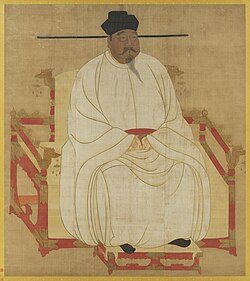
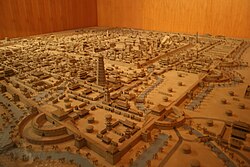
Founded by Emperor Taizu in 960, the Northern Song established its capital at Bianjing (modern-day Kaifeng). This era was defined by the centralization of power and a shift toward a civilian-led government. The state emphasized the civil service examination system, which allowed for greater social mobility by recruiting officials based on merit and knowledge of Confucian classics rather than hereditary nobility.
During this time, the empire faced constant pressure from northern neighbors, including the Liao dynasty. The signing of the Chanyuan Treaty in 1005 helped maintain a fragile peace, allowing the empire to focus on internal economic growth and urban development.
The Southern Song (1127–1279)
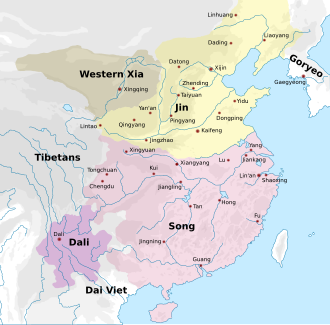
The trajectory of the dynasty shifted violently during the Jingkang incident in 1127, when the Jurchen-led Jin dynasty captured the northern capital. The Song court was forced to retreat south of the Yangtze River, establishing a new capital at Lin'an (modern-day Hangzhou). This period is known as the Southern Song.
Despite the loss of the traditional heartlands around the Yellow River, the Southern Song remained a global economic powerhouse. The region's productive agricultural land and bustling trade networks sustained a robust economy, making it a target for the rising Mongol Empire.
The Mongol Conquest
In the 13th century, the Mongols, led by Genghis Khan and later his successors, systematically dismantled the Jin and Western Xia dynasties. Although the Song initially allied with the Mongols to defeat the Jin, the alliance collapsed as the Song attempted to reclaim their lost northern territories.
Kublai Khan, who founded the Yuan dynasty in 1271, launched a relentless campaign against the Southern Song. After the fall of Lin'an in 1276 and the decisive Battle of Yamen in 1279, the Song dynasty officially ended, and China was reunited under Mongol rule.
Science, Technology, and Culture
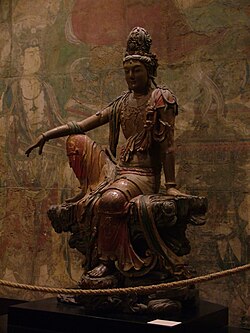
The Song dynasty is perhaps most famous for its contributions to global science and technology. It was an era of polymaths—scholars expert in multiple fields—who pushed the boundaries of human knowledge.
Military Innovation and Gunpowder
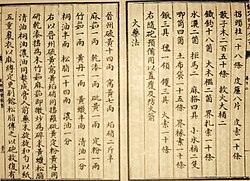
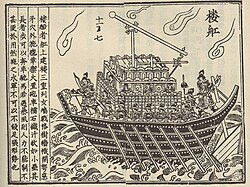
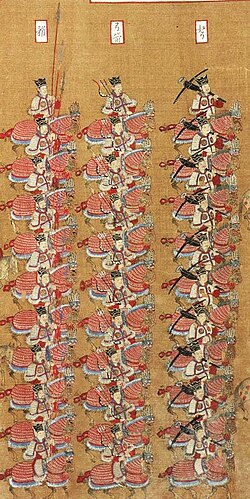
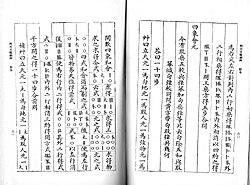
The Song period saw the first recorded written formulas for gunpowder (found in the 1044 Wujing Zongyao). This led to the development of explosive bombs launched by traction trebuchets from warships, fundamentally changing the nature of warfare.
Engineering and Mathematics
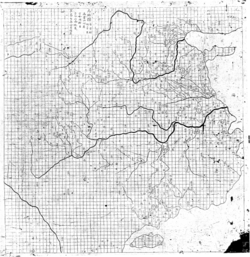
Hydraulic engineering reached new heights with the invention of the pound lock in 984 by Qiao Weiyo, which allowed ships to navigate varying water levels in canals. In mathematics, scholars like Zhu Shijie advanced algebra, while cartographers created precise maps, such as the Yu Ji Tu, featuring graduated scales for distance.

Arts and Education
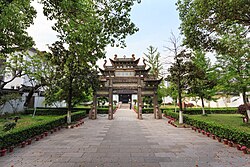
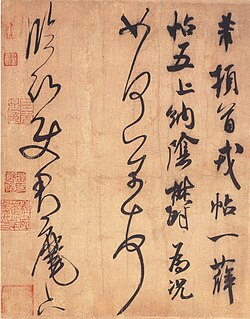
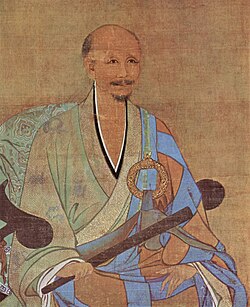
The proliferation of movable type printing democratized knowledge, making books more accessible. Education flourished in institutions like the Donglin Academy, while the arts saw a peak in calligraphy and landscape painting. Religion remained a diverse tapestry of Buddhism, Taoism, and Confucianism, alongside minority faiths like Islam and Nestorian Christianity.
Summary of the Song Dynasty
| Feature | Northern Song | Southern Song |
|---|---|---|
| Time Period | 960–1127 | 1127–1279 |
| Primary Capital | Bianjing (Kaifeng) | Lin'an (Hangzhou) |
| Main Adversary | Liao Dynasty | Jin Dynasty / Mongol Empire |
| Economic Focus | Centralization & Urbanization | Agriculture & Maritime Trade |
Frequently Asked Questions
![The Liaodi Pagoda, the tallest pre-modern Chinese pagoda, built in 1055; it was intended as a Buddhist religious structure, yet served a military purpose as a watchtower for observation of potential dangers.[119]](/images/4d/70/4d70b82691b56bc61b4cb9f48017ef3f88b9e18ecdb4582cc926d095976059b4.jpg)

What was the main difference between the Northern and Southern Song?
The Northern Song controlled most of East China with its capital in Kaifeng. The Southern Song was established after the Jin dynasty seized the north, forcing the Song court to move its capital to Lin'an and rule from south of the Yangtze River.
How did the Song dynasty contribute to modern warfare?
The Song dynasty developed the earliest known written formulas for gunpowder and utilized it to create explosive bombs, which were deployed using traction trebuchets on both land and sea.
What role did the civil service examination play?
The examination system shifted power from hereditary aristocrats to a merit-based gentry. This created a class of scholar-officials who managed the empire's administration based on their mastery of Confucian philosophy.
Who finally defeated the Song dynasty?
The Mongol Empire, under the leadership of Kublai Khan (founder of the Yuan dynasty), conquered the Song. The final defeat occurred at the Battle of Yamen in 1279.
What were some of the key technological achievements of the era?
Key achievements included the invention of the pound lock for canal navigation, the development of movable type printing, and significant advancements in cartography and mathematics.