Soda Stereo: The Legacy of Latin America's Best-Selling Rock Band
Formed in Buenos Aires in 1982, Soda Stereo stands as the most successful Argentine band in history. Comprised of singer-guitarist Gustavo Cerati, bassist Zeta Bosio, and drummer Charly Alberti, the trio redefined the landscape of Spanish-language rock. By 2007, they had sold an estimated seven million records, cementing their status as cultural icons across the continent.
The band's journey is marked by a constant sonic evolution. They began with a sound heavily influenced by new wave (a pop-rock genre characterized by synthesizers and a polished sound) and ska, eventually transitioning through post-punk, alternative rock, and art rock. Their ability to adapt and innovate allowed them to transcend national borders, turning Latin Rock into a pan-regional phenomenon.
!["Sobredosis de TV" was chosen as the first single for the first Soda Stereo album Soda Stereo, released on 14 December 1984. The video-clip for "Dietético" aired on Música Total on Canal 9 and had a considerable impact.[5]](/images/a1/49/a14930d9797d64c418a510743452c72fc60253f65b567654b5a06946293611d4.jpg)
Key Facts
- Origin: Buenos Aires, Argentina (formed 1982).
- Best-Selling Status: The highest-selling Argentine band of all time.
- Core Members: Gustavo Cerati, Zeta Bosio, and Charly Alberti.
- Major Milestone: Sold 7 million records by 2007.
- Signature Song: "De Música Ligera" from the album Canción Animal.
- Final Studio Album: Sueño Stereo (1995).
Musical Evolution and Discography
Soda Stereo's career can be viewed as a series of stylistic shifts. Their 1984 self-titled debut introduced them to the scene, followed by a move toward a post-punk aesthetic in Nada personal (1985), Signos (1986), and Doble Vida (1988). The 1990 release of Canción Animal marked a pivot to alternative rock, producing their most famous anthem, "De Música Ligera."
In their later years, the band experimented with shoegaze (a subgenre of indie rock characterized by an ethereal, distorted wall of sound) and art rock on the albums Dynamo (1992) and Sueño Stereo (1995). The latter was a commercial triumph, reaching platinum status in Argentina just 15 days after its release.
| Album Title | Release Year | Primary Style/Influence |
|---|---|---|
| Soda Stereo | 1984 | New Wave / Ska |
| Nada personal | 1985 | Post-punk |
| Signos | 1986 | Post-punk |
| Doble Vida | 1988 | Post-punk |
| Canción Animal | 1990 | Alternative Rock |
| Dynamo | 1992 | Shoegaze / Art Rock |
| Sueño Stereo | 1995 | Art Rock / Pop |
The Path to Continental Stardom
While early performances like the 1985 Chateau Rock festival helped them gain a foothold in Argentina, it was their 1986 tour that broke them open internationally. By performing in Ecuador, Colombia, Costa Rica, Peru, and Chile, Soda Stereo proved that Latin Rock could transcend nationality.
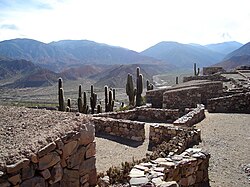
Chile became a pivotal market for the band. The hit "Nada personal" established them as idols among Chilean youth, and a strong showing at the Viña del Mar International Song Festival in February 1987 opened doors across the rest of Latin America.
![In 1986 hundreds of Chilean youths received Soda Stereo as popular idols. The song that created this first contact was Nada personal (:es)" (Nothing Personal) which became a radio hit. A little later in February 1987 Soda had a strong showing at the Viña del Mar International Song Festival, again in Chile. This, in effect, opened the doors to the rest of Latin America.[17]](/images/36/18/36180ea4a8a0d313f3a81537d16a02309af901f11279b088cca31d83aef88562.jpg)
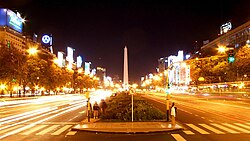
Their popularity peaked with massive public events, including a free concert on December 14, 1991, at Avenida 9 de Julio in Buenos Aires, which attracted over 250,000 people.
Breakup and the "Me Verás Volver" Reunion
The band officially disbanded in 1997, concluding with a farewell concert at the Estadio Monumental in Buenos Aires on September 20. Following the split, Gustavo Cerati launched a highly successful solo career with albums such as Bocanada and Fuerza Natural.
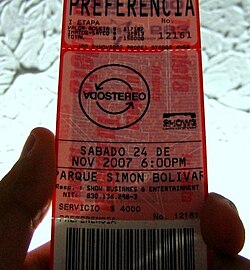
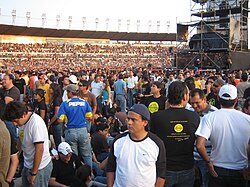
In 2007, the trio reunited for the Me Verás Volver tour. The demand was unprecedented; 90,000 tickets sold in just 24 hours for their Buenos Aires shows. The tour spanned 22 concerts across the Americas, reuniting approximately one million fans.
!["You Will See Me Return". A picture of the show at the Julio Martínez Stadium [es] in Santiago, Chile on 24 October 2007.](/images/b3/f2/b3f2f5fdeec3ac35df8ffff857cbe24d1b3f899e274537c063c56522c09b17be.jpg)
Tragedy and Modern Iterations
The band's legacy was forever altered by the health of Gustavo Cerati. After a solo performance in Caracas, Venezuela, on May 15, 2010, Cerati suffered a stroke. He remained in a coma for four years until his death from respiratory arrest on September 4, 2014.
Despite this loss, Zeta Bosio and Charly Alberti revived the name for the Gracias Totales tour (2020–2022), featuring guest vocalists including Cerati's son, Benito, and Chris Martin of Coldplay. Looking forward, the band has announced Ecos, a 2026 tour that will feature a digital version of Cerati performing on stage.
Frequently Asked Questions
Who were the members of Soda Stereo?
The core members were Gustavo Cerati (lead vocals, guitar, keyboards), Zeta Bosio (bass, backing vocals), and Charly Alberti (drums, percussion).
What is Soda Stereo's most famous song?
Their best-known song in Latin America is the alternative rock anthem "De Música Ligera," featured on the 1990 album Canción Animal.
When did the band break up and reunite?
The band originally disbanded in 1997 after their farewell concert at Estadio Monumental. They reunited for a massive tour called Me Verás Volver in 2007.
How many records did Soda Stereo sell?
By 2007, Soda Stereo had sold approximately seven million records, making them the best-selling Argentine band of all time.
What is the "Ecos" tour?
Announced in 2025, Ecos is a tour scheduled for 2026 that will utilize a digital representation of the late Gustavo Cerati to perform alongside the remaining members.