Soccer-Specific Stadiums: Design, History, and Evolution in North America
In the landscape of North American sports, the soccer-specific stadium represents a pivotal shift in how the beautiful game is hosted. Unlike multi-purpose venues designed to accommodate various sports, these stadiums are either purpose-built or fundamentally redesigned to prioritize soccer. While they can still host concerts or other sporting events like rugby, lacrosse, and American football, every architectural decision is centered on the needs of soccer players and fans.
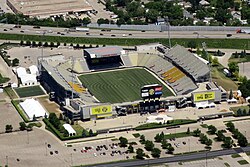
Some of these facilities, such as Toyota Stadium, SeatGeek Stadium, and Historic Crew Stadium, even incorporate permanent stages at one end to facilitate large-scale concerts without compromising the primary sporting function.
Key Facts
- Primary Purpose: Designed specifically for soccer to optimize sightlines and pitch dimensions.
- Field Size: Typically 110–120 yards long by 70–80 yards wide, adhering to FIFA international standards.
- Surface: Natural grass is preferred to reduce player injury, though some venues use artificial turf.
- Capacity: MLS venues generally range between 18,000 and 30,000 seats.
- Fan Experience: Front-row seating is placed closer to the pitch level compared to the elevated sidelines of gridiron football stadiums.
Design and Technical Specifications
The architecture of a soccer-specific stadium is defined by its scale and amenities. These venues typically include high-definition video screens, scoreboards, and luxury suites. One of the most critical distinctions is the field width. A standard soccer pitch is significantly wider than a regulation American football field (53 1/3 yards) or a Canadian football field (65 yards).
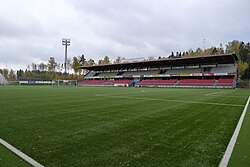
The playing surface is another point of contention and design. While natural grass is the gold standard for professional soccer to minimize injury risks, some stadiums, such as Morrison Stadium at Creighton University and Providence Park in Portland, utilize artificial turf.
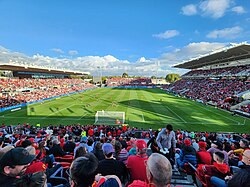
Seating arrangements also differ from traditional American sports venues. In gridiron football stadiums, the first row is often elevated to allow fans to see over coaches and substitutes. In soccer-specific venues, the seating is brought down closer to the level of the pitch, creating a more intimate and intense atmosphere for the spectators.
The Evolution of Soccer Venues in North America
During the 1970s, 80s, and 90s, professional leagues like the North American Soccer League (NASL) and the early years of Major League Soccer (MLS) relied on oversized American football stadiums. These venues were often problematic; they were too large for the crowds, too narrow for the pitch, and frequently featured artificial turf that did not meet FIFA international rules.
Baseball parks were considered as alternatives due to their natural grass and smaller capacities, but scheduling conflicts during the summer and irregular sightlines made them impractical.
The era of the soccer-specific stadium began in the 1990s. The term was coined by Lamar Hunt, who funded the construction of Columbus Crew Stadium, the first venue of its kind for MLS. This sparked a trend throughout the 2000s, with teams across the U.S. and Canada building their own homes. Canada's first such venue was BMO Field in Toronto, though the distinction is slightly different in Canada. Because the Canadian Football League (CFL) uses a wider field, venues like Tim Hortons Field can more easily accommodate both soccer and CFL regulations.
Comparative Overview of Stadium Types
| Feature | Soccer-Specific Stadium | Multi-Purpose (Gridiron) Stadium |
|---|---|---|
| Primary Focus | Soccer | Various Sports (Football, Baseball, etc.) |
| Field Width | 70–80 yards (FIFA optimal) | ~53.3 yards (American Football) |
| Seating Proximity | Close to pitch level | Elevated front rows |
| Typical Capacity | 18,000 – 30,000 (MLS) | 60,000 – 80,000 |
| Surface Preference | Natural Grass (preferred) | Often Artificial Turf |
Current Landscape Across Leagues
Major League Soccer (MLS)
MLS continues to expand its footprint of dedicated venues. Current stadiums range from the historic Providence Park (opened 1926) to modern facilities like Geodis Park (30,109 capacity) and the upcoming Nu Stadium in Miami (scheduled for 2026). Future projects include Etihad Park in New York City and McDonald's Park in Chicago.
National Women's Soccer League (NWSL)
The NWSL utilizes several soccer-specific venues, some shared with MLS teams (like Audi Field and Shell Energy Stadium) and others dedicated to the women's game, such as the CPKC Stadium in Kansas City and Lynn Family Stadium in Louisville.
United Soccer League (USL)
The USL has implemented a mandate requiring all Championship and League One teams to play in self-owned, soccer-specific stadiums by 2025. This has led to a surge in smaller, dedicated venues like Heart Health Park and the upcoming Railyards Stadium.
NCAA Division I
College soccer also employs dedicated facilities, though on a smaller scale. These range from boutique venues like the Bobcat Soccer Complex (500 capacity) to larger facilities like Harder Stadium (17,000 capacity).
Frequently Asked Questions
What makes a stadium "soccer-specific"?
A stadium is considered soccer-specific if it is purpose-built or fundamentally redesigned so that its primary function is hosting soccer matches, featuring optimized pitch dimensions and sightlines tailored for the sport.
Why is natural grass preferred over artificial turf?
Natural grass is generally favored in professional soccer because players are typically more susceptible to injuries when playing on artificial surfaces.
How do soccer-specific stadiums differ from NFL stadiums in terms of seating?
Unlike NFL stadiums, where the first row is elevated to provide a clear view over the sidelines, soccer-specific stadiums place the front row closer to the level of the pitch for a more immersive experience.
Who coined the term "soccer-specific stadium"?
The term was coined by Lamar Hunt, who financed the construction of Columbus Crew Stadium, the first such venue for Major League Soccer.
Can soccer-specific stadiums host other events?
Yes. While designed for soccer, these venues frequently host concerts and other sports such as rugby, lacrosse, and American football.