Snipe: The Specialized Wading Birds of the Scolopacidae Family
The snipe refers to a group of approximately 26 species of wading birds within the family Scolopacidae. These birds are master specialists of the wetlands, characterized by their remarkably long, slender bills, eyes positioned high on their heads for a wide field of vision, and cryptic plumage that allows them to blend seamlessly into their environment.
While they share similar traits, snipes are divided into three primary genera. The genus Gallinago enjoys a nearly worldwide distribution, while Lymnocryptes is found specifically in Europe and Asia. The genus Coenocorypha is more restricted, found only on the outlying islands of New Zealand. Interestingly, Lymnocryptes is more closely related to woodcocks (Scolopax) than to other snipes; together, these four genera form a monophyletic group—a clade consisting of an ancestral species and all its descendants.
It is important to distinguish these birds from painted-snipes (family Rostratulidae), which are not closely related to typical snipes despite their similar names.
Key Facts
- Species Count: Approximately 26 species across three genera.
- Defining Features: Long, slender bills and high-set eyes.
- Primary Diet: Insect larvae, worms, crustaceans, and snails.
- Habitat: Wet marshy settings including bogs, swamps, and wet meadows.
- Unique Ability: Can sense prey in mud without seeing it via specialized nerve filaments.
Anatomy and Foraging Behavior
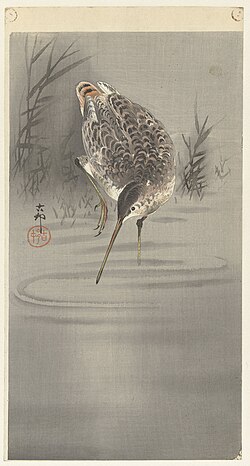
The most striking feature of the snipe is its bill, which it uses in a rhythmic "sewing-machine" action to probe the mud for invertebrates. This is not mere guesswork; the snipe possesses a highly sophisticated sensory system. Filaments from the fifth pair of nerves run nearly to the tip of the bill, opening under a soft cuticle in a series of cells. This creates a honeycomb-like structure in the premaxillaries (the front bones of the upper jaw), allowing the bird to detect prey through touch and pressure without needing to see it.
This biological adaptation is also observed in sandpipers. When feeding, the snipe can keep the very tip of its bill closed while slurping up its prey, ensuring a secure catch from the saturated soil.
Diet and Habitat
Snipe are primarily insectivores, feeding mainly on insect larvae. However, their diet is diverse, encompassing various other invertebrates such as worms, snails, and crustaceans.
To find this food, snipes inhabit a variety of wet, marshy environments. Common habitats include:
- Bogs and swamps
- Wet meadows
- Riverbanks and coastlines
- Ponds
Depending on the location, they may settle in areas with dense vegetation or patchy cover, both of which serve as vital shields against predators.
Hunting and the Origin of the "Sniper"
Because of their cryptic plumage, snipes are incredibly difficult to spot in marshlands. They are highly alert and easily startled, rarely remaining in open spaces for long. Even when flushed into the air, their erratic flight patterns make them an extremely difficult target for hunters.
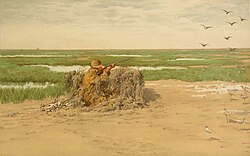
The extreme difficulty of hunting these birds led to the creation of the military term "sniper." Originally, a sniper was an expert hunter skilled in marksmanship and the art of camouflage. Over time, the term evolved to describe a sharpshooter who fires distant shots from a concealed position.
Snipe Classification Summary
| Genus | Distribution | Relationship/Notes |
|---|---|---|
| Gallinago | Nearly Worldwide | Typical snipes |
| Lymnocryptes | Asia and Europe | Closely related to woodcocks (Scolopax) |
| Coenocorypha | New Zealand Islands | Restricted range |
Frequently Asked Questions
How do snipes find food in the mud?
Snipes use specialized nerve filaments in their bills that create a honeycomb-like sensory surface. This allows them to feel the presence of invertebrates in the mud without having to see them.
What is the difference between a snipe and a painted-snipe?
While they share a common name, they are not closely related. Typical snipes belong to the family Scolopacidae, whereas painted-snipes are placed in their own separate family, Rostratulidae.
Where is the term "sniper" derived from?
The term comes from the act of hunting snipes. Because the birds are so well-camouflaged and fly erratically, only a highly skilled marksman could hunt them, leading to the term for a concealed sharpshooter.
What do snipes eat?
Their diet consists mainly of insect larvae, but they also consume other invertebrates such as worms, crustaceans, and snails.
Which snipe genus has the most limited distribution?
The genus Coenocorypha has the most limited distribution, as it is found only on the outlying islands of New Zealand.