Smog: Causes, Health Impacts, and Global Air Quality Challenges
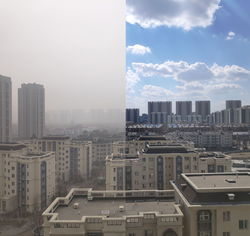
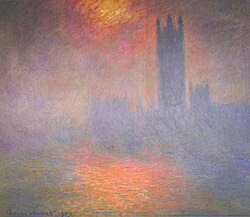
Smog, a portmanteau of "smoke" and "fog," is a form of intense air pollution characterized by its opacity and distinct odor. Originally coined in the early 20th century to describe the "pea soup fogs" of Victorian London, the term now encompasses a variety of atmospheric pollutants. This visible pollution consists of nitrogen oxides, sulfur oxides, ozone, smoke, and other particulates, resulting from a complex mix of human activity and natural phenomena.
From the industrial hubs of Asia to the sprawling basins of North America, smog remains a critical environmental and public health challenge. It is not a single substance but a mixture of emissions from coal combustion, vehicles, industry, agriculture, and forest fires, often transformed by chemical reactions in the atmosphere.
Key Facts

- Composition: Smog is made of nitrogen oxides, sulfur oxides, ozone, and particulate matter.
- Primary Sources: Major contributors include vehicle exhaust, coal burning, industrial emissions, and agricultural crop burning.
- Health Risks: Linked to increased mortality, asthma development in early life, and respiratory diseases.
- Global Hotspots: Delhi is cited as one of the most polluted cities, while Los Angeles historically served as a primary example of transportation-based smog.
- Regulatory Success: In Los Angeles, strict emissions standards led to a 70% to 80% decline in nitrous oxides and ozone between 1962 and 2012.
The Causes of Smog
Anthropogenic Sources
Human activities are the primary drivers of modern smog. The combustion of coal for energy and heating releases sulfur and nitrogen oxides. Transportation emissions from cars and trucks contribute volatile organic compounds and nitrogen oxides, which are precursors to more complex pollutants.
Agricultural practices also play a significant role. In regions like India, the burning of approximately 500 million tons of rice and wheat crop residues during autumn and spring creates massive plumes of smoke that drift over cities like Delhi.
![During the autumn and spring months, some 500 million tons of rice and wheat crop residues are burnt, and winds blow from India's north and northwest towards east.[48][49][50] This aerial view shows India's annual crop burning, resulting in smoke and air pollution over Delhi and adjoining areas.](/images/07/2e/072eae3f4b80f30abd56f17d7087fbed3a63dab833a68dbdaf763dad39137bf7.jpg)
Photochemical Smog
Unlike traditional smoky fog, photochemical smog forms when sunlight triggers chemical reactions between nitrogen oxides (NOx) and volatile organic compounds (VOCs). This process creates ground-level ozone (O3), a primary component of smog that is harmful to breathe.
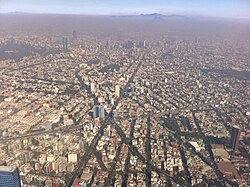
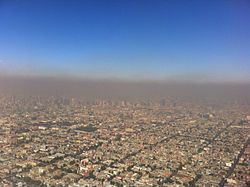
The chemical progression involves the reaction of radicals (R•) with oxygen, followed by the interaction of nitrogen dioxide (NO2) and nitric oxide (NO) with ozone and sunlight (hν). This cycle produces nitric acid (HNO3) and heat, contributing to the thick, often brownish haze seen over cities like Mexico City or Los Angeles.
![Photochemical smog formation[20]](/images/31/f3/31f3d0b9d6db8d8999e8f28d633d36d68472a4b114dca014a1f6a09394422578.png)
Natural Causes
While human activity dominates, nature also contributes to air pollution. Volcanoes release sulfur dioxide and particulates into the atmosphere, and certain plants emit isoprene, a natural volatile organic compound that can participate in photochemical reactions.
Health Impacts and Exposure Levels
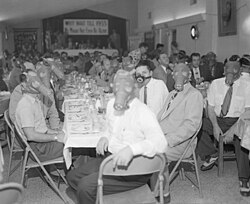
Exposure to smog is closely linked to increased mortality and chronic illness. Research indicates a connection between early-life pollution exposure and the development of asthma. In China, studies in Jinan found that smog episodes were associated with a 5.87% increase in overall mortality, while research in Xi'an linked ambient pollution to higher respiratory disease deaths.
Beyond respiratory issues, smog is associated with risks of certain birth defects, low birth weight, and an increased risk of Alzheimer's disease.

Measuring Air Quality
The U.S. Environmental Protection Agency (EPA) uses an Air Quality Index (AQI) to communicate risk. For ozone, concentrations between 85 and 104 ppbv are "Unhealthy for Sensitive Groups," while levels from 125 to 404 ppb are classified as "Very Unhealthy." Other critical pollutants include PM10 (particulate matter) and carbon monoxide (CO).
| Pollutant | Concentration Range |
|---|---|
| Ozone (O3) | 125 ppb – 404 ppb |
| PM10 | 355 μg/m³ – 424 μg/m³ |
| Carbon Monoxide (CO) | 15.5 ppm – 30.4 ppm |
| Nitrogen Dioxide (NO2) | 0.65 ppm – 1.24 ppm |
Global Impact and Regional Case Studies
Asia
Delhi is among the world's most polluted cities, where air pollution is estimated to cause 10,500 deaths annually. High levels of PM2.5 (fine particulate matter) are driven by construction, industry, and crop burning, leading to increased lung cancer and asthma in women and children.
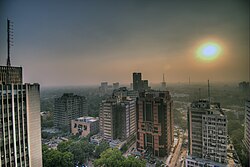
In Kyrgyzstan, the capital suffers from severe winter smog due to coal heating and vehicle emissions. This is exacerbated by the construction of high-rise buildings (elitki) that block the natural flow of fresh mountain air.
North America
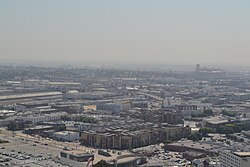
In the United States, smog is estimated to cause 24,000 deaths per year. Los Angeles was once the most polluted basin in the U.S., but the implementation of the Clean Air Act of 1970 and strict California Air Resources Board regulations led to dramatic improvements. Between 1962 and 2012, volatile organic compounds declined by a factor of 50.
Other Affected Regions
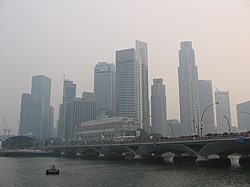
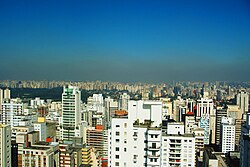
Mexico City frequently suffers from poor air quality due to its valley location and heavy reliance on automobiles. Similarly, São Paulo, Brazil, and various cities in Southeast Asia experience significant smog, often exacerbated by forest fires, such as those in Sumatra affecting Singapore.
Frequently Asked Questions

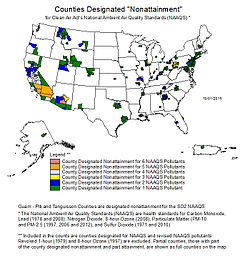
![Though the rate of exposure to ground-level ozone ("smog") and small-particulate matter ("soot") has been declining, in 2026, nearly half of people in the US under age 18 live in an area receiving a failing grade for at least one measure of air pollution.[103]](/images/96/7c/967cdab5a4b037b0ccfe062fb761fbe0b0e570ac39a48d4fe0bc29d8c59fc728.webp)
What is the difference between smoke and smog?
Smoke is a collection of airborne particulates emitted when a material undergoes combustion. Smog is a broader term for intense air pollution that combines smoke and fog, often involving chemical reactions between pollutants and sunlight to create ozone.
How does photochemical smog form?
It forms when nitrogen oxides and volatile organic compounds react in the presence of sunlight. This chemical process produces ground-level ozone and other oxidants, creating a visible haze.
Why is PM2.5 considered so dangerous?
PM2.5 refers to fine particulate matter with a diameter of 2.5 micrometers or less. Because these particles are so small, they can penetrate deep into the lungs and enter the bloodstream, causing severe respiratory and cardiovascular issues.
Can smog be reduced by government policy?
Yes. As seen in Los Angeles, the combination of the Clean Air Act and strict state-level emissions testing and restrictions on new vehicle sales significantly reduced concentrations of ozone and nitrous oxides.
What are the primary health risks of long-term smog exposure?
Long-term exposure is linked to increased mortality rates, the development of asthma (particularly in children), lung cancer, and potential risks related to birth weight and neurological health.