Skiffle: The DIY Musical Bridge to the British Invasion
Skiffle is a high-energy genre of folk music that blends elements of American blues, country, bluegrass, and jazz. Characterized by its accessibility, skiffle is famously performed using a mix of manufactured instruments and homemade or improvised gear. While it began as a regional American style, it exploded into a cultural phenomenon in the United Kingdom during the 1950s, democratizing music-making for a generation of youth.
Key Facts
- Core Influence: Rooted in American Southern folk, blues, and jazz.
- Defining Feature: Use of improvised instruments like washboards and tea-chest basses.
- UK Peak: Reached its height in the late 1950s, with an estimated 30,000 to 50,000 groups.
- Major Catalyst: Lonnie Donegan's 1956 hit "Rock Island Line."
- Legacy: Served as a critical stepping stone for The Beatles and the British Invasion.
Origins in the United States
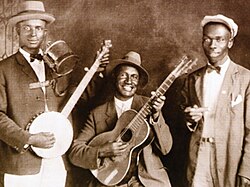
Skiffle emerged in the United States during the first half of the 20th century. While some argue it developed from New Orleans jazz, it is more broadly associated with the improvised jug bands common across the American South. These ensembles utilized everyday objects to create rhythm and melody, including jugs, washboards, washtub basses, musical saws, and cigar-box fiddles, alongside traditional banjos and acoustic guitars.
The etymology of the word "skiffle" is debated. In the west of England, the term meant to "make a mess" of a business as early as 1873. By the 1920s in Chicago, it became slang for a "rent party"—a social gathering where guests paid a small fee to help the host cover their rent. This usage likely traveled north during the African-American migration to industrial cities.
The term first appeared in a musical context in 1925 with Jimmy O'Bryant and his Chicago Skifflers. Throughout the early 20th century, it described country blues records, such as those by Dan Burley & his Skiffle Boys, and was used by Ma Rainey to describe her repertoire for rural audiences. By the 1940s, however, the term had largely vanished from the American musical lexicon.
The British Skiffle Revival
Skiffle might have remained an obscure American relic if not for its revival in the United Kingdom during the 1950s. The movement grew out of the post-war British jazz scene, specifically a shift from swing toward trad jazz (traditional jazz). Musicians like Ken Colyer and Chris Barber were central to this transition.
Lonnie Donegan, who played banjo for Ken Colyer's Jazzmen, began performing skiffle during intervals. Accompanied by a washboard and tea-chest bass, Donegan played lively versions of American folk and blues songs, heavily influenced by the recordings of Lead Belly. These "skiffle breaks" soon became as popular as the main jazz sets.
The movement reached a tipping point in late 1955. Donegan's fast-tempo recording of "Rock Island Line" became a massive hit in 1956, peaking at No. 6 in the UK and No. 8 in the US. It was the first debut record to go gold in Britain, selling over a million copies worldwide and captivating post-war youth who lacked expensive instruments.
A Grassroots Movement
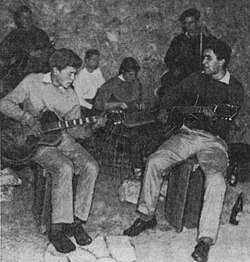
The appeal of skiffle lay in its low barrier to entry. It required neither expensive equipment nor virtuoso skill, making it particularly popular among working-class men reacting against the austerity of post-war Britain. The craze was further amplified by the BBC's Six-Five Special, the first British youth music program, which used a skiffle song as its theme.
By the late 1950s, skiffle groups were ubiquitous in church halls, cafes, and the coffee bars of Soho, such as the 2i's Coffee Bar. However, by 1958, the boom began to fade as musicians transitioned into the emerging rock and roll scene or moved toward the second British folk revival and the British blues boom.
Impact on Music History
Skiffle acted as a vital training ground for some of the most influential musicians in history. The most notable example is the Quarrymen, a skiffle group formed by John Lennon in 1957, which eventually evolved into The Beatles after Paul McCartney and George Harrison joined.
Other prominent artists who started in skiffle include:
- Rock and Blues: Jimmy Page, David Gilmour, Ritchie Blackmore, Roger Daltrey, and Mick Jagger.
- Folk and Pop: Van Morrison, Alexis Korner, and the Bee Gees (via Barry Gibb's The Rattlesnakes).
- Beat Music: Graham Nash and Allan Clarke of the Hollies.
Musician Billy Bragg has compared the skiffle movement to 1970s punk rock, noting that both were youth-led revolts against parental culture that prioritized raw expression over technical perfection.
| Feature | US Origins (Early 20th C) | UK Revival (1950s) |
|---|---|---|
| Primary Influence | Jug bands, Country Blues | Trad Jazz, Lead Belly |
| Key Instruments | Jugs, washboards, cigar-box fiddles | Tea-chest bass, washboard, guitar |
| Social Context | Rent parties, Southern rural life | Post-war austerity, youth rebellion |
| Key Figures | Jimmy O'Bryant, Ma Rainey | Lonnie Donegan, The Quarrymen |
Frequently Asked Questions
What instruments are typically used in skiffle?
Skiffle uses a mix of conventional instruments like the acoustic guitar and banjo, and improvised ones such as the washboard for percussion and the tea-chest bass (a homemade bass made from a wooden tea crate and a broomstick).
Who was the most influential figure in the British skiffle craze?
Lonnie Donegan was the primary proponent of the movement. His hit "Rock Island Line" popularized the genre and inspired thousands of young people to start their own bands.
How did skiffle lead to the creation of The Beatles?
John Lennon formed a skiffle group called the Quarrymen in 1957. This group provided the foundation for the band, with Paul McCartney and George Harrison joining shortly after, eventually evolving into the Beatles.
Why was skiffle so popular among working-class youth in the 1950s?
It was accessible and affordable. Because instruments could be improvised from household items, young people did not need money or formal musical training to express themselves and rebel against the drabness of post-war society.
What happened to skiffle by the end of the 1950s?
The craze subsided by 1958 as musicians shifted toward rock and roll, folk, and blues. Many artists began to distance themselves from the term "skiffle," viewing it as too limiting for their evolving styles.