Ska Music: The History and Evolution of the Jamaican Beat
Ska is a vibrant music genre that emerged from Jamaica in the late 1950s, serving as the foundational precursor to both rocksteady and reggae. By blending the rhythms of Caribbean mento (a folk style often associated with calypso) with American jazz and rhythm and blues (R&B), ska created a high-energy sound that would eventually travel from the streets of Kingston to the global stage.
The genre is most easily identified by its distinctive "walking" bass line and a rhythmic emphasis on the off-beat, often referred to as the "chop." This upbeat energy made it an instant favorite for dancing and a catalyst for various youth subcultures across the world.
Key Facts
- Origin: Jamaica, late 1950s.
- Core Sound: Walking bass lines with accents on the off-beat.
- Evolution: Evolved into rocksteady (1966) and then reggae (1968).
- Three Waves: Divided into the original Jamaican scene, the British 2 Tone revival, and the global Third-Wave movement.
- Global Reach: Significant scenes developed in the UK, USA, Japan, Australia, and Latin America.
The Birth of Jamaican Ska
In the late 1950s, Jamaican producers like Clement "Coxsone" Dodd and Duke Reid operated sound systems that played American jump blues and R&B. As the supply of imported records dwindled, they began recording local artists. Initially, these were produced on "soft wax" (lacquer-coated metal discs known as dub plates) before moving to 45 rpm 7-inch vinyl in late 1959.
While early recordings mirrored American shuffle blues, the sound quickly morphed. Influence from artists like Fats Domino—specifically the accentuation of the off-beat—helped define the ska style. Because Jamaica did not honor international copyright laws at the time, artists frequently recorded covers of American and British hits.
One of the most successful examples was Millie Small's 1964 version of "My Boy Lollypop," which sold over seven million copies and became Jamaica's first major international hit. Other legendary figures of this era included The Skatalites, Prince Buster, and The Wailers.
The Three Waves of Ska
First Wave: The Jamaican Original
Dominating the Jamaican music scene in the early 1960s, this era was characterized by a blend of R&B and Caribbean rhythms. It was highly popular among British mods and skinheads. By 1965, as American soul music became smoother and slower, ska evolved into the shorter-lived rocksteady phase before finally becoming reggae in 1968.
Second Wave: 2 Tone
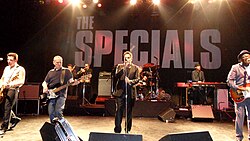
Emerging in the late 1970s in Coventry, UK, 2 Tone was a fusion of traditional Jamaican ska and the aggressive energy of punk rock. Named after Jerry Dammers' 2 Tone Records, this style featured faster tempos and a harder edge. The Specials were central to this movement, famously reviving the track "A Message to You Rudy."
Third Wave: Global Expansion
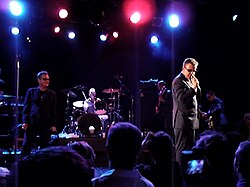
Coined by historian Albino Brown in 1989, Third-Wave ska (or West Coast ska) grew out of the punk scene in the late 1980s. While some bands kept the traditional sound, most were defined by heavy guitar riffs and large horn sections. In the 1990s, bands like No Doubt and Sublime brought the genre into the mainstream.
Global Influence and Regional Scenes
Ska's influence expanded far beyond the English-speaking world. In Japan, the "J-ska" scene flourished in the mid-1980s, led by the Tokyo Ska Paradise Orchestra. In Russia, bands like Leningrad and Distemper used ska as a form of anglophone opposition to traditional Russian rock.
Latin American ska blended traditional rhythms with rock en Español and Latin music, with groups like Los Fabulosos Cadillacs achieving international success. In Australia, the scene peaked in the mid-1980s with bands like the Allniters and later the Melbourne Ska Orchestra.
In the United States, the 1980s saw the rise of 2 Tone-influenced bands like the Uptones and the Toasters. This eventually led to the ska-punk subgenre, pioneered by Fishbone, Operation Ivy, and the Mighty Mighty Bosstones, which favored distorted guitars and fast tempos over R&B influences.
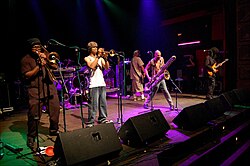
The 1990s marked a commercial peak for American ska-punk. Rancid's "Time Bomb" (1995) and hits from Reel Big Fish pushed the genre into the public eye, making it a staple of alternative music until interest waned around the year 2000.
Ska Rhythm and Technique
The essence of ska lies in its rhythmic structure. The "skank" is the onomatopoeic term for the guitar's off-beat chop, which provides the driving energy of the music.
![Quarter note "skank" guitar rhythm,[13] named onomatopoetically for its sound. Playⓘ](/images/ee/43/ee432d863c7c161a529b992b20de7c00d7c7f3978b54eb94cdc79a91ff8d8914.png)
Depending on the tempo and the wave of ska, this rhythm can vary from a steady quarter note to a more rapid eighth note pattern.
![Eighth note skank rhythm[14] Playⓘ](/images/e7/7d/e77d00dab9325c05fb23dd76ac77ab156e5a5026339b3996afeaf6808861679a.png)
| Period | Wave/Style | Key Characteristics | Notable Artists |
|---|---|---|---|
| 1960s | Jamaican Ska | R&B influence, walking bass, brass | The Skatalites, Prince Buster |
| Late 1970s | 2 Tone | Punk fusion, faster tempo, social lyrics | The Specials, Madness |
| 1980s-90s | Third Wave | Ska-punk, distorted guitars, horn sections | No Doubt, Sublime, Bosstones |
Frequently Asked Questions
What is the difference between ska and reggae?
Ska is the faster, upbeat precursor to reggae. While ska emphasizes the off-beat with a high-energy tempo, reggae is generally slower and more relaxed, evolving from ska via the intermediate stage of rocksteady.
What does "2 Tone" refer to?
2 Tone refers to a genre and record label founded in the UK in the late 1970s. It fused Jamaican ska with punk rock and was characterized by its multiculturalism and black-and-white aesthetic.
What is a "skank" in ska music?
In a musical context, the "skank" is the rhythmic guitar chop played on the off-beat. It is also the name of the dance associated with the genre.
Which bands defined the Third-Wave ska movement?
The Third-Wave movement was defined by a mix of traditional sounds and punk influences, with bands like No Doubt, Sublime, and the Mighty Mighty Bosstones achieving significant mainstream success in the 1990s.
How did American R&B influence Jamaican ska?
Jamaican producers recorded local versions of American jump blues and shuffle blues. The off-beat rhythms found in late-1950s R&B recordings, such as those by Fats Domino, were a primary influence on the development of the ska beat.