Siyum HaShas: The Global Celebration of Talmud Completion
The Siyum HaShas is a monumental event in the Jewish calendar, marking the completion of a seven-and-a-half-year cycle of studying the entire Babylonian Talmud. This achievement is the culmination of the Daf Yomi program, a daily study regimen where participants learn one page (daf) of the Talmud every day. More than just a conclusion, the Siyum HaShas serves as both an end and a beginning, bridging the completion of one cycle with the immediate start of the next.
The program is characterized by deep scholarship and communal joy. It typically features Gedolei Torah (prominent Torah leaders) and a distinguished Rav who recites the final topic of the Talmud and the Hadran ("We will return") prayer, signaling the intent to study the material again. The event includes scholarly lectures, the recitation of the first topic of the new cycle, and the Kaddish Hagadol, a special prayer. The celebrations often conclude with spirited singing and dancing.
Key Facts
- Founder: The Daf Yomi program was established by Rabbi Meir Shapiro.
- Cycle Length: It takes approximately seven and a half years to complete the entire Talmud.
- Scale: Attendance has grown from tens of thousands in 1931 to nearly 100,000 in a single U.S. venue by the 12th Siyum.
- Global Reach: Celebrations occur simultaneously across Israel, North America, Europe, Australia, and beyond.
- Dedication: Since the 7th Siyum, the event has been permanently dedicated to the memory of the six million Jews murdered during the Holocaust.
The Evolution of the Siyum HaShas
Early Milestones (1st to 4th Siyum)
The 1st Siyum HaShas took place on February 2, 1931, primarily at the Chachmei Lublin Yeshiva in Poland, presided over by Rabbi Meir Shapiro. By the 2nd Siyum in 1938, attendance in Poland reached 15,000 to 20,000 people, though the founder, Rabbi Shapiro, had passed away in 1933. The 3rd Siyum in 1945 was deeply poignant, as it followed the Holocaust and was dedicated to the millions who perished.
By the 4th Siyum in 1953, the center of gravity had shifted toward Israel, with 10,000 people gathering in Mea Shearim, Jerusalem, alongside significant celebrations in New York City.
Growth and Expansion (5th to 8th Siyum)
From 1960 through 1982, the program saw steady growth. The 5th Siyum featured massive outdoor gatherings in Jerusalem and Bnei Brak. The 6th Siyum (1968) introduced larger venues like the Culture Palace in Tel Aviv and the Town Hall in Stamford Hill, London. The 7th Siyum (1975) saw the introduction of Daf Yomi badges for schoolchildren and the formal dedication of the event to Holocaust victims.
The 8th Siyum in 1982 marked a turning point in participation. Agudath Israel estimated that nearly 250,000 people worldwide participated, with the main U.S. event held at the Felt Forum in New York City.
The Era of Stadiums (9th to 14th Siyum)
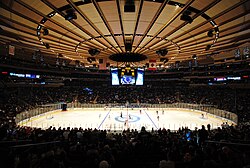
The 9th Siyum in 1990 saw a bold move by Rabbi Moshe Sherer to book Madison Square Garden. Despite skepticism, over 20,000 people attended, selling out the venue. This set a precedent for the 10th and 11th Siyums, which continued to utilize Madison Square Garden and other large arenas like the Nassau Coliseum and the Continental Airlines Arena.
The 12th Siyum HaShas (2012) reached an unprecedented scale at MetLife Stadium in New Jersey, where 92,000 seats were sold out. This event also saw the launch of the Koren Talmud Bavli, a 42-volume edition featuring translation and commentary by Rabbi Adin Steinsaltz.
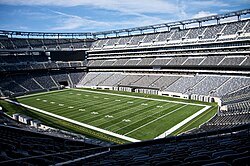
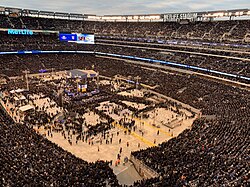
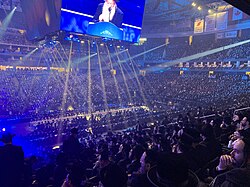
The 13th Siyum (2020) again utilized MetLife Stadium and the Barclays Center, emphasizing the principle of b'rov am hadrat melech (God's honor is increased when a large number of Jews gather). Additionally, the Dirshu organization held a separate celebration at the Prudential Center.
The 14th Siyum HaShas is scheduled to take place on June 6, 2027, at MetLife Stadium.
Siyum HaShas Summary Table
| Siyum Edition | Year | Primary U.S. Venue | Notable Milestone |
|---|---|---|---|
| 1st | 1931 | Baltimore/Philadelphia | Founded by Rabbi Meir Shapiro in Lublin, Poland |
| 7th | 1975 | Manhattan Center | Permanently dedicated to Holocaust victims |
| 9th | 1990 | Madison Square Garden | First time a major sports arena was filled |
| 12th | 2012 | MetLife Stadium | 92,000 attendees; launch of Koren Talmud Bavli |
| 13th | 2020 | MetLife Stadium | Concurrent events at Barclays Center and Prudential Center |
| 14th | 2027 | MetLife Stadium | Upcoming celebration (June 6) |
Frequently Asked Questions
What is the purpose of the Hadran prayer?
The Hadran is a prayer recited at the end of a study cycle. It expresses the student's commitment to return to the text and continue studying the material, emphasizing that Torah study is a lifelong process rather than a one-time task.
Who started the Daf Yomi program?
The Daf Yomi program was founded by Rabbi Meir Shapiro, who presided over the first Siyum HaShas in 1931 at the Chachmei Lublin Yeshiva in Poland.
How long does it take to complete one cycle of the Talmud?
Because the program requires studying one page of the Talmud every day, it takes approximately seven and a half years to complete the entire Babylonian Talmud.
Why are such large stadiums used for these events?
The growth of the Haredi population and the popularity of the Daf Yomi program have led to hundreds of thousands of participants. Large venues like MetLife Stadium are used to accommodate the massive crowds and to fulfill the principle that gathering a large number of people increases the honor of the occasion.
Is the Siyum HaShas only for men?
While traditionally male-dominated, recent cycles have seen increased female participation. For example, the 12th Siyum featured a Modern Orthodox event with female Torah scholars, and the 13th Siyum included a celebration by the Hadran organization focusing on women's learning.