New Jersey: The Garden State
Known as the Garden State, New Jersey is a land of striking contrasts, where bustling metropolitan hubs meet serene natural landscapes. From the high-rise skylines of Jersey City to the quiet stretches of the Pine Barrens, New Jersey serves as a vital bridge between the major economic centers of New York City and Philadelphia.
Admitted to the Union on December 18, 1787, as the third state, New Jersey has evolved from a colonial province into one of the most densely populated and economically prosperous states in the U.S. Its motto, "Liberty and prosperity," reflects a legacy of industrial innovation and a commitment to diverse growth.
Key Facts
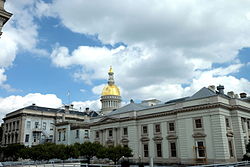
- Capital: Trenton
- Largest City: Newark
- Population: Approximately 9,548,215 (2025 est.)
- Population Density: Ranked 1st in the United States
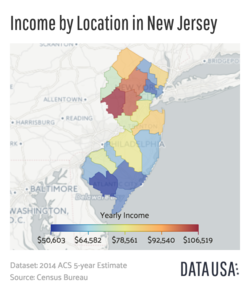
- Median Household Income: $99,800 (2023), ranking 2nd nationally
- Highest Point: High Point (1,803 ft)
- State Fruit: Northern highbush blueberry
Geography and Climate
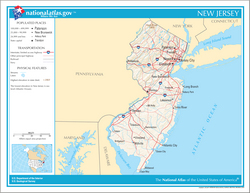
![Metropolitan statistical areas and divisions of New Jersey; those shaded in blue are part of the New York City Metropolitan Area, including Mercer and Warren counties. Counties shaded in green, including Atlantic, Cape May, and Cumberland counties, belong to the Philadelphia Metropolitan Area.[clarification needed]](/images/78/f8/78f88c2862c50fce7a3e5cd0b4fac8a98f595b4526166888a57e701127a6e586.webp)
New Jersey covers a total area of 8,722.58 square miles, with a diverse landscape that includes the Hudson Palisades, the Meadowlands, and the New Jersey Pine Barrens. The state is bordered by the Atlantic Ocean to the east, providing the famous Jersey Shore, and the Delaware River to the west.
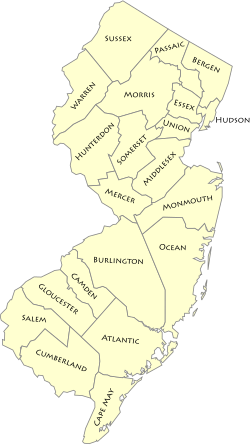
The climate varies by region. Northern areas, such as Sussex, experience cooler temperatures, while coastal cities like Cape May and Atlantic City enjoy more moderate winters. The state's geography is further defined by the Delaware Water Gap and the Great Swamp National Wildlife Refuge.
| City | January (Low/High) | May (Low/High) | July (Low/High) | December (Low/High) |
|---|---|---|---|---|
| Sussex | -9 / 1 (16/34) | 7 / 21 (45/70) | 16 / 28 (61/82) | -6 / 4 (22/39) |
| Newark | -4 / 4 (24/39) | 12 / 22 (53/72) | 20 / 30 (68/86) | -1 / 6 (30/44) |
| Atlantic City | -2 / 5 (29/42) | 13 / 19 (55/67) | 21 / 27 (70/81) | 1 / 8 (34/46) |
| Cape May | -2 / 6 (28/42) | 12 / 21 (53/70) | 19 / 29 (66/84) | 0 / 8 (32/47) |
History and Heritage
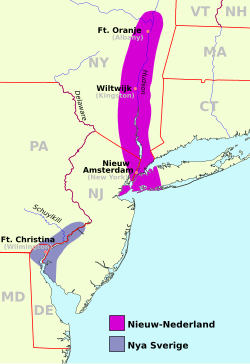
New Jersey's early history is marked by the presence of New Netherland and New Sweden during the colonial era. The state played a pivotal role in the American Revolutionary War, serving as a strategic battleground.
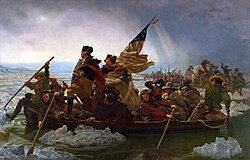
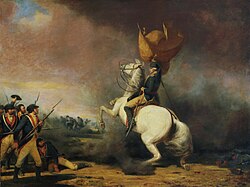
Key historical events include George Washington's covert crossing of the Delaware River on December 25, 1776, leading to the Battle of Trenton, and the subsequent Battle of Princeton in January 1777.
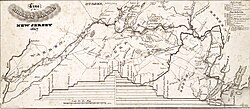
In the 19th century, the state's infrastructure expanded significantly, exemplified by the 107-mile-long Morris Canal, which facilitated trade and transport across the region.
Demographics and Culture
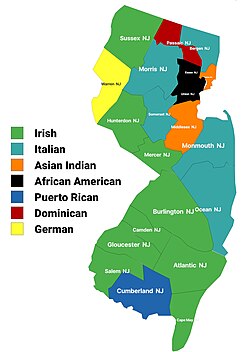
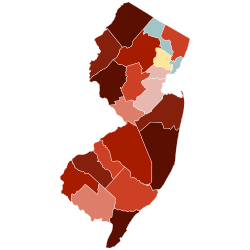
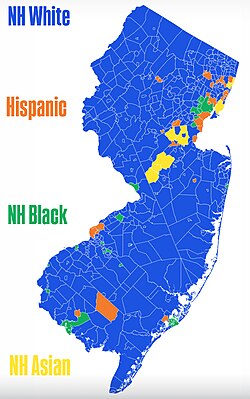
New Jersey is one of the most ethnically diverse states in the U.S. According to 2020 census data, the population includes significant White (non-Hispanic), Hispanic or Latino, Black or African American, and Asian communities.
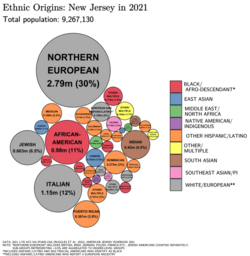
This diversity is reflected in the state's vibrant ethnic enclaves, such as India Square in Jersey City, the Ironbound Portuguese and Brazilian district in Newark, and Little India in Edison/Iselin, the largest South Asian hub in the country.
Language diversity is equally prominent, with Spanish being the most common non-English language, followed by Chinese, Italian, Portuguese, and Korean.
Economy and Infrastructure
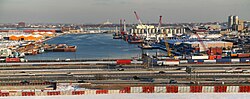
The state's economy is a powerhouse of industry, finance, and logistics. Jersey City has become a financial center known as Wall Street West, while the Port Newark-Elizabeth Marine Terminal stands as one of the world's busiest container seaports.
![The developing waterfront skyline of Downtown Jersey City, dubbed Wall Street West[240]](/images/d9/8e/d98e432ea67ad0938553d81c94fb58f6fa3158aa78c35667ff879d88ca596ed9.jpg)
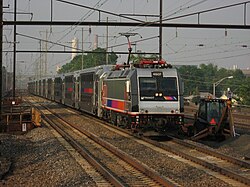
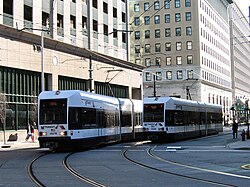
Transportation is a cornerstone of New Jersey's functionality. The George Washington Bridge is the world's busiest motor vehicle bridge, and the state is served by extensive rail networks, including NJ Transit and the Hudson–Bergen Light Rail.
![The George Washington Bridge, connecting Fort Lee (foreground) in Bergen County across the Hudson River to New York City (background), is the world's busiest motor vehicle bridge.[252][253]](/images/f1/e6/f1e671f856aa9d224d54b5df6a7f2bd54778cf6f6ffa2e1a71ea28924c8c8696.jpg)
Education and Research
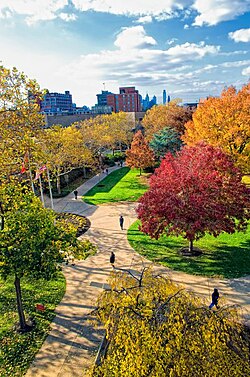
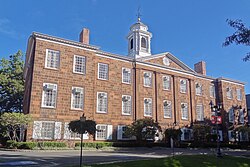
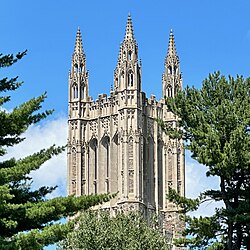
New Jersey is home to world-class academic institutions. Rutgers University is the largest state university system in the state, while Princeton University remains one of the world's most prominent research institutions and an Ivy League member.
Tourism, Sports, and Leisure
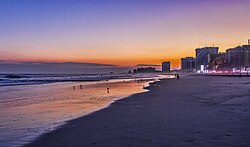
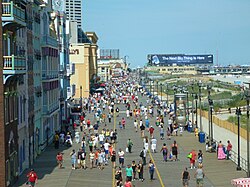
Tourism in New Jersey is heavily centered on the coast. Atlantic City is the nexus of the state's gambling industry and features the world's first and longest boardwalk.
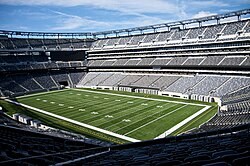
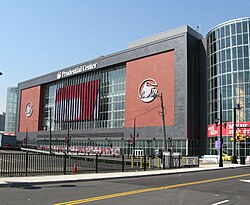
The state is also a major sports destination. MetLife Stadium hosts both the New York Giants and New York Jets, while the Prudential Center is home to the NHL's New Jersey Devils.
Arts and Entertainment
From the Liberty Science Center in Jersey City to the Thomas Edison Center in Menlo Park, the state offers a wealth of museums. For those seeking thrills, Six Flags Great Adventure and various boardwalk amusement parks provide extensive entertainment options.
Frequently Asked Questions
Why is New Jersey called the Garden State?
New Jersey earned this nickname due to its rich agricultural history and the ubiquitous gardens and landscaping found throughout the state.
What is the most populous city in New Jersey?
Newark is the largest city in New Jersey.
Which bridge in New Jersey is the busiest in the world?
The George Washington Bridge, connecting Fort Lee to New York City, is the world's busiest motor vehicle bridge.
What is the significance of the Atlantic City Boardwalk?
Opened in 1870, it was the world's first boardwalk and remains the longest and busiest boardwalk in the world.
Which major universities are located in New Jersey?
The state is home to Rutgers University, the largest state university system, and Princeton University, a world-renowned Ivy League research institution.