Sir William Pulteney: A Distinguished Career in the British Army
Lieutenant-General Sir William Pulteney (1861–1941) was a prominent British military leader whose career spanned over four decades of service to the British Empire. From the deserts of Egypt to the trenches of the Western Front, Pulteney rose through the ranks to command major corps during some of the most significant conflicts of the late 19th and early 20th centuries.
Key Facts
- Full Name: Sir William Pulteney, GCVO, KCB, KCMG, DSO.
- Highest Rank: Lieutenant-General.
- Primary Unit: Scots Guards.
- Major Commands: III Corps and XXIII Corps.
- Notable Role: Served as 'Black Rod' in the UK Parliament from 1920 to 1941.
- Service Period: 1878–1920.
Early Life and Military Beginnings
Born on May 18, 1861, in Ashley, Northamptonshire, Pulteney was educated at Eton College. His military journey began in October 1878 when he was commissioned into the Oxfordshire Militia. He later transitioned to the Scots Guards, receiving his commission as a second lieutenant on April 23, 1881.
Early Campaigns and Promotions
Pulteney's early career was marked by rapid deployment to colonial conflicts. He served in the Anglo-Egyptian War, participating in the Battle of Tell El Kebir in September 1882. By 1892, he had reached the rank of captain. His leadership during the Bunyoro and Nandi expeditions in 1895 earned him a mention in despatches and the appointment as a Companion of the Distinguished Service Order (DSO). He was promoted to major on May 1, 1897.
Service in the Second Boer War
When the Second Boer War broke out in October 1899, Pulteney deployed to South Africa with the 1st Battalion of his regiment, attached to the Guards Brigade. He received a brevet appointment as lieutenant colonel on November 11, 1899, and saw action at the battles of Belmont, Enslin, and Modder River, as well as Magersfontein in December 1899.
In April 1900, he became second in command of his regiment. He participated in the strategic march toward Bloemfontein and Pretoria, fighting in the battles of Diamond Hill (June 1900) and Belfast (August 1900), and the advance to Komatipoort in September. For his distinguished service, he was granted a brevet promotion to colonel on November 29, 1900. He remained in South Africa until the war's conclusion in May 1902.
Interwar Leadership and Command
Following his return to the United Kingdom, Pulteney spent several years in high-level administrative and command roles. After a period of half-pay starting in January 1908, he was appointed temporary brigadier general and took command of the 16th Infantry Brigade in Ireland. By January 1909, he was promoted to major general, and in July 1910, he assumed command of the 6th Division, a position he held until the start of the First World War.
The First World War
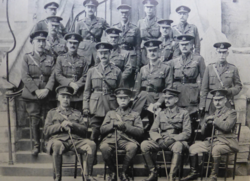
Pulteney's role expanded significantly with the onset of World War I. On August 5, 1914—just one day after Britain entered the conflict—he was promoted to temporary lieutenant general and appointed General Officer Commanding (GOC) of the III Corps. He led this formation on the Western Front continuously from August 31, 1914, until February 19, 1918.
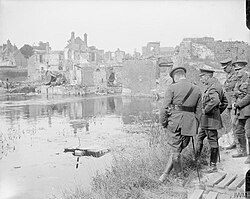
In May 1915, his rank of lieutenant general became substantive. Following his tenure on the Western Front, he commanded the XXIII Corps within the United Kingdom from February 20, 1918, to April 15, 1919.
Later Life and Parliamentary Service
After the war, Pulteney served with the British military mission to Japan before retiring from active army service in January 1920. However, his public service continued in a prestigious civilian capacity; from 1920 until his death in 1941, he held the office of Black Rod (the Gentleman Usher of the Black Rod) in the Parliament of the United Kingdom.
Pulteney married Jessie, the daughter of Sir John Arnott, Baronet, in 1917. He passed away on May 14, 1941, in Stansted Mountfitchet, Essex, at the age of 79.
Summary of Service and Honors
| Category | Details |
|---|---|
| Key Conflicts | Anglo-Egyptian War, Second Boer War, First World War |
| Major Commands | 16th Infantry Brigade, 6th Division, III Corps, XXIII Corps |
| Highest Rank | Lieutenant-General |
| Major Honors | GCVO, KCB, KCMG, DSO |
| Post-Military Role | Black Rod (1920–1941) |
Frequently Asked Questions
Which military units did Sir William Pulteney serve in?
He began his career in the Oxfordshire Militia before transferring to the Scots Guards, where he spent a significant portion of his service.
What was Pulteney's role during the First World War?
He served as the General Officer Commanding of the III Corps on the Western Front from 1914 to 1918, and later commanded the XXIII Corps in the UK.
What is the role of 'Black Rod' that Pulteney held?
Black Rod is a senior official in the Parliament of the United Kingdom, serving as the messenger of the House of Lords.
Which honors was Sir William Pulteney awarded?
He was a Knight Grand Cross of the Royal Victorian Order (GCVO), a Knight Commander of the Order of the Bath (KCB), a Knight Commander of the Order of St Michael and St George (KCMG), and received the Distinguished Service Order (DSO).
Where did Pulteney serve during the Second Boer War?
He served in South Africa with the 1st Battalion of the Scots Guards, participating in battles such as Belmont, Enslin, Modder River, and Magersfontein.