Sir William Anson: A Legacy of Law, Education, and Politics
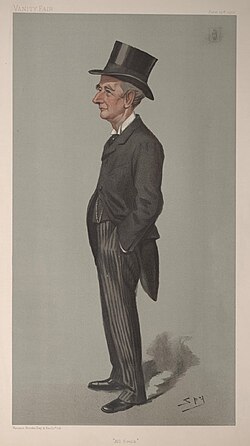
Sir William Anson was a distinguished figure whose career seamlessly bridged the worlds of legal scholarship, university administration, and national governance. From his early days at the Bar to his influential role in the British Parliament, Anson left an indelible mark on the academic and political landscape of the late 19th and early 20th centuries.
Key Facts
- Legal Expertise: Author of standard texts on the English Law of Contract and the British Constitution.
- Academic Leadership: Served as the Warden of All Souls College, Oxford, starting in 1881.
- Political Service: First Parliamentary Secretary to the Board of Education (1902–1905).
- Civic Duty: Member of Parliament for Oxford University and Chancellor of the Diocese of Oxford.
Legal Foundations and Academic Rise
Anson's professional journey began in 1869 when he was called to the Bar, a legal qualification allowing him to practice as a barrister. He worked on the home circuit until 1873, the year he succeeded to the baronetcy. His transition into academia began in 1874 when he was appointed as the Vinerian reader in English law at Oxford. This prestigious position was linked to a Fellowship at All Souls College, where he remained until his appointment as Warden of All Souls in 1881.
Contributions to Legal Literature
Beyond administration, Anson was a prolific scholar. He played a pivotal role in establishing a school of law at Oxford and taught undergraduates at Trinity College from 1886 to 1898. He authored several seminal works that became standard references in the field, including The Principles of the English Law of Contract (first published in 1884) and the two-part series The Law and Custom of the Constitution, which detailed "The Parliament" and "The Crown" between 1886 and 1892.
Civic Leadership and Political Career
Anson was deeply committed to both local governance and university interests. His civic contributions in Oxford were extensive: he served as an alderman of the city in 1892, chairman of quarter sessions for the county in 1894, and Chancellor of the Diocese of Oxford in 1899. He also held the position of Vice-Chancellor of Oxford University from 1898 to 1899.
In 1899, Anson entered national politics when he was returned without opposition as the Member of Parliament (MP) for Oxford University, representing the Liberal Unionist interest. Due to the requirements of his new parliamentary role, he resigned his position as vice-chancellor.
Impact on National Education
While in Parliament, Anson focused heavily on educational reform. In 1900, he joined the newly formed consultative committee of the Board of Education. By August 1902, he achieved a historic milestone by becoming the first Parliamentary Secretary to the Board of Education, a role he maintained until 1905. His lifelong dedication to learning was further recognized in 1902 when the Victoria University of Manchester awarded him an honorary Doctor of Laws (LL.D.) during the university's 50th jubilee celebrations.
Final Years and Honors
In 1911, Anson was appointed a Privy Counsellor, reflecting his high standing in the British government. He also maintained a long-term commitment to local education, serving on the governing body of Abingdon School from 1900 until his death in 1914.
| Period/Year | Role/Achievement | Institution/Organization |
|---|---|---|
| 1869 | Called to the Bar | Legal Profession |
| 1874 | Vinerian Reader in English Law | Oxford University / All Souls |
| 1881 | Warden | All Souls College |
| 1899 | Member of Parliament (MP) | Oxford University |
| 1902–1905 | First Parliamentary Secretary | Board of Education |
| 1911 | Privy Counsellor | UK Government |
Frequently Asked Questions
What were Sir William Anson's most famous written works?
Anson is best known for writing The Principles of the English Law of Contract and The Law and Custom of the Constitution, both of which became standard academic texts.
What role did he play in the Board of Education?
Anson served as a member of the consultative committee in 1900 and later became the first-ever Parliamentary Secretary to the Board of Education from 1902 to 1905.
Which Oxford college was he most closely associated with?
He was most closely associated with All Souls College, where he held a Fellowship and eventually served as Warden starting in 1881.
When did he serve as a Member of Parliament?
He was elected as the MP for Oxford University in 1899, running in the Liberal Unionist interest.
What honorary degree did he receive?
He received an honorary Doctor of Laws (LL.D.) from the Victoria University of Manchester in February 1902.