Sir Thomas Kelly-Kenny: A Legacy of British Military Leadership
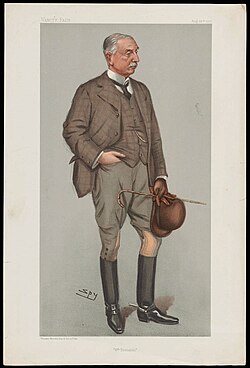
General Sir Thomas Kelly-Kenny was a distinguished figure in the British Army, whose career spanned nearly half a century of global conflict and administrative leadership. From the battlefields of China and Abyssinia to the rugged terrain of South Africa, Kelly-Kenny rose through the ranks to become a trusted advisor to royalty and a key administrator within the War Office.
Key Facts
- Full Name: Sir Thomas Kelly-Kenny, GCB GCVO.
- Service Period: 1858–1907.
- Highest Rank: General.
- Major Commands: Adjutant-General to the Forces and Commander of the 6th Division.
- Key Conflicts: Second Opium War, British Expedition to Abyssinia, and the Second Boer War.
- Royal Connection: Close confidential military advisor to King Edward VII.
Early Life and Education
Born on 27 February 1840 in Kilrush, County Clare, Ireland, Thomas Kelly was the fifth son of Matthew Kelly and Mary Kenny. He received his education as a lay student at St. Patrick's College, Carlow. In 1874, he adopted the additional surname "Kenny" following the will of his maternal uncle, Dr. Mathias Kenny, a veteran of the Peninsular War and the Battle of Waterloo.
Military Ascent and Global Campaigns
Kelly-Kenny began his military journey on 2 February 1858, when he was appointed as an ensign without purchase in the 1st Battalion, 2nd (The Queen's Royal) Regiment of Foot. His early career was marked by rapid deployment and diverse experiences, including serving as an aide-de-camp (ADC) to General Sir James Jackson at the Cape of Good Hope.
During the Second Opium War, he served as ADC to Sir Alfred Jephson. He saw active combat at Sinho and participated in the capture of the Tanku and Taku forts, earning a mention in despatches. By 1870, he was deployed to Abyssinia, where he managed the transport train—a role for which Lord Napier praised his "zeal, energy and ability." After graduating from the staff college in 1875, he continued his ascent, reaching the rank of major in 1877 and eventually major-general by 1896.
Political Ambitions and Irish Roots
Despite his military duties, Kelly-Kenny remained deeply connected to his native County Clare. He served as a Justice of the Peace and held significant landholdings in the region. However, his foray into politics was fraught with tension. In 1879, he sought a seat in a by-election for County Clare but was forced to withdraw due to opposition from the Catholic clergy, who disagreed with his Liberal politics despite his Catholic faith and local standing.
The Second Boer War
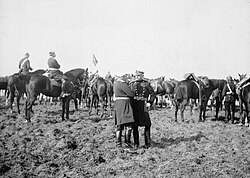
As a lieutenant general, Kelly-Kenny commanded the 6th Division of the South African field force during the Second Boer War (1899–1902). He played a significant role in the relief of Kimberley and fought in the battles of Poplar Grove, Driefontein, and Paardeberg.
At the Battle of Paardeberg, Kelly-Kenny advocated for a conservative strategy: besieging General Cronje's forces and utilizing superior artillery from a safe distance. However, Lieutenant-General Herbert Kitchener overruled this plan, ordering a direct assault on the Boer trenches. This decision led to "Bloody Sunday," resulting in heavy British casualties.
War Office and Royal Favor
Following the Boer War, Kelly-Kenny became a close confidant of King Edward VII. In October 1901, at the King's insistence, he was appointed Adjutant-General to the Forces, a role he held until 1904. While the King valued his administrative capacity and integrity, Kelly-Kenny faced friction within the War Office. Lord Roberts and other colleagues viewed him as too conservative regarding military reform.
Despite these internal conflicts, the King steadfastly supported him, shielding him from attempts to reduce his powers or transfer him to an army corps. In 1902, Kelly-Kenny accompanied Lord Roberts and the Secretary of State for War to Germany to observe army manoeuvres as a guest of Emperor Wilhelm.
Later Years and International Diplomacy
In his final years of service, Kelly-Kenny acted as a diplomatic representative for the British Crown. He attended the wedding of the Crown Prince of Germany in 1905 and accompanied Prince Arthur of Connaught on a mission to Japan in 1906 to present the Order of the Garter to the Emperor. During this trip, he was awarded the Grand Cross of the Order of the Rising Sun.
Kelly-Kenny retired from the army in 1907 and sold his Irish lands to tenants under the 1909 Land Purchase Act. He remained a fixture of royal society, maintaining friendships with Queen Alexandra and the Prince of Wales.
| Category | Details |
|---|---|
| Primary Unit | 2nd (The Queen's Royal) Regiment of Foot |
| Key Honors | GCB, GCVO, Order of the Red Eagle, Order of the Rising Sun |
| Major Command | 6th Division (South African field force) |
| Administrative Role | Adjutant-General to the Forces (1901–1904) |
| Death | 26 December 1914 (Aged 74) |
Frequently Asked Questions
Why did Kelly-Kenny withdraw from the 1879 County Clare by-election?
He withdrew because the majority of the Catholic clergy, including Bishop Ryan, did not endorse his candidacy due to his Liberal political views, despite his local roots and faith.
What was the controversy at the Battle of Paardeberg?
Kelly-Kenny proposed a cautious siege and artillery bombardment to minimize losses. This was overruled by Lieutenant-General Herbert Kitchener, whose order for a direct assault led to the high casualties of "Bloody Sunday."
What was his relationship with King Edward VII?
He was a close friend and confidential military advisor to the King. Edward VII highly valued his industry and administrative skills, often protecting him from political rivals within the War Office.
Did Kelly-Kenny have any involvement with the Irish Volunteers?
While there is no record of his active participation, a witness statement from Seán Fitzgibbon suggests that Sir Thomas Myles proposed Kelly-Kenny as a potential leader for the Irish Volunteers in August 1914.
How did Kelly-Kenny wish to be buried?
Despite his high rank and lifelong service, he left strict instructions in his will that he did not want a military funeral.