Siege of Kimberley: The 124-Day Struggle of the Second Boer War
The Siege of Kimberley was a pivotal engagement of the Second Boer War, lasting from October 14, 1899, to February 15, 1900. Located in the Cape Colony (modern-day South Africa), Kimberley was a strategic prize due to its status as the global center of diamond mining. For over four months, British forces and civilians endured isolation and shelling before a daring cavalry maneuver broke the deadlock.
At the time, Kimberley was the second-largest city in the Cape Colony, boasting a population of 40,000. Its prosperity was driven by the De Beers Mining Company, which controlled 90% of the world's diamond supply. However, its proximity to the Boer republics of the Transvaal and the Orange Free State made it a vulnerable outpost, situated over 700 kilometers away from the nearest major British ports.
Key Facts
- Duration: 124 days (October 14, 1899 – February 15, 1900).
- Outcome: British victory and the relief of the town.
- Key Figures: Cecil Rhodes, Lt Col Robert Kekewich, and Major-General John French.
- Innovation: The creation of "Long Cecil," a locally manufactured artillery piece.
- Casualties: 42 British killed and 135 wounded; heavy losses for Boer forces.
Preparation and the Outbreak of Hostilities
Despite warnings from the De Beers company regarding the town's vulnerability, the premier of the Cape Colony, William Philip Schreiner, dismissed fears of an attack as groundless in September 1899. Consequently, the town entered the conflict with limited official support.
Lt Col Robert Kekewich commanded a modest force consisting of the Loyal North Lancashire Regiment, Royal Engineers, and a mix of Cape Police and irregular troops. Their arsenal included RML 2.5-inch mountain guns, machine guns, and obsolete seven-pounder guns mounted on redoubts atop mine tailing heaps.
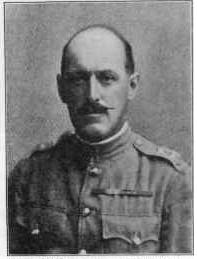
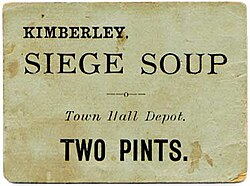
The siege began in earnest on October 14, 1899. Boer commandos quickly severed the railway lines to the south and north, effectively isolating the town. Crucially, the Boers shut off the primary water supply at Riverton on the Vaal River, making water more precious than the diamonds the city was famous for. Communication with the outside world was reduced to hazardous journeys by dispatch riders and the use of the heliograph (a wireless telegraph that signals by reflecting sunlight).
Innovation Under Pressure: Long Cecil
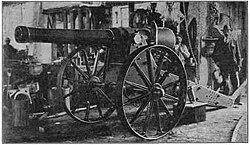
With inadequate weaponry to counter the Boer artillery, the engineers of the De Beers company, led by Chief Mechanical Engineer George Labram, took matters into their own hands. They manufactured fortifications, an armored train, and a massive gun known as Long Cecil.
Long Cecil featured a 100-millimeter bore and could fire a 13-kilogram shell up to 6,000 meters. Completed on January 21, 1900, the gun allowed the defenders to strike Boer positions that had previously been out of reach.
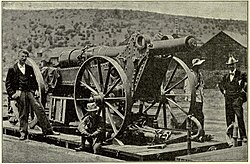
While the defenders fought from within, the Boers utilized the Long Tom, a powerful long-range artillery piece that caused significant distress to the town's residents.
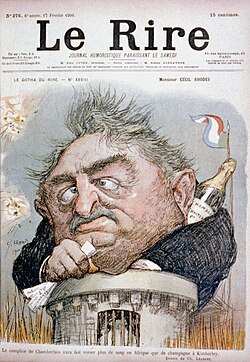
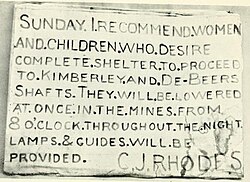
The presence of Cecil Rhodes, the diamond magnate, added a political dimension to the siege. Rhodes offered shelter to residents within the Kimberley Mine, though contemporary caricatures often depicted him as a trapped figure of luxury amidst the conflict.
The Relief of Kimberley
The British high command initially focused on the Boer capitals, but public pressure—fueled by the plight of Kimberley, Ladysmith, and Mafeking—forced a change in strategy. Early attempts by Lord Methuen to relieve the town failed at the battles of Modder River and Magersfontein, a period known as "Black Week."
In January 1900, Field Marshal Lord Roberts took command and assembled a massive force. He tasked Major-General John French with leading the largest British mounted division ever assembled to break the siege.
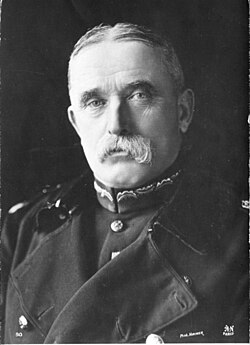
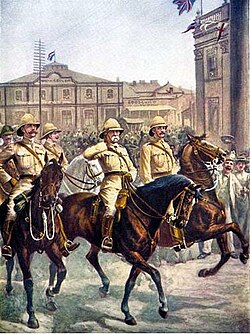
French executed a grueling flanking maneuver through the summer heat, losing hundreds of horses to exhaustion. On February 15, 1900, French's cavalry launched a bold charge through a Boer crossfire, successfully breaking through to the town.
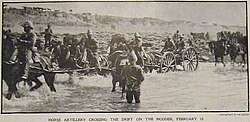
The relief was finalized on the evening of February 15, followed by Lord Roberts' entry into the city. The victory was cemented shortly after at the Battle of Paardeberg, where General Piet Cronjé's Boer force was defeated and captured.
Summary of the Siege
| Category | Details |
|---|---|
| Dates | 14 October 1899 – 15 February 1900 |
| British Commanders | Robert Kekewich, John French, Lord Roberts |
| Boer Commanders | Cornelius Wessels, Naas Ferreira, Piet Cronjé |
| British Strength | >1,600 (initial) |
| Boer Strength | 3,000 – 6,500 |
| British Casualties | 42 killed, 135 wounded |
Aftermath and Legacy
Following the relief, the region remained unstable. A concentration camp for captive Boer civilians and Black refugees was established in Kimberley on January 4, 1901, administered by the Kimberley Regiment. The camp operated until January 9, 1903, and is remembered today by a memorial at the Newton Dutch Reformed Church.
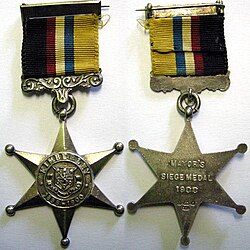
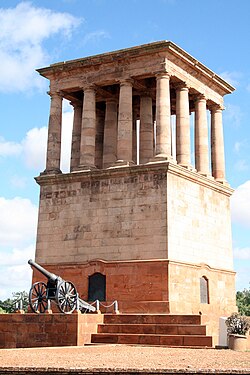
The city's resilience is still commemorated through the Kimberley Star and the Honoured Dead Memorial.
Frequently Asked Questions
Why was Kimberley so important during the Second Boer War?
Kimberley was the center of the world's diamond mining operations, with the De Beers company supplying 90% of the global supply. Its economic value and strategic location near the Boer republics made it a high-priority target.
What was "Long Cecil"?
Long Cecil was a 100mm rifled gun manufactured locally by De Beers engineers during the siege to supplement the town's inadequate artillery and counter Boer shelling.
How was the siege finally broken?
The siege was lifted on February 15, 1900, by a massive cavalry division under Major-General John French, who used a bold flanking maneuver and a direct charge to break through Boer lines.
What was the impact of the water supply being cut?
When the Boers severed the water supply at Riverton, water became more valuable than diamonds, creating a humanitarian crisis for the 40,000 residents of the town.
Who was the primary Boer general defeated after the relief?
General Piet Cronjé was the primary Boer leader whose force was trapped and defeated at the Battle of Paardeberg immediately following the relief of Kimberley.