Silahtarağa Power Station: The Industrial Legacy of Istanbul
The electrification of Istanbul began with a bold industrial venture at the upper end of the Golden Horn. The Silahtarağa power station stands as a monument to the city's transition into the modern era, serving as the primary source of energy for the metropolis for several decades.
The Birth of Ottoman Electrification
While a small hydroelectric station was built near Tarsus in Anatolia in 1902, the Silahtarağa plant was designed as the first major power station in the Ottoman Empire. The project was spearheaded by Ganz, an Austro-Hungarian Gas and Electric Company based in Budapest.
To facilitate the project, the Ottoman Electric Company was established in 1910. This venture was a collaboration between Ganz and two financial institutions: the Belgian Banque de Bruxelles and the Austro-Hungarian Banque Générale Hongroise de Crédit. After securing an imperial concession that lasted 50 years, the company constructed a coal-fired power plant in the Silahtarağa neighborhood of the Eyüp district.
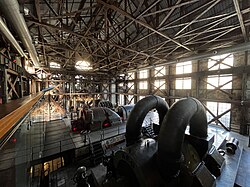
Powering the City
The station officially entered service on February 11, 1914. Its initial impact was immediate, providing the necessary energy to fuel Istanbul's tram network. Shortly thereafter, the plant began supplying electricity to the Dolmabahçe Palace, the official residence of the Sultan on the Bosporus strait.
As the infrastructure expanded, electrical power became a common feature in the more prosperous districts of the city, marking a significant shift in urban living and transportation.
Nationalization and Evolution
The ownership of the plant shifted as Turkey transitioned into a republic. In 1937, the foreign-owned company was nationalized. By July 1, 1938, the facility was handed over to the Municipality of Istanbul, with management assigned to the Electricity, Tunnel and Tram Company of Istanbul (IETT).
For several decades, Silahtarağa remained the sole producer of electricity for the city. This monopoly ended in 1952 when the station was integrated into the newly established Turkish national grid. Over the following years, management shifted again, moving to Etibank in 1962 and finally to the Turkish Electric Institution (TEK) in 1970.
Technical Capacity and Closure
The facility's energy output grew significantly over its operational lifespan. It began with three generators producing 6 MW (megawatts) each, but this capacity was eventually expanded to a total of 80 MW.
Despite its historical importance, the plant eventually became obsolete. On March 13, 1983, the Silahtarağa power station was shut down because it was no longer economical to operate. For the next 20 years, the site remained largely derelict.
Recognizing its historical value, the plant was officially listed as a "cultural and natural heritage of Istanbul" in 1991, ensuring its protection for future generations.
Key Facts
- Location: Silahtarağa neighborhood, Eyüp district, Istanbul.
- Start Date: February 11, 1914.
- Original Builder: Ganz (Austro-Hungarian Gas and Electric Company).
- Peak Capacity: 80 MW.
- Closure Date: March 13, 1983.
- Heritage Status: Listed as cultural and natural heritage in 1991.
| Year | Event |
|---|---|
| 1910 | Establishment of the Ottoman Electric Company |
| 1914 | Power station begins service |
| 1937 | Nationalization of the foreign-owned company |
| 1952 | Integration into the Turkish national grid |
| 1983 | Station shut down due to economic inefficiency |
| 1991 | Designated as cultural and natural heritage |
Frequently Asked Questions
Who built the Silahtarağa power station?
The station was built by the Budapest-based Austro-Hungarian Gas and Electric Company, known as Ganz, in cooperation with Belgian and Austro-Hungarian banks.
What were the first things powered by the station?
The plant initially supplied electricity to Istanbul's tram network and the Sultan's residence, the Dolmabahçe Palace.
How much power did the station produce?
The plant started with three 6 MW generators and eventually increased its total capacity to 80 MW.
Why was the power station closed?
The station was shut down on March 13, 1983, because it was no longer economical to operate.
What is the current status of the site?
After being derelict for 20 years, the site was listed as a cultural and natural heritage of Istanbul in 1991 and now houses SantralIstanbul.