Side Platforms in Railway and Transit Station Design
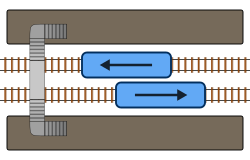
In the world of transit infrastructure, the layout of a station significantly impacts passenger flow and operational efficiency. One of the most fundamental configurations is the side platform—also referred to as a marginal or single-face platform. This design features platforms positioned to the side of one or more railway tracks or guideways, serving as the primary boarding area for passengers at railway stations, tram stops, transitways, and rapid transit systems.
For double-track railway lines, the basic design typically employs dual side platforms, with one platform dedicated to each direction of travel. This differs from an island platform, where a single platform is situated between two tracks. While side platforms are common, they often require a wider overall station footprint because they cannot share a single central boarding area for riders using both tracks.
Key Facts
- Definition: A platform located on the side of a track rather than between tracks.
- Configuration: Dual side platforms are standard for double-track lines; single side platforms are common for single-track lines.
- Connectivity: Platforms are often linked by footbridges or tunnels to ensure safe passenger transit between directions.
- Footprint: Generally requires more total width than an island platform layout.
- Versatility: Can be adapted for grade crossings using near-side or far-side configurations.
Station Layout and Variations
The physical arrangement of side platforms can vary based on the surrounding environment and the specific needs of the transit line.
Grade Crossing Integration
When a station is located near a level crossing (a grade crossing where a road intersects the tracks), platforms are typically arranged in one of two ways:
- Near-side platforms: Both platforms are positioned before the intersection.
- Far-side platforms: Both platforms are positioned after the intersection.
Advanced Configurations
In more complex transit environments, engineers employ specialized layouts to increase capacity or efficiency:
- Scissors Crossings: A single side platform may be served by multiple vehicles simultaneously through the use of a scissors crossing, which allows access mid-way along the platform length.
- Hybrid Layouts: Larger stations may combine two side platforms with several island platforms positioned between them.
- Spanish Solution: A specific high-capacity format featuring two side platforms and one central island platform serving two tracks, allowing passengers to board and alight from different sides of the train.
Operational Status
Not all side platforms remain active. In some instances, a station may have a side platform that has become disused while the opposite platform remains in operation, as seen at Ryde Esplanade.
Comparison of Platform Types
| Feature | Side Platform | Island Platform |
|---|---|---|
| Position | Outside the tracks | Between the tracks |
| Station Footprint | Generally wider | Generally narrower |
| Passenger Access | Separate platforms per direction | Shared platform for both directions |
| Typical Use | Standard double-track or single-track lines | High-efficiency transfers |
Frequently Asked Questions
What is the difference between a side platform and an island platform?
A side platform is located on the outer sides of the tracks, meaning each direction of travel has its own platform. An island platform is a single platform located between two tracks, allowing passengers for both directions to use the same area.
How do passengers move between dual side platforms?
To ensure safety and avoid crossing tracks on foot, stations with dual side platforms often provide a footbridge or an underground tunnel to connect the two sides.
What is a "Spanish solution" in station design?
The Spanish solution is a layout that uses both side platforms and an island platform to serve two tracks. This allows passengers to exit the train on one side and enter on the other, reducing congestion.
Why would a station use side platforms instead of an island platform?
Side platforms are often used to better accommodate large numbers of passengers or when the station is an infill station built along an existing line where there is no room to shift tracks to create a central island.
What are near-side and far-side platforms?
These terms describe the placement of platforms relative to a road crossing. Near-side platforms are located before the road intersection, while far-side platforms are located after it.