Shukri al-Quwatli: The Architect of Syrian Independence
Shukri al-Quwatli was a pivotal figure in the 20th-century Middle East, serving as the first president of post-independence Syria. A lifelong advocate for Arab unity and sovereignty, his journey from a persecuted dissident under Ottoman and French rule to the presidency reflects the turbulent birth of the modern Syrian state.
Born in Damascus in 1891, Quwatli's early life was defined by a pursuit of knowledge and a growing commitment to nationalism. After studying political science and public administration at the Mekteb-i Mülkiye in Istanbul, he returned to Syria to enter the Ottoman civil service. However, his alignment with al-Fatat—a secret society seeking Arab independence—led to his arrest and torture by Ottoman authorities. His resilience during this period, including a dramatic attempted suicide to protect his colleagues, cemented his reputation as a nationalist hero.
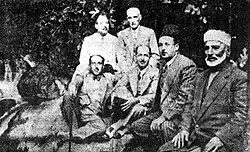
The Struggle Against the French Mandate
Following the collapse of the Ottoman Empire and the brief establishment of the Kingdom of Syria, the French took control of the region in 1920 after the Franco-Syrian War. Quwatli, disillusioned with monarchism, co-founded the republican Independence Party. The French authorities sentenced him to death, forcing him into exile in Cairo.
While in Egypt, Quwatli served as the chief ambassador of the Syrian-Palestinian Congress. He leveraged strong diplomatic ties with Saudi Arabia to secure funding for the Great Syrian Revolt (1925–1927). Upon his pardon and return to Syria in 1930, he rose to prominence within the National Bloc, a coalition of nationalist leaders dedicated to ending French rule.
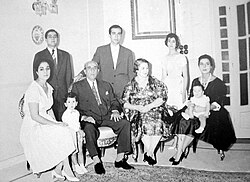
Presidency and the Dawn of Independence
In 1943, Quwatli was elected president of Syria. He famously refused a French offer to secure his election in exchange for a treaty guaranteeing Syria's military alignment with France, insisting that Syrian sovereignty must be absolute. On April 17, 1946, he officially declared Syria's independence from France.
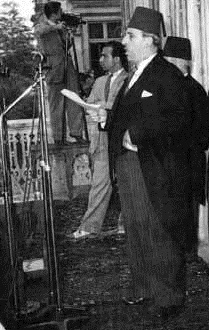
His first term was marked by the challenges of state-building and the 1948 Arab-Israeli War. Quwatli opposed the UN partition of Palestine and helped co-found the Arab Liberation Army (ALA), a volunteer force intended to support Palestinian Arabs. However, the poor performance of the Syrian Army during the conflict eroded his popularity and led to internal political strife.
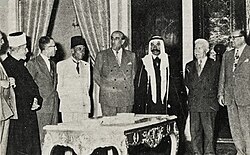
Coup, Exile, and Return
In 1949, Quwatli was toppled in a military coup led by Husni al-Za'im. He was imprisoned and later exiled to Egypt, where he developed a close friendship with Gamal Abdel Nasser. He returned to Syria in 1955 and won the presidency once more, serving during a period of intense Cold War tension.
During his second tenure, Quwatli adopted a policy of neutralism—an attempt to avoid alignment with either the US-led Western bloc or the Soviet-led Eastern bloc. When the United States denied his requests for aid, he shifted closer to the Eastern bloc and formed a defense agreement with Egypt and Saudi Arabia to counter the Baghdad Pact.
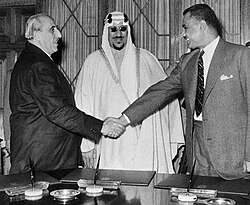
The United Arab Republic and Later Years
By 1958, the influence of the military and the popularity of pan-Arabism led Quwatli to merge Syria with Egypt to form the United Arab Republic (UAR). He stepped down as president, allowing Gamal Abdel Nasser to lead the union. Nasser honored him with the title "First Arab Citizen."
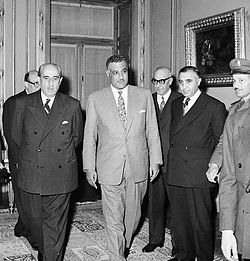
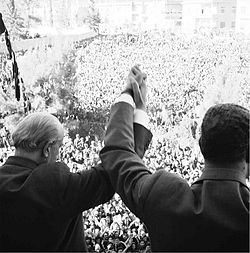
The union eventually soured. Quwatli became disenchanted, viewing the UAR as a police state where Syria was subordinate to Egypt. He supported Syria's secession from the union in 1961. Following a Ba'athist coup in 1963, Quwatli left Syria for Lebanon.
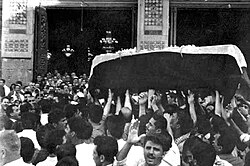
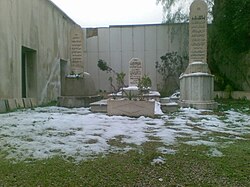
He died of a heart attack in Beirut on June 30, 1967, shortly after the Arab defeat in the Six-Day War. Despite initial resistance from the Ba'athist government, he was buried in Damascus on July 1.
Key Facts
- First President: Served as the first president of post-independence Syria starting in 1943.
- Independence: Declared Syria's full independence from France on April 17, 1946.
- Pan-Arabism: Facilitated the merger of Syria and Egypt into the United Arab Republic in 1958.
- Political Stance: Promoted "neutralism" during the Cold War to maintain Syrian autonomy.
- Education: Graduated from the Mekteb-i Mülkiye in Istanbul in 1913.
| Term | Period | Key Event | Successor/Outcome |
|---|---|---|---|
| First Term | 1943–1949 | Syrian Independence (1946) | Husni al-Za'im (Coup) |
| Second Term | 1955–1958 | Cold War Neutralism | Gamal Abdel Nasser (UAR) |
Frequently Asked Questions
Why was Shukri al-Quwatli imprisoned by the Ottomans?
He was arrested for his involvement with al-Fatat, a secret society that worked toward the independence and unity of the Arab territories within the Ottoman Empire.
What was Quwatli's role in the 1948 Arab-Israeli War?
He opposed the UN partition of Palestine and co-founded the Arab Liberation Army (ALA) to provide arms and funding to Palestinian fighters, though he initially cautioned against the entry of regular Arab armies.
What is the "United Arab Republic"?
The United Arab Republic (UAR) was a political union between Syria and Egypt established in 1958, which Quwatli helped create before stepping down to let Gamal Abdel Nasser serve as president.
Why did Quwatli eventually oppose the union with Egypt?
He believed the union had turned Syria into a police state subordinate to Egypt and criticized the socialist policies of land distribution and industrial nationalization.
How did Shukri al-Quwatli die?
He died of a heart attack in Beirut on June 30, 1967, reportedly following the news of the Arab defeat in the Six-Day War.