Shuar People: History, Culture, and Traditions of the Amazon
The Shuar, also known as the Jivaro, are an indigenous ethnic group inhabiting the lush landscapes of the Ecuadorian and Peruvian Amazonia. Renowned for their formidable hunting skills and a complex spiritual worldview, the Shuar have maintained a distinct identity despite centuries of contact with external forces. From the foothills of the Andes to the tropical lowlands, their society is a testament to resilience and adaptation.
The term "Shuar" simply means "people" in their native tongue. Within the group, distinctions exist based on geography: the muraiya (hill) Shuar reside in the Andean foothills, while the achu (swamp-palm) Shuar, or Achuar, inhabit the wetter lowlands to the east.
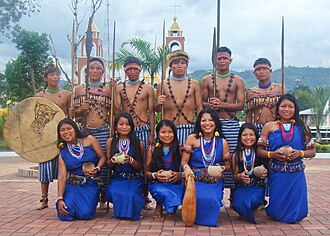
Key Facts
- Total Population: Approximately 100,000 people.
- Languages: Shuar (Jivaroan family) and Spanish.
- Primary Locations: Tropical rainforests and savannas of Ecuador and Peru.
- Religions: A blend of Christianity, Shamanism, and Animism.
- Notable Tradition: The practice of tsantsa (head shrinking).
- Political Organization: Represented by the Shuar Federation.
Social Structure and Historical Evolution
Historically, the Shuar were semi-nomadic, living in dispersed households linked by loose kin and political ties. The core of their society was the autonomous household, typically consisting of a husband, his wives (often two), and their children. This society practiced matrilocal residence, where sons-in-law moved into the household of their wives' families.
The Shuar have a long history of resisting external domination. In 1527, they successfully defeated an incursion by the Inca armies under Huayna Capac. Later, while they initially traded peacefully with the Spanish in the 16th century, they violently drove the colonizers away in 1599 after attempts to impose illegal taxes.
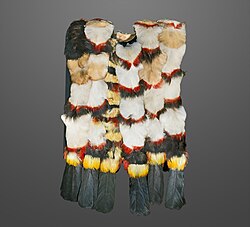
Transition to Centros
In the 20th century, the influence of Catholic missionaries and the pressure of colonization led to a shift in settlement patterns. The Shuar began organizing into nucleated settlements called centros. While these centers facilitated evangelization, they also served as a strategic tool for the Shuar to defend their land claims against settlers.
By 1964, these communities formed a political federation to protect their interests against the Ecuadorian state and transnational corporations. This organization eventually evolved into the Shuar Federation, which manages education, land tenure, and civil registration within the Shuar reserve.
The Tradition of Tsantsa
The Shuar are most famous in Western literature for tsantsa, the process of shrinking human heads. While outsiders often viewed these as trophies of war, the Shuar viewed them as spiritual vessels. They believed the shrunken head contained the muisak, or soul, of the victim.
By capturing the muisak, Shuar men believed they could transfer this power to their wives and daughters. This was seen as a practical benefit, as women's labor in cultivating manioc and brewing chicha (manioc beer) provided the primary caloric intake for the community.
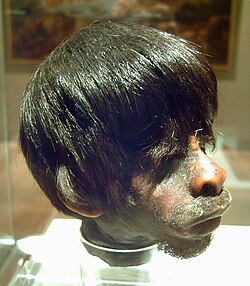
Spirituality, Rituals, and Shamanism
Shuar culture was traditionally organized around a warrior society. A pivotal rite of passage for boys around age eight involved a journey to a waterfall, where they would drink tobacco water and ingest maikua (Datura arborea). This was intended to induce visions of an arútam, or ancestral spirit.
Possessing an arútam wakaní was believed to grant strength and invincibility. A warrior who achieved great success in battle was known as a kakáram.
Shamanism and Healing
The Shuar believe that unexplained deaths and illnesses are caused by tsentsak, which are invisible darts controlled by shamans (uwishin). To diagnose and treat these ailments, shamans ingest natem (Ayahuasca). While they rely on shamans for spiritual attacks, the Shuar also possess extensive knowledge of medicinal plants, such as Piripiri (Cyperus species), for everyday health needs.
Modern Integration and the Ecuadorian State
Today, the Shuar are deeply integrated into the Ecuadorian nation-state. Their identity remains strong, and they have entered the realm of electoral politics. A landmark moment occurred on November 20, 2018, when Diana Atamaint became the president of the National Electoral Council.

The Iwia Elite Units
The Ecuadorian Army has leveraged the Shuar's reputation as fierce warriors by forming elite units known as Iwias (meaning "Jungle Demon"). These soldiers, trained at the Escuela de Iwias Crnl. Gonzalo Barragán, distinguished themselves during the 1995 Cenepa War between Ecuador and Peru.
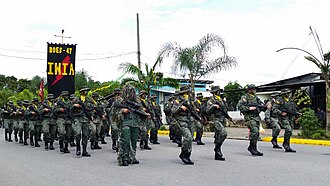
Summary of Shuar Cultural Elements
| Category | Traditional Practice/Belief | Modern Adaptation |
|---|---|---|
| Settlement | Semi-nomadic, dispersed households | Nucleated settlements (Centros) |
| Governance | Autonomous family units | Democratic Shuar Federation |
| Spirituality | Animism and Shamanism | Blend of Christianity and Shamanism |
| Warfare | Head-shrinking (Tsantsa) | Elite Army units (Iwias) |
| Economy | Hunting and gardening | Agriculture, cattle, mining, and timber |
Frequently Asked Questions
What is the meaning of the word "Shuar"?
In their own language, the word Shuar means "people".
Why did the Shuar shrink heads?
The practice of tsantsa was not for trophies, but to capture the muisak (soul) of the victim, which was believed to provide power that could aid the labor of the women in the community.
What are the Iwias?
The Iwias are elite units of the Ecuadorian Army composed of Shuar soldiers, named after a "Jungle Demon" from Shuar mythology.
How is the Shuar community organized today?
They are organized into nucleated settlements called centros and are represented politically by the Shuar Federation, which manages their reserve and interacts with the Ecuadorian government.
What is the role of the shaman in Shuar culture?
Shamans, or uwishin, are believed to control invisible darts called tsentsak. They are sought after for the diagnosis and treatment of illnesses believed to be caused by these spiritual attacks.