Shriketits: Australia's Unique Bark-Stripping Birds
The shriketits are a specialized group of birds belonging to the genus Falcunculus. Endemic to Australia, these birds are perfectly adapted to life in open woodland and eucalypt forests. While they may be unobtrusive in appearance, their unique foraging habits and distinct distribution make them a fascinating subject for ornithologists and nature enthusiasts alike.
Key Facts
- Genus: Falcunculus, consisting of three distinct species.
- Habitat: Open eucalypt forests and woodlands across Australia.
- Diet: Primarily insects and spiders, supplemented by thistle seeds and occasionally young birds.
- Unique Trait: They use a parrot-like bill to strip bark from trees to find invertebrates.
- Parental Care: Both males and females share duties in incubating eggs and rearing young.
Taxonomy and Distribution
Classified under the order Passeriformes (perching birds) and the family Falcunculidae, shriketits are found in disjunct ranges across the Australian continent. This means their populations are separated geographically rather than overlapping in a single continuous area.
| Common Name | Scientific Name | Distribution |
|---|---|---|
| Northern shriketit (White's shrike-tit) | F. whitei | Kimberley region (north-western Australia) and the Top End of the Northern Territory. |
| Western shriketit (white-bellied shrike-tit) | F. leucogaster | Sparsely distributed in south-western Western Australia. |
| Eastern shriketit | F. frontatus | South-eastern Australia, from the Lower South-East of South Australia through the Murray-Darling Basin to south-eastern Queensland. |
Physical Characteristics
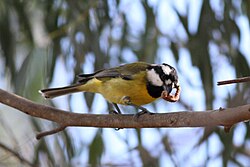
Shriketits exhibit noticeable sexual dimorphism, meaning males and females differ in appearance. Males are generally larger than females in terms of weight, bill size, and wing length. A key identifying feature is the throat color: males possess a black throat, whereas females have an olive green throat. Both sexes share bold black and white facial markings.
Behavior and Ecology
Foraging and Diet
The most distinctive behavior of the shriketit is its method of hunting. Equipped with a strong, parrot-like bill, these birds engage in bark-stripping, tearing pieces of bark off eucalyptus trees to uncover hidden invertebrates. Because they are relatively quiet, the audible sound of bark being stripped is often the best way to detect their presence in the wild.
Their diet consists mainly of spiders and insects. During the breeding season, they may also prey on young birds. Additionally, they are known to consume thistle seeds.
Nesting and Breeding
Shriketits build their nests high in eucalyptus trees, typically situated in the fork of a branch. Breeding is a collaborative effort; both the male and female share the responsibilities of incubating the eggs and raising the offspring. Depending on the conditions, a pair may produce up to two broods in a season.
Frequently Asked Questions
What makes the shriketit's bill unique?
The shriketit possesses a parrot-like bill specifically adapted for stripping bark from trees, allowing them to access insects and spiders that other birds cannot reach.
Where can you find the Eastern shriketit?
The Eastern shriketit is found in south-eastern Australia, ranging from the Lower South-East of South Australia and the Murray-Darling Basin up to south-eastern Queensland.
How can you tell a male shriketit from a female?
Males are larger and have black throats, while females are smaller and have olive green throats. Both sexes feature bold black and white markings on their faces.
What do shriketits eat?
Their primary diet consists of insects and spiders. They also eat thistle seeds and, particularly during the breeding season, may eat young birds.
How do shriketits raise their young?
Both parents are involved in the process, sharing the duties of incubating the eggs and rearing the chicks in nests built high in the forks of eucalyptus branches.