Shoalwater Bay Indian Tribe: A History of Resilience and Sovereignty
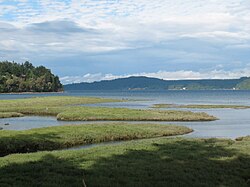
The Shoalwater Bay Indian Tribe represents a diverse lineage of indigenous peoples whose ancestral homelands center around Willapa Bay. Comprising the Lower Chehalis, the Willapa Chinook, and other groups, the tribe has a long history of maintaining its cultural identity and land rights despite the pressures of colonization and federal policy.
Historically, the region was known as Shoalwater Bay, a name that persists in the tribe's official title today.
The Struggle for Land and Recognition
The tribe's relationship with the United States government began with a firm stance on autonomy. In 1855, representatives of the Shoalwater Bay Indians attended the signing of the Chehalis River Treaty. However, the leaders of the tribes in Willapa Bay refused to sign the document, choosing instead to return to their lands to preserve their traditional lifestyles.
Despite the lack of a signed treaty, the federal government took action eleven years later. On September 22, 1866, President Andrew Johnson issued an executive order establishing a reservation at nám̓sč̓ac̓, the site of a former Lower Chehalis village. At that time, approximately 30 to 40 Indian families remained in the area. This order set aside 334.75 acres for "miscellaneous Indian purposes," providing the community with a critical land base.
Leadership and Cultural Heritage
The tribe's leadership during the turn of the century was marked by the tenure of George A. Charley, who served as chief from 1899 to 1936. He succeeded his father, Charley Toke. George A. Charley was notable for having a flattened head, a traditional practice among noble families in the Pacific Northwest.
The Path to Federal Recognition
For the first half of the 20th century, the Shoalwater Bay Indian Tribe lacked official federal recognition. This changed in the 1960s when the tribe entered into negotiations with the United States government. These efforts culminated on March 10, 1971, when the tribe was officially recognized, thereby securing its sovereignty—the inherent right of a people to govern themselves.
Following this recognition, the tribe formally adopted its constitution on May 22, 1971.
Modern Challenges and Triumphs
The latter part of the 20th century brought both financial settlements and health crises. In 1984, the tribe received $1,000,000 after relinquishing a claim to eight acres of land that the US government had granted to a private citizen in 1872.
Between 1988 and 1998, the community faced a severe health crisis. An alarming 25 to 66 percent of pregnancies resulted in miscarriages, stillbirths, or infant deaths. While no official cause was identified, the crisis was linked to a lack of prenatal care, eventually leading to increased federal funding and awareness for tribal healthcare.
Repatriation and Infrastructure
The tribe continues to work toward the return of its ancestors. In February 2006, a notice was issued under NAGPRA (the Native American Graves Protection and Repatriation Act) to the American Museum of Natural History in New York regarding the remains of eight individuals likely of Shoalwater origin.
In recent years, the tribe has become a leader in climate adaptation. In 2022, they opened North America's first free-standing vertical tsunami evacuation tower in Tokeland. The 50-foot structure can hold over 400 people. Furthermore, a $25 million grant received in 2025 is being used to relocate tribal buildings and construct new housing uphill to protect members from rising sea levels and tsunami threats.
Key Facts
- Ancestry: Descended from the Lower Chehalis, Willapa Chinook, and other peoples of Willapa Bay.
- Land Base: A 334.75-acre reservation established by executive order in 1866.
- Federal Recognition: Officially recognized by the US government on March 10, 1971.
- Innovation: Built the first free-standing vertical tsunami evacuation tower in North America (2022).
- Climate Action: Secured a $25 million grant in 2025 for uphill relocation of housing and buildings.
| Year | Event | Significance |
|---|---|---|
| 1855 | Chehalis River Treaty | Tribal leaders refused to sign to maintain traditional lifestyles. |
| 1866 | Executive Order | Established a 334.75-acre reservation at nám̓sč̓ac̓. |
| 1971 | Federal Recognition | Official US recognition and adoption of the tribal constitution. |
| 1984 | Land Claim Settlement | Tribe received $1,000,000 for 8 acres of land. |
| 2022 | Tsunami Tower Opening | First vertical evacuation structure in North America. |
| 2025 | Relocation Grant | $25 million for climate-resilient housing and infrastructure. |
Frequently Asked Questions
Who makes up the Shoalwater Bay Indian Tribe?
The tribe is descended from multiple peoples whose homelands are in Willapa Bay, including the Willapa Chinook and the Lower Chehalis.
Why did the tribe not sign the Chehalis River Treaty of 1855?
The leaders of the tribes living in Willapa Bay refused to sign the treaty so they could return to their lands and continue their traditional ways of life.
When did the tribe receive official federal recognition?
The Shoalwater Bay Indian Tribe was recognized by the US government on March 10, 1971, and adopted its constitution on May 22 of that same year.
What was the nature of the health crisis in the 1990s?
Between 1988 and 1998, the tribe experienced a high rate of pregnancy loss (25% to 66%), which was associated with a lack of prenatal care and led to increased federal health funding.
How is the tribe addressing the threat of sea level rise?
The tribe built a 50-foot vertical tsunami evacuation tower in 2022 and received a $25 million grant in 2025 to move buildings and housing to higher ground.