Ship of State: Plato's Metaphor for Governance and Power
The Ship of State is one of the most enduring metaphors in Western political thought. It likens the complex task of governing a city-state to the command of a seafaring vessel. While the image of a nation as a ship is common today, its philosophical foundations were deeply established by Plato in his seminal work, The Republic (Book 6, 488a–489d).
Long before Plato, the metaphor appeared in the works of the lyric poet Alcaeus and playwrights such as Aeschylus, Sophocles, and Aristophanes. However, Plato expanded the concept to argue that governance is a specialized craft, requiring specific knowledge and virtue rather than popular appeal.
Key Facts
- Origin: While used by earlier Greek poets and playwrights, it was famously expounded by Plato in The Republic.
- Core Argument: Plato asserted that only philosopher kings—benevolent leaders with access to the Form of the Good—are fit to lead.
- Political Target: The metaphor was specifically used to critique direct democracy (pure majority rule).
- The Navigator: In the metaphor, the true expert in navigation represents the philosopher, who is often dismissed by the masses.
- Cultural Reach: The image has evolved from a critique of democracy to a general symbol of national leadership in modern political discourse.
Plato's Allegory: The Mutinous Crew
Plato uses the character of Socrates to describe a ship with a captain who is physically strong and imposing but suffers from poor eyesight and hearing, and lacks knowledge of navigation. This captain represents the head of state in a direct democracy.
The crew consists of sailors who quarrel over who should steer the ship. These sailors represent demagogues and politicians. Despite having no formal training in the art of navigation, they claim the skill cannot be taught and vie for the captain's favor through flattery, gifts, and wine. Their primary goal is not the safety of the vessel, but the acquisition of power and access to the ship's stores.
Amidst this chaos is the true navigator. To steer the ship safely, the navigator must study the seasons, the sky, the stars, and the winds. However, because the sailors do not value this specialized knowledge, they dismiss the navigator as a "useless stargazer" or a "good-for-nothing." Plato uses this to illustrate how a society governed by majority rule often rejects the actual experts capable of leading it safely.
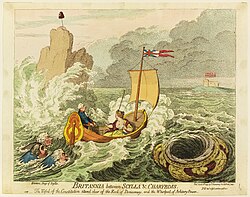
Evolution of the Metaphor Through History
Following antiquity, the Ship of State continued to influence literature and politics across different eras:
- The Renaissance: Sebastian Brant reworked Plato's ideas into the satirical 1494 book Ship of Fools (Das Narrenschiff), which gained widespread popularity through translations into English, French, and Latin.
- Early Modern Era: Roger Williams, founder of Rhode Island, utilized the metaphor in 1656, and the biographer Asser used it to describe King Alfred as an "excellent pilot" guiding his wealth-laden ship home.
- Revolutionary Periods: The Jacobins of the French Revolution frequently referenced the Ship of State while defending the new French Republic against European monarchies.
- 19th Century: Thomas Carlyle used the image to argue against the democratic movements of his time, while poet Henry Wadsworth Longfellow wrote the poem "O Ship of State."
Modern Interpretations
In contemporary American political discussion, the metaphor has largely lost its original anti-democratic and pro-absolutist meaning. It is now typically used as a simple image of the state requiring a government to act as officers. It has also entered popular culture, appearing in Leonard Cohen's song "Democracy" and the British comedy Yes Minister, where Sir Humphrey Appleby joked that the Ship of State is the only ship that "leaks from the top."
Summary of the Ship of State Metaphor
| Ship Element | Political Equivalent | Characteristics |
|---|---|---|
| The Captain | The Head of State | Strong but lacking in vision and expertise. |
| The Sailors | Demagogues/Politicians | Competitive, flattering, and unskilled in navigation. |
| The Navigator | The Philosopher | Possesses true knowledge; viewed as useless by the crew. |
| The Art of Navigation | Statesmanship/Philosophy | A specialized craft based on objective truth and study. |
Frequently Asked Questions
What is the primary purpose of Plato's Ship of State metaphor?
The metaphor is intended to critique direct democracy and argue that governance is a specialized skill. Plato suggests that just as a ship requires a trained navigator, a state requires a philosopher king to lead it effectively.
Who are the "sailors" in Plato's allegory?
The sailors represent politicians and demagogues who seek power not through expertise or a desire for the common good, but through the manipulation and flattery of the leader to gain control of the state's resources.
How does the modern use of the term differ from Plato's original meaning?
While Plato used the metaphor to argue against democracy in favor of absolute power held by a benevolent philosopher, modern usage generally views the state as a ship in need of competent leadership without the inherent anti-democratic bias.
Which other historical figures used this metaphor?
Notable figures include Roger Williams, the biographer Asser, Thomas Carlyle, and the Jacobins of the French Revolution, each applying the image to their specific political or biographical contexts.