Shelly Bay Residential Development: A History of Controversy and Cancellation
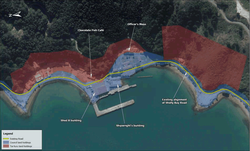
The proposed residential development at Shelly Bay stands as one of the most contentious urban planning projects in recent Wellington history. What began in 2014 as an ambitious plan by Ian Cassels and The Wellington Company to build a 350-house community evolved into a decade-long saga of legal battles, political shifts, and cultural disputes.
The project was characterized by intense public scrutiny, with the news site Stuff publishing approximately 400 articles on the subject between 2011 and 2019. From clashes over land ownership to disputes over environmental preservation, the Shelly Bay project serves as a case study in the complexities of modern resource management and community opposition.
Key Facts
- Original Plan: A 350-house residential development proposed by The Wellington Company.
- Legal Hurdles: Resource consent was granted in 2017, quashed by the Court of Appeal in 2018, and re-approved in 2019.
- Land Ownership: Involved sales from the Taranaki Whānui iwi (via PNBST) and proposed sales of Wellington City Council land.
- Major Opponents: Enterprise Miramar, director Peter Jackson, and members of the Mau Whenua group.
- Outcome: The project was aborted in September 2023 and the land was purchased by Peter Jackson and Fran Walsh.
The Battle for Resource Consent
To proceed with the development, the developers required resource consent—a legal permit allowing land use that may deviate from standard zoning rules. The Wellington City Council first granted this in 2017, but the decision was challenged by the lobby group Enterprise Miramar.
In 2018, the Court of Appeal quashed the consent, ruling that the Council had misinterpreted the law. Following a reconsideration by independent commissioners in October 2019, a new consent was approved. This new permit allowed for more intensive housing than the city's district plan typically permitted, though Enterprise Miramar continued its opposition into 2020.
Iwi Land Disputes and Occupations
The land acquisition process was fraught with internal and external conflict. Ian Cassels purchased land from the Taranaki Whānui iwi through the Port Nicholson Block Settlement Trust (PNBST). In June 2017, a portion of the land was sold for $2 million—a price lower than what the iwi had originally paid for it.
This sale sparked backlash from Mau Whenua, a group of Taranaki Whānui members who argued the sale lacked a proper mandate. While PNBST claimed the sale was necessary for financial survival, Mau Whenua fought to reclaim the land, even obtaining a caveat (a legal notice preventing sale) in July 2019. However, the caveat lapsed in December 2019, and the land passed to a company owned by Cassels.
Tensions peaked in November 2020 when Anaru Mepham and Mau Whenua began an occupation of Shelly Bay. The protest, which included the erection of tents, saw support from then-Mayor Andy Foster, leading to criticism from other councillors. The occupation lasted until May 2022, following eviction notices served by Taranaki Whānui and local marae.
By 2021, a new agreement was reached ensuring the iwi would have a greater stake in the project, including ownership of all commercial assets and a distinctive presence in the area.
Political Shifts and Council Land
The development also relied on the Wellington City Council selling 0.3 hectares and leasing 0.6 hectares of land. This became a central issue in the October 2019 local elections. While former Mayor Justin Lester supported the project, he was replaced by Andy Foster, who had campaigned on stopping the development.
Despite Mayor Foster's opposition, the Council voted 9–6 in November 2020 to proceed with the land sale and lease. The financial burden on the city was significant; by December 2020, the Council had spent over $800,000 on consultants and legal fees, while capping its infrastructure contribution at $10 million.
Environmental and Community Opposition
Beyond political and cultural disputes, the project faced strong opposition from prominent figures and community groups. Director Peter Jackson criticized the plan, describing the area as a precious green space and comparing the proposed housing to "Soviet-era apartments." Enterprise Miramar raised concerns regarding traffic congestion and road safety.
In 2020, the developers sought funding from the central Government's $3 billion infrastructure fund, intended to stimulate the economy post-pandemic. However, following pleas from the legal representatives of Peter Jackson and Fran Walsh, the application was rejected.
The Final Outcome: Cancellation and Restoration
After a groundbreaking ceremony in January 2023, the project unexpectedly collapsed. In September 2023, it was announced that the development had been aborted. The land was subsequently sold to Peter Jackson and Fran Walsh, who expressed their intention to restore the natural beauty of the coastline.
Industry analysts suggest the failure was driven by economic pressures. Rising interest rates and construction costs likely inflated the project's estimated cost from an initial $500 million to over $720 million by 2023. Reports indicate that Jackson and Walsh paid approximately $39 million for the land.
| Year | Key Event | Outcome |
|---|---|---|
| 2014 | Project Proposal | 350-house plan introduced by Ian Cassels |
| 2017 | Initial Consent & Sale | Resource consent granted; iwi land sold for $2M |
| 2018 | Court Appeal | Resource consent quashed |
| 2019 | Re-approval & Election | New consent granted; Andy Foster elected Mayor |
| 2020 | Occupation & Council Vote | Mau Whenua occupation begins; Council votes to sell land |
| 2023 | Cancellation | Project aborted; land sold to Jackson and Walsh |
Frequently Asked Questions
Why was the Shelly Bay development cancelled?
The project was aborted in September 2023, primarily due to rising construction costs and interest rates. Estimates suggest the project cost grew from $500 million to over $720 million.
Who eventually purchased the land?
The land was purchased by director Peter Jackson and Fran Walsh, who intend to restore the natural beauty of the bay.
What was the role of the Taranaki Whānui iwi in the project?
The iwi, through the Port Nicholson Block Settlement Trust (PNBST), sold land to the developers. This led to internal disputes with the Mau Whenua group, though a 2021 agreement eventually gave the iwi a larger stake in the project's commercial assets.
Why did the Court of Appeal quash the first resource consent?
The court ruled in 2018 that the Wellington City Council had wrongly interpreted the law when it originally decided to grant the consent.
How much did the Wellington City Council spend on the dispute?
As of December 2020, the Council had spent over $800,000 on legal fees and consultants related to the development.