Sexual Fetishism: Definitions, Types, and Clinical Perspectives
The concept of sexual fetishism—the attribution of inherent value or sexual power to specific objects or body parts—has undergone significant evolution in both linguistic and medical contexts. While the term originates from the French fétiche and Portuguese feitiço (meaning "spell"), its application in modern psychology has shifted from a focus on supernatural belief to a nuanced understanding of human sexual interest.
In the late 19th century, the term was first used in an erotic context by Alfred Binet. Since then, the medical community has worked to refine how these interests are categorized, moving away from stigmatization toward a more clinical and rights-based approach.
Key Facts
- ICD-11 Update: As of June 2018, the World Health Organization removed fetishism and fetishistic transvestism as psychiatric diagnoses.
- Common Interests: Clothing (58.3%) and rubber/rubber items (22.9%) were among the most frequent fetishes identified in a 1983 clinical review.
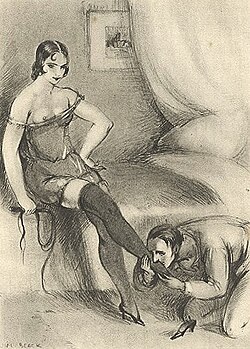
- Podophilia: Foot fetishism is the most common interest within groups focused on body parts, accounting for 47% of such groups.
- Clinical Distinction: The term partialism was historically used to describe arousal from specific body parts, a distinction later merged into fetishism in the DSM-5.
- Prevalence: Studies suggest fetishistic fantasies are more common in males than females.
Evolution of Medical Definitions
The way psychiatry defines fetishism has changed alongside advancements in diagnostic standards. Originally, most medical sources defined fetishism as a sexual interest in non-living objects, body parts, or secretions. However, the publication of the DSM-III in 1980 excluded arousal from body parts from the diagnostic criteria for fetishism.
This led to the introduction of partialism—a diagnosis specifically for body part arousal—in the 1987 DSM-III-R. While some experts, such as Martin Kafka, argued that the two should be merged due to significant overlap, it was not until the DSM-5 in 2013 that the two were officially combined.
Common Types of Fetishes
Research into fetishistic interests reveals a wide spectrum of preferences, ranging from inanimate objects to specific anatomical features. A 1983 review of 48 clinical cases highlighted the following prevalence:
- Clothing: 58.3%
- Rubber and rubber items: 22.9%
- Footwear: 14.6%
- Body parts: 14.6%
- Leather: 10.4%
- Soft materials or fabrics: 6.3%
Digital trends also provide insight into modern preferences. An analysis of internet discussion groups showed that among those focused on body features, 47% were dedicated to podophilia (foot fetishism). Other notable groups include those focused on body fluids (9%), body size (9%), hair (7%), and muscles (5%).
When examining clothing-related interests, the breakdown includes leg or buttock-related clothing like stockings (33%), footwear (32%), underwear (12%), and whole-body wear like jackets (9%).
| Category | Percentage of Cases |
|---|---|
| Clothing | 58.3% |
| Rubber/Rubber Items | 22.9% |
| Footwear | 14.6% |
| Body Parts | 14.6% |
| Leather | 10.4% |
| Soft Materials/Fabrics | 6.3% |
Theories of Causation and Occurrence
Psychologists have proposed various theories to explain the origins of fetishism. In 1920, sexologist Magnus Hirschfeld proposed the theory of partial attractiveness, suggesting that sexual attraction is often the product of interacting individual features rather than a whole person. He argued that while most people have special interests, pathological fetishism occurs when a single feature is overvalued.
In 1951, Donald Winnicott suggested a developmental perspective through his theory of transitional objects. He speculated that childhood objects, such as cuddly toys or thumb-sucking, could become sexualized in adulthood.
From a personality standpoint, studies have noted that fetishists often report higher levels of introversion and lower levels of satisfaction with life and relationships. A 1996 Swedish study also found that hypersexual behavior increased the odds ratio for certain paraphilias, with a ratio of 4.6 in males and 25.6 in females.
Modern Diagnosis and Human Rights
The landscape of diagnosis has shifted significantly toward a human rights-based approach. The ReviseF65 project campaigned to abolish fetish-related diagnoses in the International Classification of Diseases (ICD) to prevent stigmatization. This effort was successful with the publication of the ICD-11 on June 18, 2018, which removed fetishism and fetishistic transvestism as psychiatric diagnoses.
The World Health Organization (WHO) and the United Nations maintain that discrimination against individuals with fetishes or those involved in BDSM is inconsistent with human rights principles. According to the WHO, fetishistic fantasies are common and should only be treated as a disorder if they cause distress or impair normal functioning.
Frequently Asked Questions
Is fetishism considered a mental disorder?
According to the WHO's ICD-11, fetishism is no longer classified as a psychiatric diagnosis. It is generally only considered a disorder if the fantasies cause significant distress or impair an individual's ability to function normally.
What is the difference between fetishism and partialism?
Historically, partialism referred specifically to sexual arousal from body parts, while fetishism referred to non-living objects. However, the DSM-5 merged these two concepts into the single category of fetishism.
How common are fetishistic fantasies?
Prevalence rates vary by study. One 2011 study found that 30% of men reported fetishistic fantasies, while a 2014 study found that 26.3% of women and 27.8% of men acknowledged fantasies involving sex with a non-sexual object.
What is podophilia?
Podophilia is the technical term for a foot fetish, which is one of the most common forms of body-part-related sexual interest.
Why did the WHO change its classification?
The change was part of an effort to avoid stigmatizing individuals and to align with human rights principles, recognizing that many sexual interests are common and do not inherently constitute a pathology.